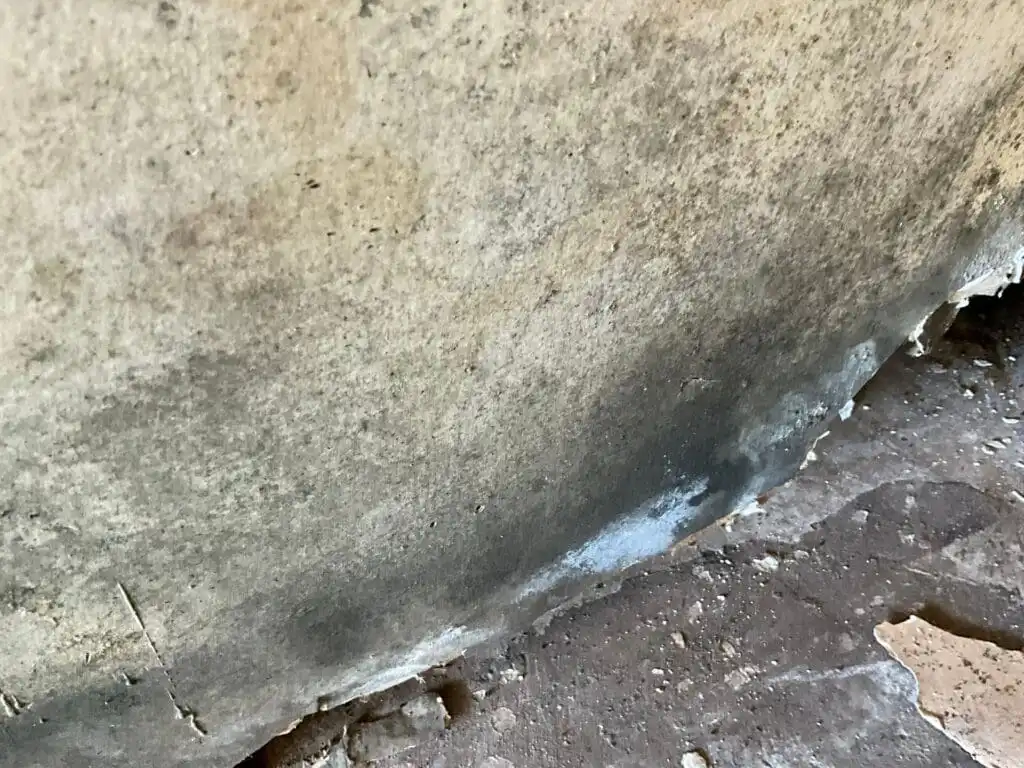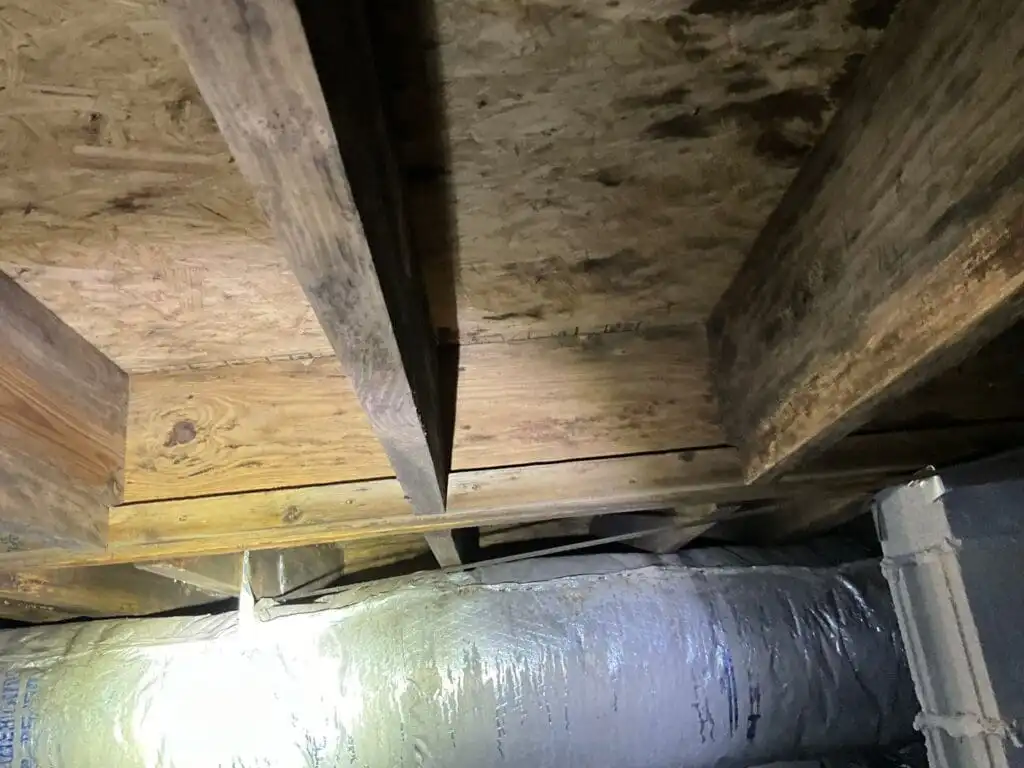
Not every discolored patch on a wall is mold, and not every mold growth presents the same level of concern. Knowing the difference between mold, mildew, dust, and staining — and understanding when a visual finding warrants professional assessment — helps homeowners respond appropriately rather than either overreacting or dismissing something that needs attention.
Mold vs. Mildew
Mildew is a surface fungus that grows in flat, powdery patches, typically white, gray, or light yellow. It colonizes surfaces that are regularly damp — bathroom grout, shower curtains, window sills — but does not penetrate deeply into the material it is growing on. Mildew is generally less hazardous than mold and responds to surface cleaning with appropriate products.
Mold grows more deeply into the substrate and is not removed by surface cleaning alone. It appears in a wider range of colors: black, dark green, gray, brown, white, or even orange, depending on the species and what it is growing on. Mold has a fuzzy or slimy texture, compared to mildew’s powdery appearance. The most significant practical difference is that cleaning mildew eliminates the growth, while cleaning visible mold often leaves the underlying colony intact.
Mold vs. Dirt and Staining
Dirt and non-biological staining do not grow or change over time. A discoloration that was the same size and appearance three months ago as it is today is more likely a stain than mold. Mold colonies expand over time as long as moisture conditions support growth.
Three observations help distinguish mold from non-biological material:
- Odor. Active mold produces a musty, earthy smell from the volatile compounds released during growth. Dirt and staining do not produce this odor.
- Texture. Mold has a fuzzy, irregular, or slimy surface. Dirt and dust are dry and powdery. A discoloration that feels or looks fuzzy under close inspection is more likely mold.
- Moisture history. Mold requires sustained moisture to establish. A discoloration in a location that has a history of water exposure — near a roof leak, under a sink, in a crawl space — is more likely mold than one in a consistently dry area.
Common Indoor Mold Types in CSRA Homes
The CDC identifies Cladosporium, Penicillium, Alternaria, and Aspergillus as among the most common indoor molds, all of which can cause respiratory symptoms in sensitive individuals. These species appear in a range of colors and textures. None can be reliably distinguished from each other or from Stachybotrys chartarum (black mold) by visual inspection alone.
In Augusta and the CSRA, where indoor humidity is high for much of the year and crawl spaces are common, Cladosporium and Penicillium are frequent findings in air sampling results. These are not rare or exotic molds — they are the everyday result of moisture conditions that the region’s climate creates in many homes.
Why Visual Identification Is Not Sufficient
The EPA notes that mold species cannot be identified by color or appearance alone, and that professional testing is needed for accurate identification. This matters in two situations: when knowing the species is relevant to remediation decisions (particularly if Stachybotrys is suspected), and when a negative visual inspection has not found a source despite the presence of odor or symptoms — because professional air sampling can detect elevated spore concentrations from colonies not visible from accessible areas.
When Professional Inspection Is the Right Step
Professional mold inspection is appropriate when:
- Visible mold covers more than 10 square feet, or is in an area that suggests a larger hidden source (e.g., surface mold on a wall where the interior may be more extensively affected)
- Mold returns to the same location within a few weeks of cleaning, indicating the moisture source has not been eliminated
- A musty odor is present but no visible mold can be located
- Household members have location-specific respiratory symptoms — coughing, congestion, eye irritation — that are worse at home and improve when away
- A water event occurred and materials were not verified dry by a professional
- A home is being bought or sold and documented air quality testing is required
Schedule a Mold Inspection
EnviroPro 360 provides certified mold inspection and air sampling across Augusta, Aiken, North Augusta, and the CSRA, with species-level identification from an AIHA-accredited laboratory. Contact EnviroPro 360 to schedule an inspection.