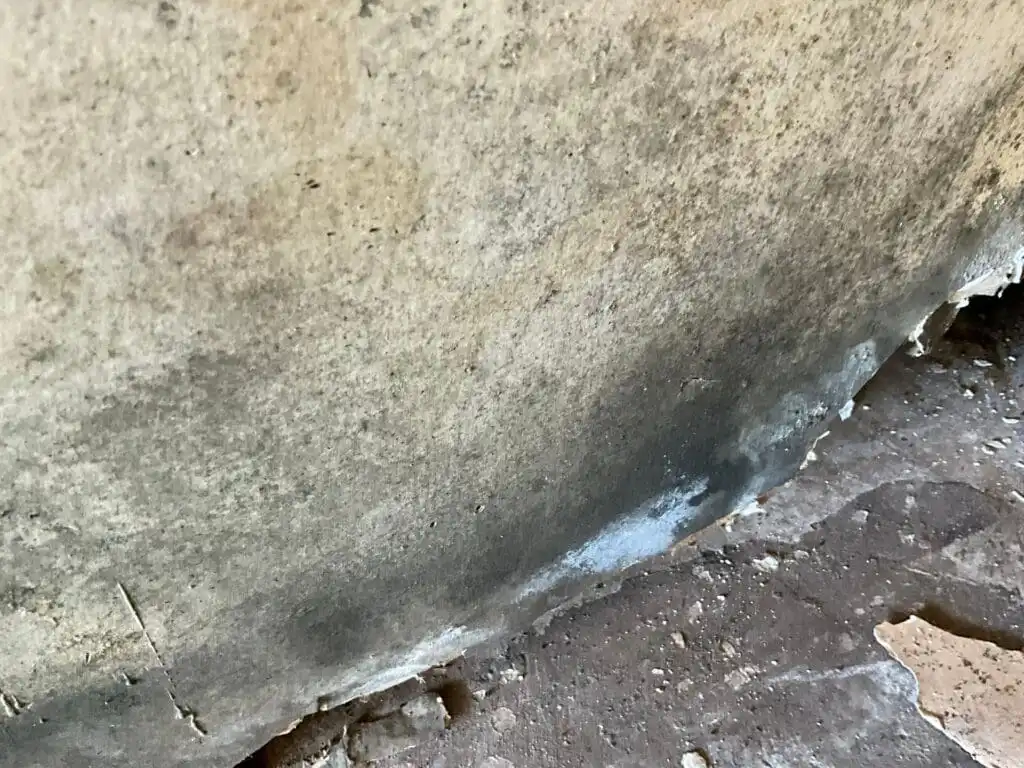
That moment in late October or early November when you switch on the heat can turn uncomfortable fast if it comes with a musty, stale odor drifting out of the registers. In CSRA homes, this is a common seasonal experience, and it is not always harmless.
The instinct is to brush it off as dust burning off a heating element. But in Augusta and the surrounding area, that odor is often a signal worth investigating rather than masking with air freshener.
Why Fall HVAC Startup Brings Out Hidden Smells
Most CSRA homes run heat pumps rather than furnaces. Heat pumps operate in cooling mode for nine to ten months of the year, then transition to heating mode in late fall. During the cooling season, the evaporator coil is cold and wet — it pulls moisture out of the air as it cools it. Over a long summer of operation, organic dust accumulates on the coil fins, drain pan, and blower wheel. When the system transitions to heating mode, it runs warmer and stops producing condensation, meaning any biological growth that established itself on those damp surfaces during summer is now being dried out and its byproducts pushed through the supply ducts.
That is one reason the first few days of heat in fall often smell different from the rest of the heating season. Dust burn-off is temporary. Mold byproducts are not.
Dust Burn-Off vs. Mold Odor
Dust burn-off from a heating system smells sharp and dry, like something is singeing. It typically fades within a day or two as the system runs and clears accumulated particles.
A musty, damp, or earthy smell that persists beyond the first day or two of heating operation is a different situation. That odor is produced by microbial volatile organic compounds (MVOCs), chemical byproducts of active mold growth. MVOCs are not cleared by heat. They are generated continuously as long as the growth producing them is active.
If the smell is present every time the system runs, fades when you open windows, or is worse in specific rooms or near specific registers, the HVAC system is distributing something from inside itself or from a space connected to the return.
Where the Odor May Be Coming From
In the CSRA, where HVAC systems run for nine to ten months, accumulation of biological growth on cooling components happens faster than in cooler climates. A coil that is wet for 300 days a year has a much longer window for establishing mold than one that operates for 120 days. Possible sources include:
- Evaporator coil and drain pan: The most common location for mold growth in CSRA HVAC systems, due to the long cooling season and consistent condensation during Augusta summers.
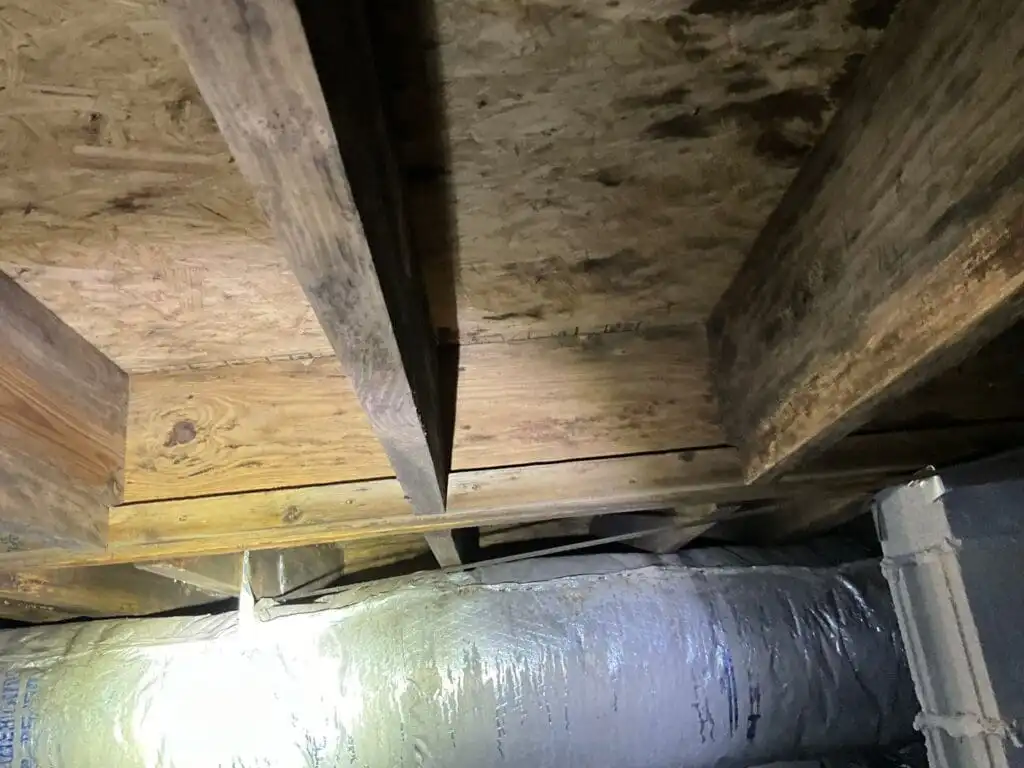
- Crawl space air: In homes with vented crawl spaces, the heating season often pressurizes the building in ways that pull crawl space air upward into the living areas. If the crawl space has active mold growth on joists or insulation facing, that air carries the odor into the home.
- Attic insulation: Soaked by slow roof leaks or condensation from temperature swings, attic mold colonies can release MVOCs that enter the return system through unsealed attic penetrations.
- Wall cavities near HVAC returns: Return ducts that are not properly sealed pull air from adjacent wall cavities. Mold growing in a wall cavity connected to the return is drawn directly into the system and distributed throughout the home.
What to Check Before Calling for Professional Testing
- Change your HVAC filter if it has been more than three months since the last change
- Open the air handler access panel (with the system off and power cut at the breaker) and visually inspect the coil and drain pan for biological growth or standing water
- Confirm the condensate drain line is clear — find where it exits and confirm it is draining or has no visible blockage
- Check accessible crawl space areas for visible moisture on joists or obvious growth on insulation facing
If none of these reveal an obvious source, or if the smell persists after filter replacement and basic cleanup, professional testing is the appropriate next step.
When to Get Professional Testing
The EPA recommends professional mold assessment when musty odors persist and no source can be identified by visual inspection. The CDC notes that mold exposure can worsen asthma and cause persistent respiratory symptoms, fatigue, and sinus irritation that will not resolve while the source remains active.
If someone in your household has been experiencing symptoms that track with when the heat runs, or if the odor has been present for more than one heating season, the evidence for an active source is strong enough to warrant testing.
Professional mold testing in this context involves comparing air samples taken with the HVAC running to samples taken with it off, alongside samples at specific registers and inside the air handler. This approach isolates whether the system is the source or simply the distributor of a problem originating elsewhere.
How EnviroPro 360 Can Help
EnviroPro 360 serves homeowners across Augusta, Evans, North Augusta, Aiken, and the surrounding CSRA with certified mold testing, HVAC mold assessments, and indoor air quality investigation. If your home smells musty when the heat runs and the source is not obvious, contact us to schedule an inspection. Same-day and 24-hour appointments are available.