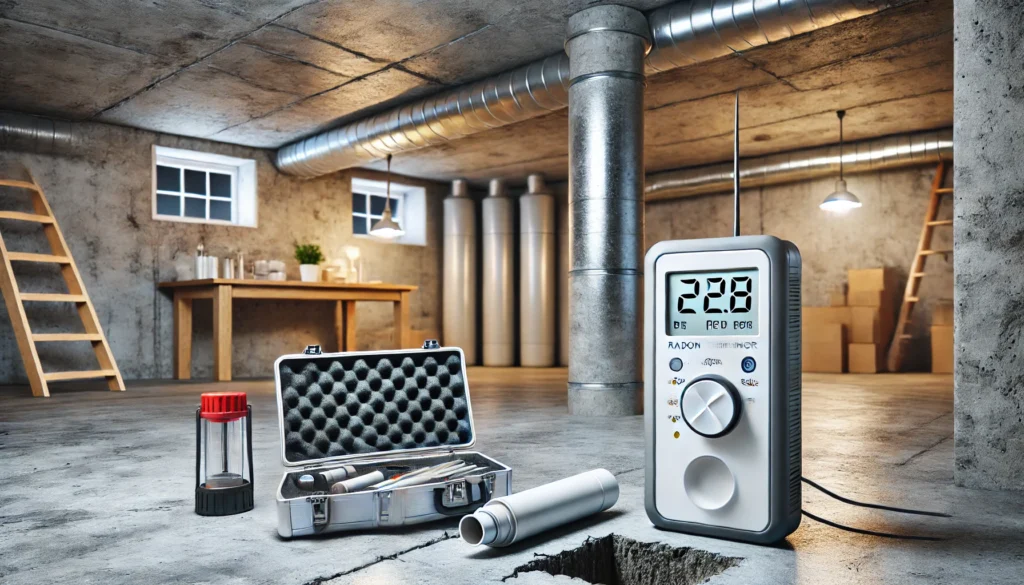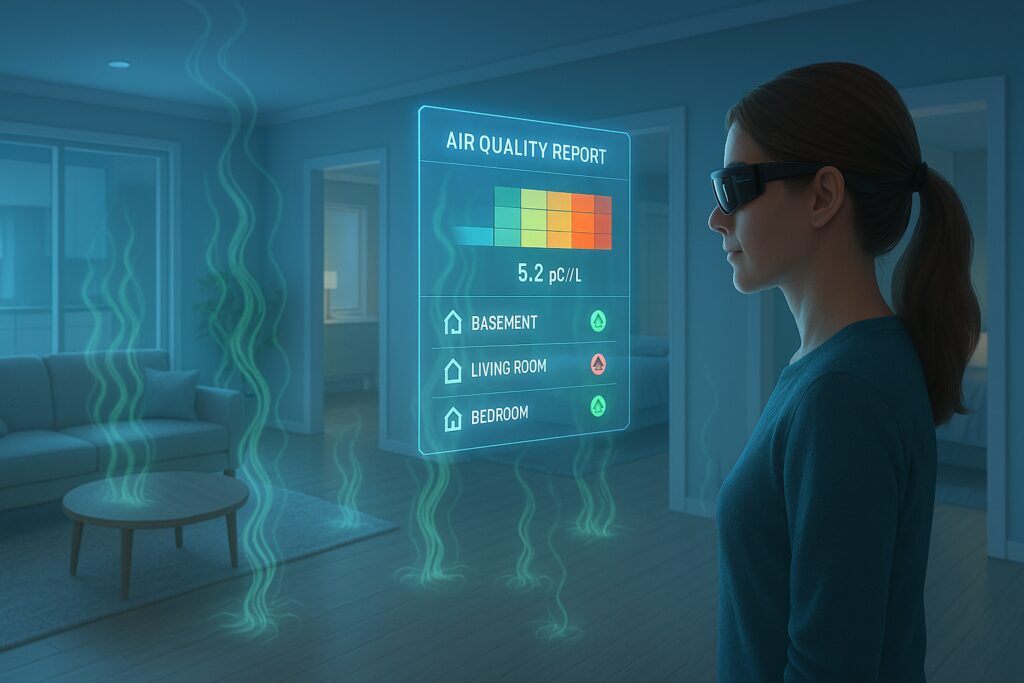
You signed the lease, the appliances are new, and the walls still smell like fresh paint. Then you get a radon test result back and it is elevated. How is that possible in a brand-new apartment?
It is a question more new-construction residents are asking as radon testing becomes more common. The answer lies in how modern buildings are designed and what radon actually is — and why newness has nothing to do with radon risk.
Radon Does Not Care How Old the Building Is
Radon forms from the natural decay of uranium in soil and rock. It migrates upward through the ground and enters any structure through gaps in the foundation, crawl space interfaces, plumbing penetrations, and construction joints. This process is entirely independent of the building’s age. A home built last year sits on the same soil as a home built fifty years ago. If the soil beneath it contains uranium, it produces radon. If the building has entry points at the foundation level, radon enters.
The Environmental Protection Agency recommends that all homes below the third floor be tested for radon, regardless of age or construction type. The EPA action level is 4.0 pCi/L (picocuries per liter). At or above that concentration, steps should be taken to reduce indoor radon levels.
Why New Construction Can Make Radon Worse
Modern building standards emphasize energy efficiency, and energy-efficient construction often means airtight construction. Buildings designed to minimize air leakage and reduce heating and cooling costs do exactly what they are engineered to do: they prevent air from escaping. The problem is that they also prevent radon-bearing air from escaping. In a leaky older structure, natural air infiltration through gaps and cracks allows radon to dilute and disperse. In a tightly sealed new building, radon that enters through the foundation has fewer pathways out. It accumulates.
This effect is particularly pronounced in new apartment construction where units are designed with high levels of insulation, vapor barriers, and weatherstripping. The building performs exactly as designed from an energy perspective while potentially creating elevated radon conditions for the occupants.
The Centers for Disease Control and Prevention identifies radon as the second leading cause of lung cancer in the United States, responsible for approximately 21,000 deaths annually. The tighter the building envelope, the more important it is to verify radon levels rather than assume the building is safe.
Ground Floor and Below-Grade Units Face the Highest Risk
In a multistory apartment building, radon risk is not distributed equally across floors. Radon enters at the foundation level and concentrates in the lowest portions of the building. Ground-floor units, garden-level units (those partially below grade), and basement apartments are most directly exposed to the radon that enters through the slab and foundation walls.
Upper-floor units have meaningfully less risk because radon has to travel farther from its entry point to reach them, and natural dilution occurs along the way. A fifth-floor unit in a new apartment building is unlikely to have a radon problem. A ground-floor or below-grade unit in the same building may test well above the EPA action level.
In Georgia and South Carolina, new apartment construction in the CSRA region — including developments in Augusta, Evans, Grovetown, North Augusta, and Aiken — sits on soils that vary significantly in their radon-producing potential. Local geology is the primary determinant of radon risk, and a new building in a high-radon area will have elevated radon regardless of its construction quality.
Radon-Resistant New Construction and Its Limitations
Some new construction incorporates radon-resistant construction (RRNC) features, which typically include a layer of gas-permeable material beneath the slab, a plastic sheeting vapor barrier, and a passive vent pipe routed from below the slab to above the roofline. These features reduce radon entry but do not guarantee low radon levels.
In areas with high radon potential, passive RRNC systems sometimes need to be upgraded to active systems (with a fan) after construction and testing reveal that passive venting is insufficient. A new apartment that includes passive RRNC features should still be tested to confirm whether those features are adequate for the radon conditions on that specific lot.
What Renters in New Apartments Should Do
If you are renting a ground-floor or below-grade unit in a new apartment building, you have the right to test for radon in your own living space. You do not need the landlord’s permission to conduct a passive radon test in your unit. A short-term charcoal canister test from a hardware store can give you an initial reading, and a professional test provides a more reliable result with documented methodology.
If the result is at or above 4.0 pCi/L, notify your landlord in writing with the test result and request that the building be assessed for a radon mitigation solution. Professional radon testing with proper documentation gives you a result that holds up if you need to escalate the issue.
Contact EnviroPro 360 to schedule professional radon testing for your rental unit in Augusta, Aiken, or anywhere in the CSRA.