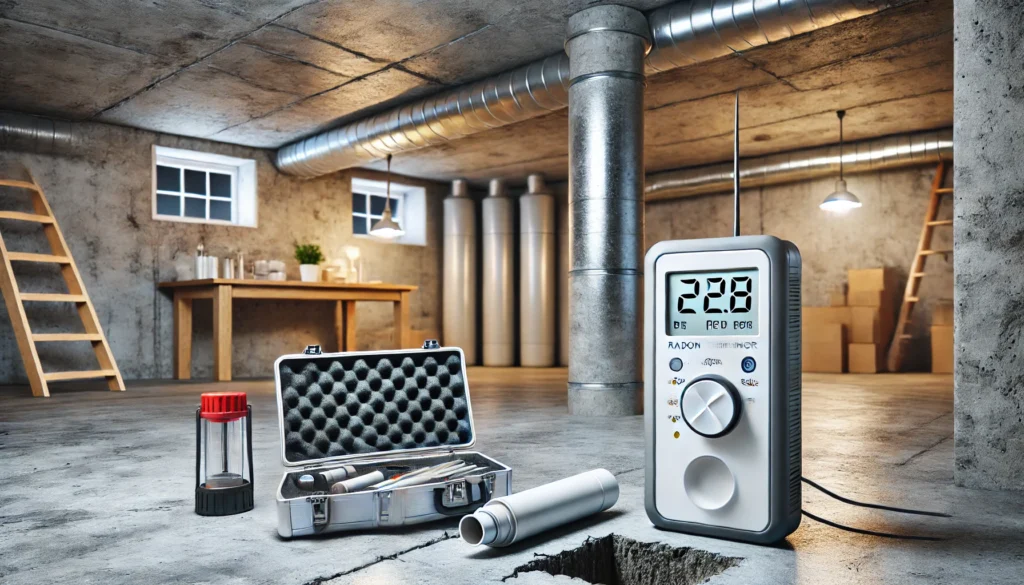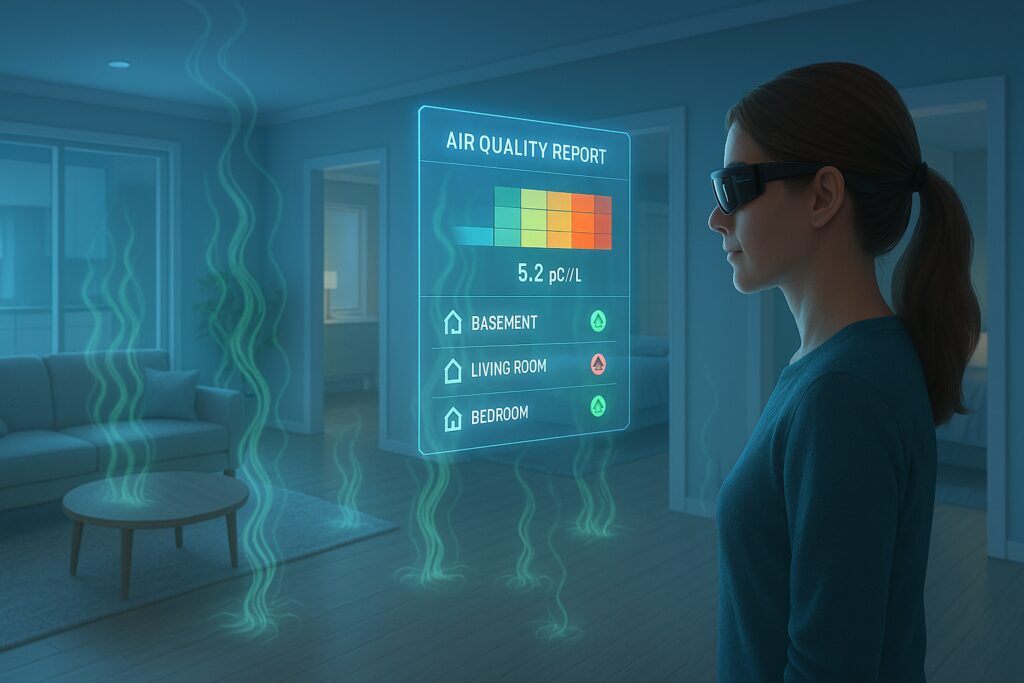
Hardware stores and home improvement retailers carry radon test kits priced between $10 and $30. Online marketplaces stock digital radon monitors with real-time readings. On the surface, these products seem like an efficient way to check for a problem that has no visible symptoms. But the limitations of low-cost radon tests are significant, and relying on a result that does not accurately reflect your home’s actual conditions carries real consequences.
This is not an argument against testing. Quite the opposite: testing is essential. The concern is with test results that create false reassurance when the measurement method cannot reliably detect a genuine problem.
What Cheap Radon Tests Actually Measure
Most budget radon tests fall into two categories. The first is the short-term charcoal canister kit: a passive device placed in the home for two to seven days, then mailed to a lab for analysis. The second is the low-cost digital radon monitor, which provides continuous readings on a display screen but may lack the calibration standards that professional-grade equipment meets.
Both types can serve a purpose in the right context. The problem is not the technology itself — it is the way these tests are commonly deployed and interpreted. Most homeowners who purchase a kit follow the general instructions, place the device in a basement or lower level, run the test for the minimum required time, and accept the result at face value. That approach misses several critical variables.
Why a Single Short-Term Snapshot Can Mislead
Radon levels in any given home are not static. They shift based on season, outdoor temperature, barometric pressure, HVAC operation, ventilation habits, and even the time of day. A home that tests at 3.5 pCi/L during a mild spring week with windows occasionally open might register 6.0 pCi/L during winter when closed-building conditions concentrate radon indoors.
The EPA action level of 4.0 pCi/L is based on long-term average exposure. For a short-term test to be relied upon, closed-building conditions must be maintained for at least 12 hours before testing begins and throughout the entire test period. Windows and doors must remain closed except for normal entry and exit. If those conditions are not met precisely, the result will not reflect what your family is actually breathing over months and years of normal occupancy.
The Centers for Disease Control and Prevention notes that radon is the second leading cause of lung cancer in the United States, responsible for approximately 21,000 deaths annually. At that scale of consequence, a measurement that reads 30% lower than the true average due to seasonal timing or imperfect conditions can lead a homeowner to conclude that no action is needed when the opposite is true.
Placement Errors Change the Number
Radon test instructions typically direct the user to place the device in the lowest livable level of the home, away from drafts. That guidance is correct in principle but leaves significant room for error in practice. Consider how placement location affects the reading:
- Near a window or exterior door: Outdoor air dilutes the radon concentration in the test zone, producing a lower reading than the rest of the space.
- Adjacent to a sump pit or foundation crack: Readings near a radon entry point may spike and then average out, distorting the representative level for the room.
- In a rarely occupied storage area: If the test is placed in a room your family does not use, the result does not represent actual exposure in the spaces where you spend time.
- Near the HVAC return air vent: Airflow from the HVAC system can significantly affect local radon concentrations depending on system direction and pressure.
Certified radon testers are trained to assess airflow patterns, identify entry points, and select placement that produces a result representative of occupant exposure.
Digital Radon Monitors and Calibration
Consumer-grade digital radon monitors have improved in recent years, and some models are reasonably accurate. However, many devices sold at accessible price points do not meet the calibration standards required of equipment used in professional radon measurement. Calibration matters because radon levels must be measured consistently across devices and over time for the numbers to be meaningful.
Professional radon measurement equipment is tested against calibration standards and recalibrated on a schedule. A consumer monitor that was never calibrated to begin with may read consistently but inaccurately, giving you the same wrong number every time without signaling that anything is amiss.
What to Do If You Have Already Used a Kit
A result from a properly placed, short-term charcoal kit under closed-building conditions is useful data. If your result came back below 2.0 pCi/L and conditions were followed correctly, that is a reasonable indication that your level is likely low. If it came back between 2.0 and 4.0 pCi/L, the EPA recommends a follow-up long-term test before making decisions about mitigation. If it came back at or above 4.0 pCi/L, a professional confirmation test under controlled conditions is warranted before any mitigation work begins.
If you are uncertain whether your test was placed correctly or whether conditions were followed, the safest course is to retest using a professional service.
How EnviroPro 360 Tests for Radon in Augusta and the CSRA
EnviroPro 360 provides professional radon testing for homeowners in Augusta, Evans, Martinez, Grovetown, North Augusta, Aiken, and surrounding CSRA communities. Testing follows EPA measurement protocols, with equipment placed to reflect actual occupant exposure. Results are explained in plain language, and if levels are elevated, you will understand exactly what the number means and what steps to consider next.
Contact EnviroPro 360 to schedule a professional radon test and get a result you can rely on.