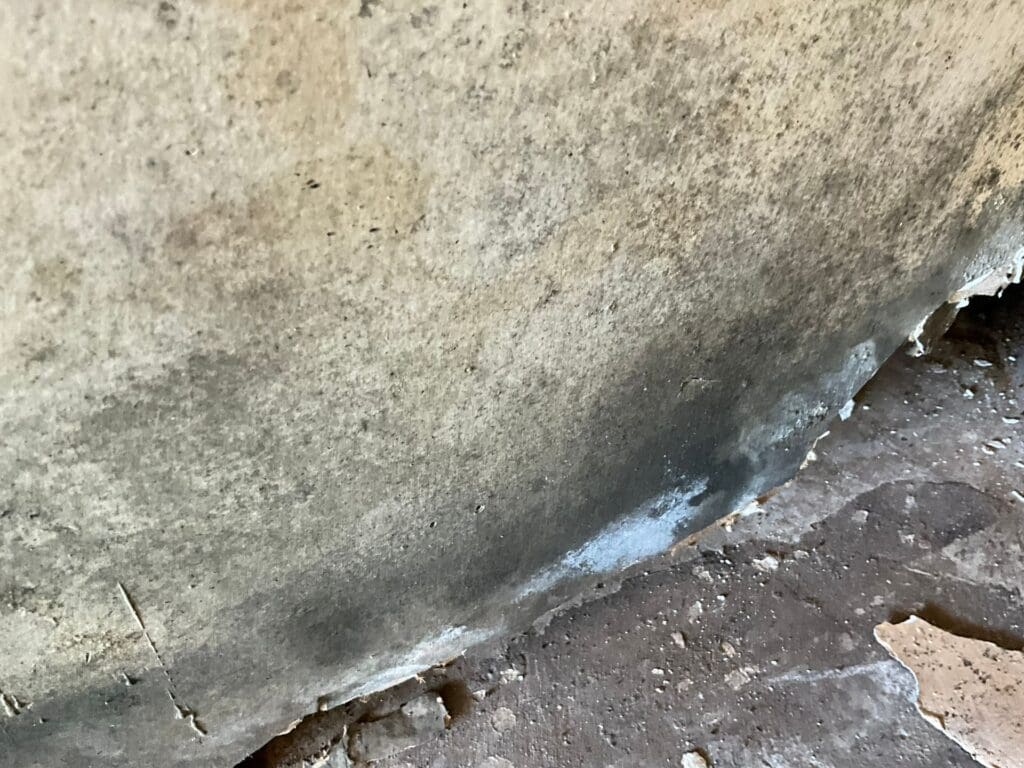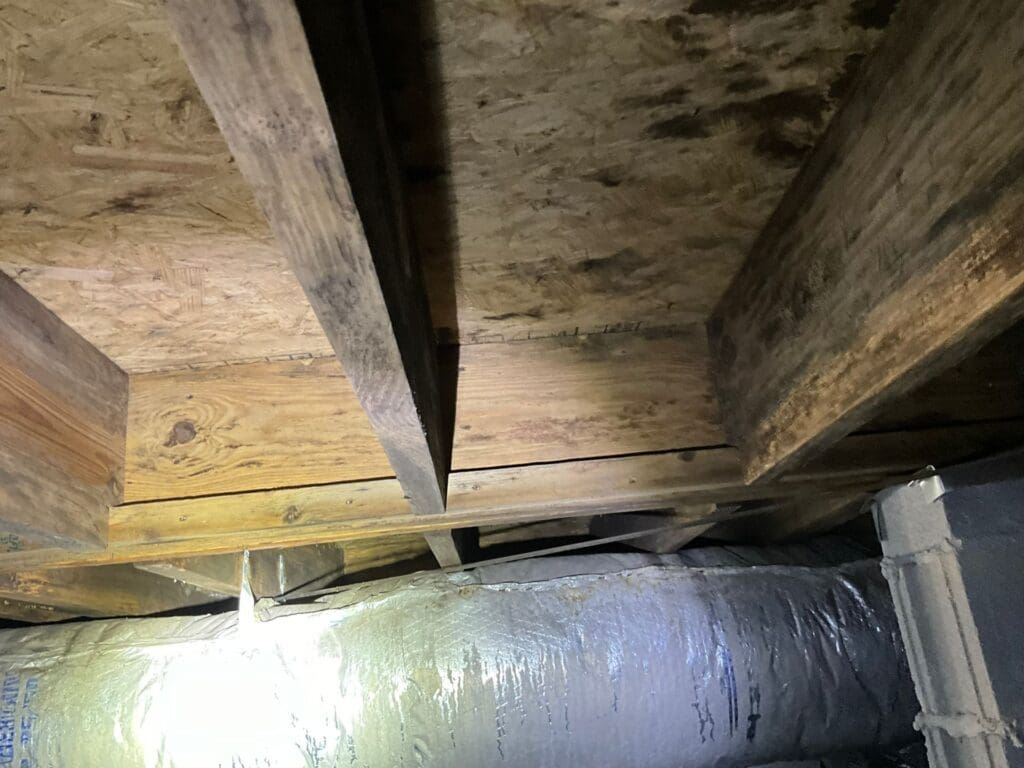
When most people think about mold in their home, they picture obvious water damage: a burst pipe, a flooded basement, a roof leak that soaked through the ceiling. Those are real triggers. But they are not the only ones, and in the CSRA, they are not even the most common.
The more frequent scenario in Augusta and the surrounding area is humidity-driven mold — growth that established itself without any leak, flooding, or visible water event the homeowner ever noticed.
Mold Does Not Need Standing Water
The requirement for mold growth is moisture, not liquid water. Mold spores are present in virtually every indoor environment at low baseline levels. They germinate and begin growing when relative humidity at a surface exceeds approximately 70 percent, or when material moisture content stays elevated for more than 48 hours.
According to the EPA, keeping indoor relative humidity between 30 and 50 percent is the most effective way to prevent mold growth. In Augusta, where outdoor summer humidity regularly exceeds 80 percent, maintaining indoor levels low enough to prevent mold growth requires consistent HVAC operation and adequate ventilation. When those systems are undersized, poorly maintained, or turned off for extended periods, humidity rises and surfaces in low-airflow areas cross the threshold where mold becomes established within days.
Where Humidity-Driven Mold Develops
Without a leak, moisture accumulates through these mechanisms:
- HVAC condensation on duct surfaces: Supply ducts running through unconditioned attics or crawl spaces develop condensation when the temperature difference between the duct exterior and surrounding air is large enough. That moisture wets insulation and duct liner over time. In the CSRA, where HVAC systems run for nine to ten months of the year, this accumulation happens faster than in cooler climates.
- Thermal bridging at exterior walls: Metal framing, concrete block, and wall sections with insulation gaps create cold spots at interior surfaces. When warm humid indoor air contacts those surfaces, condensation forms on the back of the drywall without any water event.
- Cooking and bathing vapor: Kitchens and bathrooms used frequently without adequate exhaust ventilation accumulate substantial moisture. A 10-minute shower in a bathroom without a properly vented exhaust fan can raise local humidity enough to wet grout and wall surfaces repeatedly over days and weeks.
- Crawl space and basement soil vapor: In the CSRA, ground moisture is consistently high. Unencapsulated crawl spaces and unsealed basement slabs allow soil vapor to enter wall and floor assemblies continuously throughout the year, with no rain event required.
- Low-airflow storage spaces: Closets on exterior walls, attics, and garages that see little air circulation trap moisture from the building envelope and accumulate it over weeks and months.
The CDC notes that exposure to damp indoor environments is associated with respiratory health effects including asthma, allergic rhinitis, and upper respiratory infections, regardless of whether the moisture source was a flood or gradual accumulation.
Why It Goes Unnoticed
Humidity-driven mold develops slowly. There is no single event to point to, no obvious damage to repair, and often no smell until the colony is well established. By the time a musty odor becomes noticeable in a closet or basement room, growth on the wall surface behind stored items may have been active for several months.
EnviroPro 360 regularly finds mold colonies in CSRA homes where the owners are certain they have never had a leak. A common pattern: a homeowner notices dark staining on the inside of a bedroom closet wall backing up to the home’s north exterior. No leaks, no moisture events. Moisture meter readings come back elevated. The insulation in that section of wall was poorly installed, leaving stud bays uninsulated against the sheathing. On cold CSRA winter nights, the interior face of the sheathing drops below the dew point for the indoor air, producing consistent condensation on the back of the drywall. The mold had been growing for at least one season before the staining became visible.
The CSRA’s seasonal transitions make this worse. When outdoor temperatures swing 20 to 30 degrees between day and night in March and November, condensation patterns inside the building envelope shift. A space that was dry in January may develop a moisture problem by March as the humidity-temperature balance changes with the season.
What You Can Do
Prevention starts with monitoring:
- Keep a hygrometer in high-risk spaces (closets, basements, attic access areas) and confirm humidity stays below 60 percent
- Confirm bathroom exhaust fans are vented to the exterior, not into the attic
- Inspect HVAC ductwork in unconditioned spaces for condensation or moisture staining after extended humid weather
- Check crawl spaces after rainy periods for elevated humidity or moisture on floor joists
If a specific area of your home consistently feels damp, smells musty, or shows early discoloration despite no known water event, professional mold testing can determine whether growth is present, identify the moisture pathway, and provide the specific data needed to correct it before the problem grows.
How EnviroPro 360 Can Help
EnviroPro 360 serves homeowners across Augusta, Aiken, North Augusta, Columbia, and the surrounding CSRA with certified mold testing, air quality assessment, and moisture investigation. If you suspect humidity-driven mold in your home, contact us to schedule an inspection.