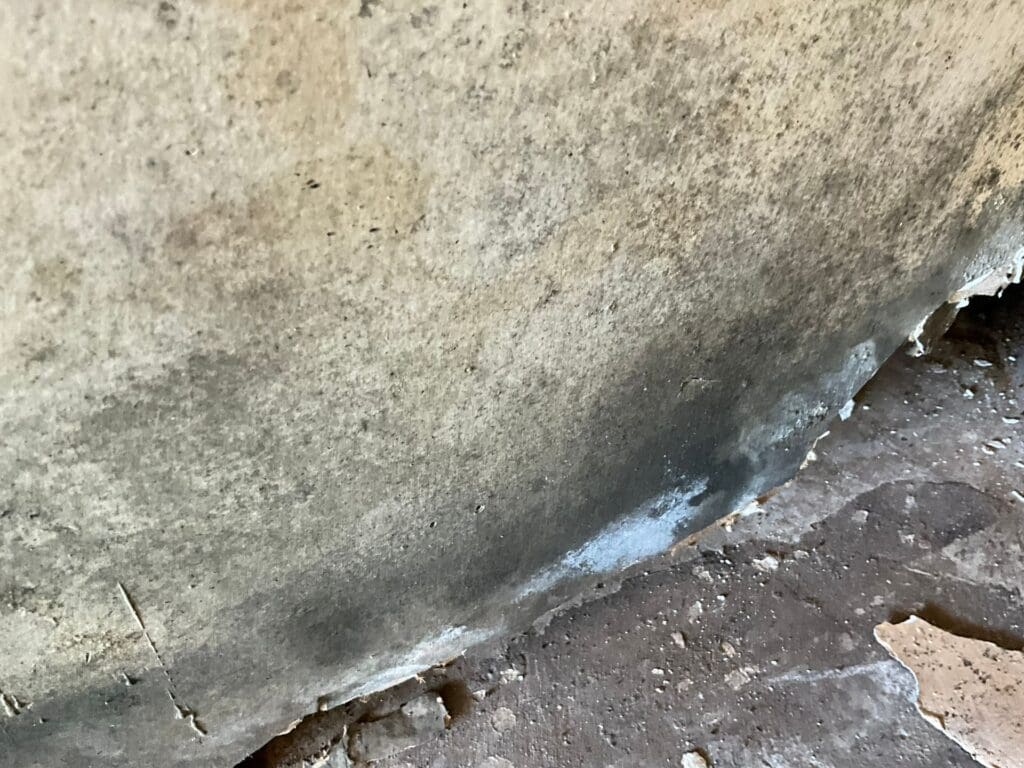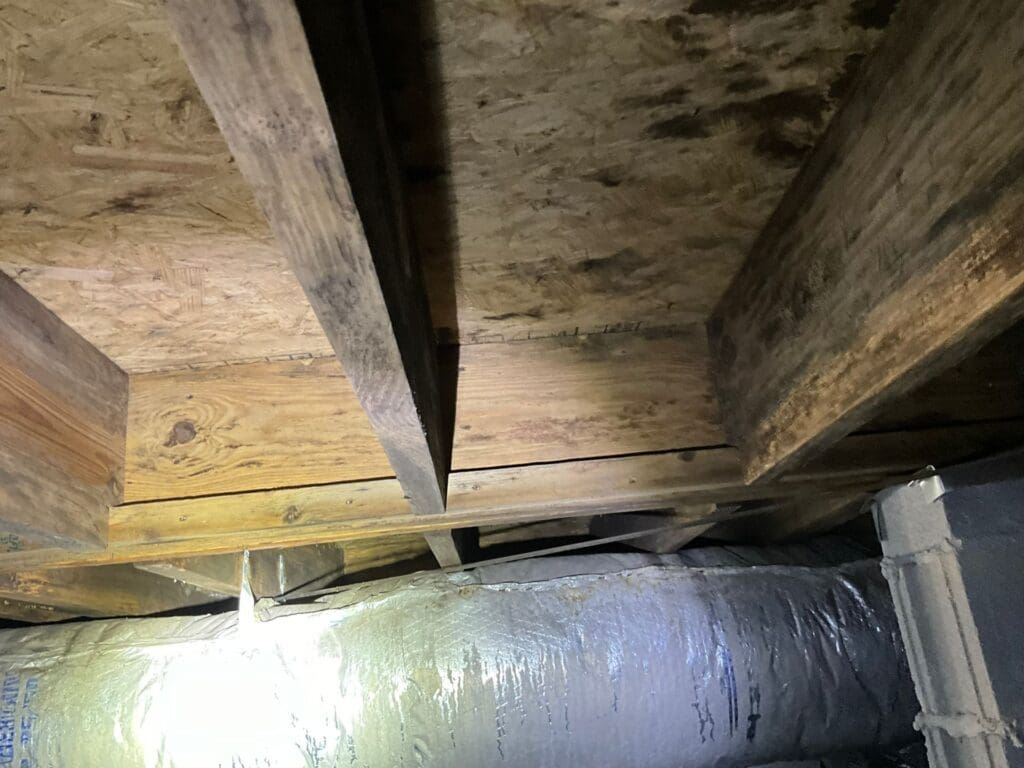
Treating visible mold and watching it return weeks later is one of the most common frustrations homeowners in the Augusta area report. The cycle repeats because surface cleaning addresses the symptom without addressing the cause.
Mold is a biological response to available moisture. When the conditions that produced the original growth remain in place, new growth re-establishes on the same or adjacent surfaces after cleaning. Understanding why recurrence happens is the first step toward actually stopping it.
Why Surface Cleaning Produces Temporary Results
Household bleach and antimicrobial sprays remove visible mold from non-porous surfaces such as glazed tile, sealed concrete, and painted metal. They do not penetrate porous materials like drywall paper, wood framing, insulation, or grout. On porous materials, the cleaning solution dilutes and evaporates before reaching the root-like hyphae that have colonized the substrate. The visible surface discoloration is removed, but the colony remains viable inside the material and resumes growth once adequate moisture returns.
According to the EPA, porous mold-contaminated building materials such as drywall, ceiling tiles, and insulation generally need to be removed and replaced rather than cleaned in place. Surface treatment alone is not a durable solution on these materials, and it is the reason cleaning-only approaches almost always result in recurrence.
The Four Most Common Root Causes in CSRA Homes
1. An Unidentified or Unrepaired Moisture Source
The single most common driver of recurring mold is a moisture source that was never fully identified. Slow plumbing leaks inside wall cavities, failed caulk or grout lines in showers, HVAC condensate pans that overflow intermittently, and roof leaks that activate only during sustained rain events all provide episodic moisture that re-wets building materials after they appear to have dried between events.
If the same location produces mold repeatedly in your home, a concealed or intermittent moisture source is the most likely explanation. The moisture pathway must be identified and repaired before any remediation effort will produce lasting results.
2. Crawl Space Moisture Migration
In CSRA homes with vented or unencapsulated crawl spaces, warm outdoor air enters the crawl space and deposits moisture on the cooler wood joists and subfloor assembly above. The stack effect then draws crawl space air upward through floor penetrations, utility chases, and wall cavities into the living space. Mold that is cleaned from first-floor baseboards, closet floors, or carpet edges regularly recurs in homes where crawl space humidity is the underlying driver.
This pattern is most pronounced from late spring through early fall in Augusta, when outdoor relative humidity consistently runs above 70 percent. Without crawl space encapsulation or controlled ventilation, the moisture cycle continues regardless of how many times visible surface mold is cleaned above the floor.
3. HVAC System Moisture
Air conditioning systems produce condensate as they remove heat and humidity from indoor air. A drain pan that fills faster than it drains, an evaporator coil with reduced airflow from a dirty filter, or supply ductwork that sweats inside an unconditioned attic or crawl space all introduce moisture into the system. When the HVAC runs, that moisture is distributed into conditioned spaces and deposits on the nearest cool surfaces.
Mold that recurs around ceiling supply registers, along baseboards beneath supply vents, or inside closets near returns often indicates an HVAC moisture problem rather than a surface or material issue. Cleaning the visible mold without inspecting the HVAC system leaves the root cause intact.
4. Incomplete Prior Remediation
Mold remediation that did not include proper containment, removal of affected porous materials, and independent post-remediation clearance testing frequently produces recurrence. Without containment, spores dispersed during cleaning settle on adjacent surfaces. Without material removal, viable hyphae in drywall or insulation resume growth. Without clearance testing, there is no objective verification that spore concentrations returned to acceptable levels after the work was completed.
A job that looks visually complete immediately after cleaning is not the same as a job that has been verified complete through air sampling and moisture measurement.
Health Risks of Chronic Recurring Mold
According to the CDC, mold exposure is associated with nasal irritation, throat irritation, coughing, wheezing, and worsened asthma. When mold recurs repeatedly in the same home, occupants experience ongoing exposure rather than a single incident. For children, the elderly, and individuals with pre-existing respiratory conditions or compromised immune function, chronic low-level mold exposure carries greater cumulative risk than a single acute event.
How Independent Testing Breaks the Cycle
Breaking the recurrence cycle requires two things: identifying the actual moisture source driving the growth, and verifying through post-remediation testing that the problem was fully resolved. Surface inspection alone frequently misses the moisture source. Air sampling and moisture metering provide objective data that points to the mechanism behind the recurrence.
EnviroPro 360 conducts pre-remediation mold assessments throughout the Augusta and CSRA region that document existing conditions, identify probable moisture pathways using thermal imaging and moisture metering, and provide the information a licensed remediation contractor needs to address the problem at its source. After remediation is complete, we conduct independent clearance testing to verify that spore concentrations have returned to acceptable levels and that the moisture source has been resolved.
Because EnviroPro 360 is an independent testing company that does not perform remediation, our clearance results are objective. There is no financial interest in passing a remediation job that was not completed correctly.
If mold keeps returning in the same location in your home, the moisture source has not been fully identified or resolved. Contact EnviroPro 360 to schedule a certified mold assessment for your Augusta or CSRA home.