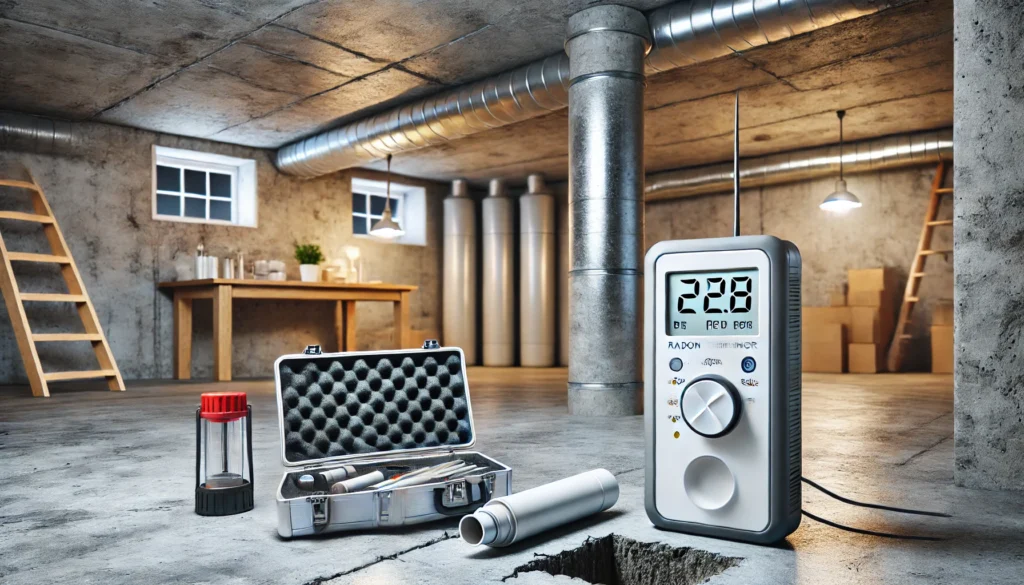
Why radon matters more in winter
Radon is a colorless, odorless radioactive gas that seeps from soil into buildings. The EPA and the Surgeon General estimate radon contributes to about 21,000 lung cancer deaths in the U.S. each year, which makes it a major indoor air risk for both smokers and non-smokers. The EPA’s recommended action level for indoor radon is 4.0 pCi/L. If results are at or above that number, you should take steps to reduce it.
Cold weather creates the perfect setup for higher readings. We spend more time with windows closed, ventilation drops, and heating systems can increase pressure differences that pull soil gas indoors. The EPA’s testing protocol for short-term tests uses closed-house conditions for exactly this reason, since closed conditions better capture potential winter spikes.
The basics: how and where to test
You have two main approaches:
- Short-term test: Typically 2–90 days. Helpful when you need quick winter results, such as before a renovation or real estate deadline.
- Long-term test: More than 90 days. Best for understanding the true year-round average after an initial screening.
Placement matters. The EPA-aligned National Radon Program Services recommends testing on the lowest level suitable for occupancy (finished basement or first floor) in a regularly used room. Avoid kitchens, bathrooms, and laundry rooms that swing in humidity.
Closed-house conditions for short-term tests mean keeping windows and exterior doors closed as much as possible for at least 12 hours before starting and during the test, while operating heating systems normally. Follow the device’s instructions for exact timing.
Understanding results and next steps
- Below 4.0 pCi/L: Consider retesting in the future, especially if you change how you use lower levels of the home.
- At or above 4.0 pCi/L: EPA recommends taking action. Many homes are fixed with sub-slab depressurization systems installed by qualified mitigators, followed by a post-mitigation test to confirm performance.
If a short-term winter test is elevated, a follow-up long-term test can confirm the average, or you can do a second short-term test if decisions are time-sensitive.
Georgia and South Carolina resources you can use
Georgia: The Georgia Department of Public Health Radon Program explains testing options and reiterates that 4.0 pCi/L or higher should be fixed. Many Georgia libraries also participate in programs that loan electronic radon monitors to the public.
South Carolina: SC DHEC offers free short-term radon test kits for in-state residences while supplies last. These are ideal for winter screening under closed-house conditions.
Nationwide tip: EPA notes that free or low-cost kits may also be available through local and state programs.
Common winter testing mistakes to avoid
- Opening windows during the test
Even brief ventilation can dilute indoor radon and skew results. Keep doors and windows closed as instructed for short-term tests. - Testing in the wrong room
Choose a frequently used room on the lowest livable level, not a bathroom or kitchen. - Stopping after a single reading
Use a second short-term test if you need a quick confirmation, or run a long-term follow-up to understand the average.
Why professional testing helps in winter
DIY kits are effective when used correctly, but professional testing can be faster and simpler. Certified testers follow EPA and ANSI/AARST standards, control for seasonal factors, and deliver clear, defensible reports. These standards cover single-family homes, multifamily buildings, schools, and other large structures.
For properties with complex layouts, finished and unfinished spaces, or known foundation cracks, professional testing ensures proper device placement and documentation that insurers, buyers, or facility managers recognize.
EnviroPro 360: Winter radon testing across Georgia & South Carolina
At EnviroPro 360, we provide:
- Short-term and long-term radon testing with calibrated devices
- Clear, lab-backed reports and guidance on mitigation steps
- Testing for homes, multifamily, schools, and commercial spaces aligned with EPA and ANSI/AARST practices
We serve the CSRA and surrounding regions across Georgia and South Carolina, and we coordinate with trusted mitigation partners when results require action. Your safety and documentation come first.
Final Thoughts
If you have never tested for radon, or it has been a few years, winter is the perfect time to check. Contact EnviroPro 360 to schedule professional radon testing and get clear answers you can act on.
Safe Environment Begins with Us.