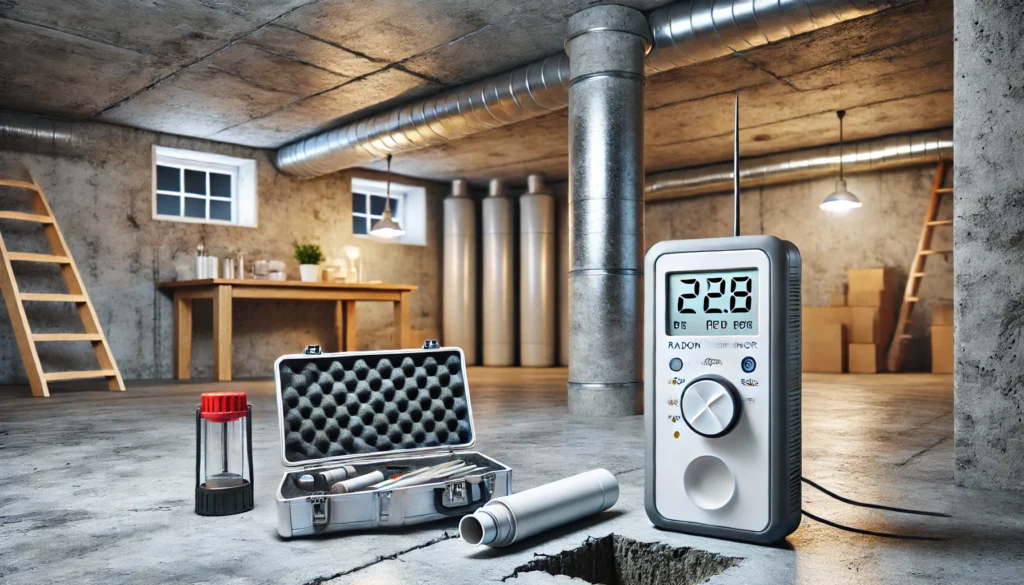
If you’re looking into radon testing in Augusta, GA, you probably have a few questions. Is a radon test required by law? Who is allowed to do one? Does a test have to be done a certain way to count? And what happens if the number comes back high?
The short answer: radon testing is not required for most homeowners in Augusta. But the details matter, especially when you buy or sell a home. This guide covers the rules in Georgia and South Carolina. It explains what radon certifications mean and how home sales handle radon here. It also shows how to choose a tester you can trust.
What is radon, and why test for it?
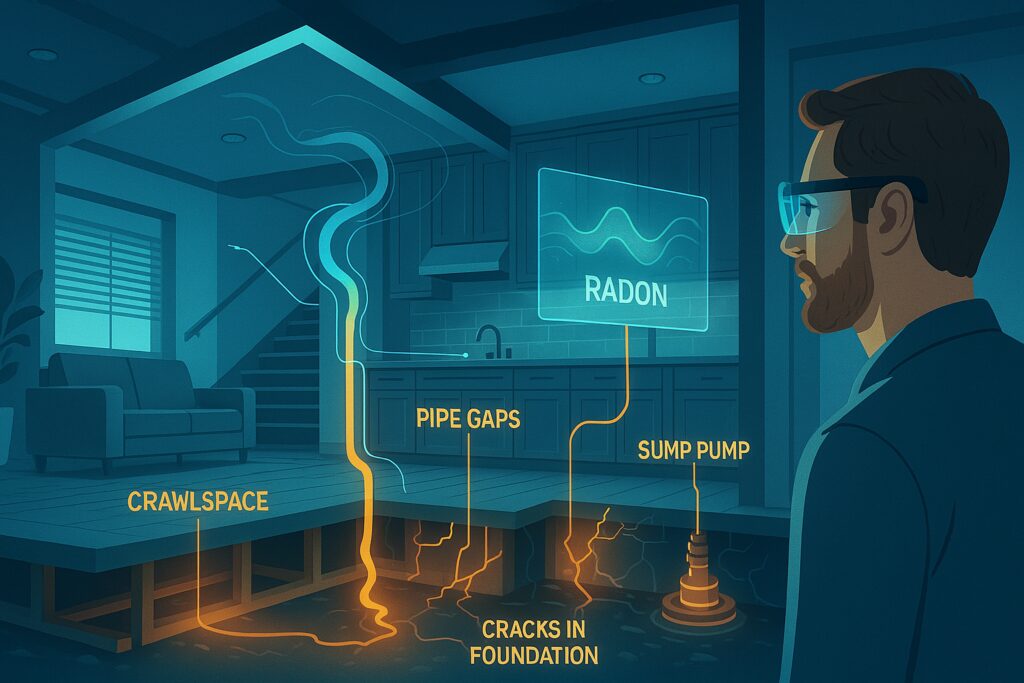
Radon is a radioactive gas that comes from the soil. It has no color, smell or taste. It seeps into homes through foundation cracks, gaps around pipes and crawl spaces. Testing is the only way to know your level.
The EPA says radon is the second leading cause of lung cancer in the U.S. It estimates about 21,000 deaths a year. The CDC gives radon the same rank.
Radon is measured in pCi/L (picocuries per liter). This unit tells you how much radioactivity is in a liter of air. The EPA action level is 4.0 pCi/L. At or above that level, the EPA says to fix your home. Outdoor air averages about 0.4 pCi/L, according to the EPA’s Citizen’s Guide.
The EPA recommends testing all homes below the third floor. In the CSRA, levels can differ a lot between houses on the same street. Soil and foundation type both play a part. A neighbor’s low result says nothing about your home.
Is radon testing required in Georgia?
No. Georgia has no state law that makes homeowners test for radon. There’s no rule that you test before you sell, buy or move in. We don’t know of any Augusta-Richmond County rule that adds one.
South Carolina is similar. It has no law that requires a radon test before a home sale. That covers North Augusta, Aiken and the rest of the SC side of the CSRA.
So in most Augusta-area home sales, no one has to test. A test happens when the buyer asks for one or the purchase contract calls for it.
What sellers must disclose
Not having to test is not the same as being free to hide a result. Georgia sellers can’t hide known defects that a buyer couldn’t find on their own. Many Georgia sales also use a seller’s disclosure form with questions about environmental concerns. If you tested and got a high result, plan to share it. The key word is “known.” You don’t have to test to avoid a disclosure. But once you know, you can’t set it aside.
South Carolina is more direct. Its disclosure law lists radon gas as one of the conditions the seller’s disclosure statement must cover. A seller can answer “no representation” if they truly don’t know. But they still must share what they do know.
This is general information, not legal advice. Ask your real estate agent or attorney about your sale.
Do radon testers need a license in Georgia or South Carolina?
Neither state issues its own radon license. That surprises a lot of people. It means anyone can sell you a “radon test.” Quality varies.
Instead, both states point you to national certification. The EPA and state radon programs direct people to two national programs:
- NRPP (National Radon Proficiency Program). This program certifies radon measurement and mitigation professionals.
- NRSB (National Radon Safety Board). This is the other national program. It also certifies measurement and mitigation professionals.
Both programs require approved training and a passing exam. Both also require continuing education to stay certified. Certified testers must use devices that are checked for accuracy. They also follow a quality control plan.
Why certification matters
You can’t see, smell or double-check radon. You have to trust the number. A test that’s set up wrong can give a number that is too low.
For example, a device near a window, vent or outside wall can read low. So can a device left in a room no one uses. A certified tester knows these traps. They also know when something went wrong during a test. When that happens, they can tell you whether the result still counts.
What a proper radon test looks like
A valid home radon test follows the national ANSI/AARST standards. ANSI is the American National Standards Institute. AARST is the American Association of Radon Scientists and Technologists. The EPA lists these standards on its site. Here’s what a good test includes.
Closed-house conditions
Closed-house conditions mean windows and outside doors stay shut, except for normal coming and going. They start at least 12 hours before the test and last the whole test. A test done with windows open may read too low. A buyer’s agent may not accept it.
The right spot
The device goes on the lowest level you live in or could live in. It should sit away from drafts, windows, outside doors and direct sun. Kitchens, bathrooms and laundry rooms are poor choices.
The right length
A short-term test runs at least 48 hours. A long-term test runs more than 90 days. Home sales use short-term tests because of time limits. A long-term test gives a better picture of your yearly average. Learn more about short-term vs. long-term radon tests.
Lab analysis or a continuous monitor
Charcoal test kits go to an accredited lab. A continuous radon monitor records the level every hour. Its report shows the hourly ups and downs and the average. Hourly data can also show if someone opened a window or moved the device.
Radon testing in Augusta real estate deals
Even without a law, more Augusta-area buyers now ask for a radon test. It usually happens during the inspection period, alongside the home inspection. The test must run under closed-house conditions to count.
Buyers often ask that a certified professional do the test. That gives both sides a result they can stand behind. If you want the full picture, read our guide to radon testing during a home sale.
What if the test comes back high?
If a test reads 4.0 pCi/L or higher, a few things can happen:
- The buyer may ask the seller to install a mitigation system before closing.
- The two sides may agree to lower the price or give a credit.
- The buyer may walk away.
Mitigation means lowering the radon level in a building. A certified radon mitigation contractor does this work.
Why sellers should consider testing before listing
Sellers who test first have more control. If the number is high, you can fix it on your own schedule. Then you retest and show buyers the new result. That’s a stronger spot than getting surprised during the buyer’s inspection window. See do I need radon testing before selling my home.
Retesting after mitigation
A mitigation system needs a follow-up test. That’s the only way to know it works. A fan that isn’t venting well can leave levels high. So can a second entry point that was missed.
The EPA says to retest after the system goes in. Ask for a certified tester for this test too. The written result is a record you can keep. It helps with insurance, refinancing and your next sale.
How to choose a radon tester in Augusta
Use this short checklist before you book:
- Ask for proof of NRPP or NRSB certification. Look up the person’s name on the program’s website. Make sure the certification is current.
- Ask how they test. Listen for closed-house conditions, a 48-hour minimum and placement on the lowest lived-in level.
- Ask what device they use. A continuous monitor gives hourly data. A lab-analyzed kit should go to an accredited lab.
- Ask what the report includes. It should show the average, the test dates and where the device sat.
- Watch for conflicts of interest. Some companies test and also sell mitigation. A tester who doesn’t install systems has no reason to push one.
How EnviroPro 360 handles radon testing
EnviroPro 360 is an independent testing company based in Augusta. Our testers are NRPP certified. We follow ANSI testing standards for how a test is set up and run. Our tests run at least 48 hours. Most results are ready 24 to 48 hours after the test ends.
We test only. We don’t install radon mitigation systems, so our results have no sales angle. We explain your number in plain language. If you need mitigation, we tell you what to ask a contractor. After a system goes in, we can do the post-mitigation retest and give you a written record.
We serve Augusta, Evans, Martinez, Grovetown, North Augusta, Aiken and the wider CSRA. For more on local levels, read radon testing in Augusta, GA: what the EPA action level means.
Your next steps
- If you’re buying or selling, add a radon test to your inspection plans now.
- Choose a tester with current NRPP or NRSB certification, and ask how they run the test.
- If your result is 4.0 pCi/L or higher, confirm it, talk to a certified mitigation contractor, and retest after the work.
EnviroPro 360 provides radon testing for homes and businesses in Augusta, Aiken, Columbia and nearby towns. If you have questions about radon testing rules in Augusta or want to talk through your situation, the EnviroPro 360 team is happy to help. Reach out any time.