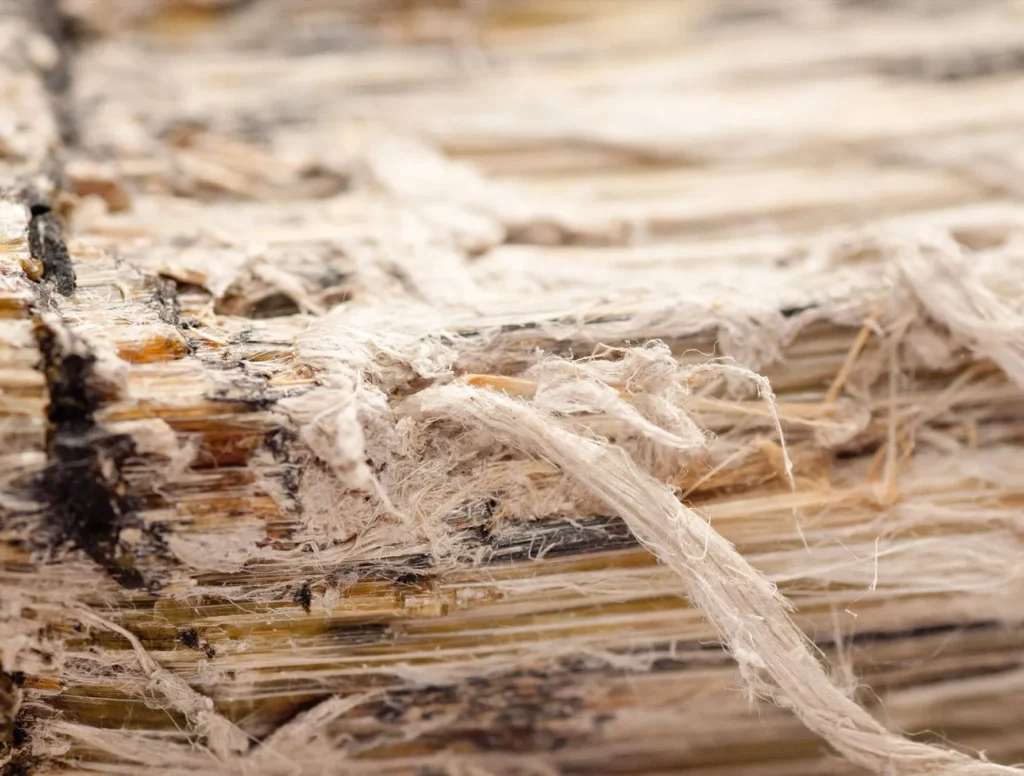
A contractor in South Carolina pulls down a popcorn ceiling in a 1970s ranch home. No testing beforehand. The dust settles on every surface in the house, gets tracked through the HVAC system, and embeds in carpet and furniture. Three days later, the homeowner finds out the ceiling contained chrysotile asbestos. The entire home now needs professional decontamination. The renovation budget tripled, the contractor is facing an EPA enforcement action, and the client relationship is finished.
This happens more often than most people in the building trades would admit. And it is almost always preventable with testing that takes less than a week and costs a fraction of what cleanup and enforcement will.
This post is written specifically for contractors — not as a regulatory overview, but as a practical guide to protecting your business, your license, and your workers. For the full regulatory framework covering NESHAP, OSHA, and state requirements, see our post on asbestos regulations for Georgia and South Carolina.
The contractor’s liability exposure is different from the building owner’s
Building owners have regulatory obligations around asbestos — survey requirements, notification duties, disclosure to contractors. But contractors carry a separate and in some ways more acute liability when asbestos is disturbed without proper procedures.
EPA enforcement: Under the Clean Air Act, EPA NESHAP penalties can reach $70,117 per day per violation. EPA enforcement actions against contractors are not rare — they result from complaints by neighbors, workers, and building occupants, and from referrals by state agencies. A contractor who disturbs asbestos on a residential project without testing cannot use “I didn’t know it was there” as a defense. The obligation to test before disturbing suspect materials is on the contractor, not just the owner.
OSHA citations: If you have employees, you have OSHA obligations. Allowing workers to disturb asbestos-containing materials without the required training, PPE, and exposure controls can result in serious violation citations of up to $16,131 per violation and willful violation citations of up to $161,323. Willful citations become part of your public OSHA inspection record — visible to future clients, insurers, and public contracting agencies.
Personal injury claims: Asbestos-related diseases have latency periods of 20 to 50 years. A worker or homeowner occupant who was exposed during a renovation you performed in 2025 may not develop symptoms until the 2040s or 2050s. Depending on how well records were kept and what state statutes of limitations apply at that time, you — or your estate — could still be named in litigation. The paper trail from a pre-renovation asbestos survey is one of the few things that can definitively establish what was present and what procedures were followed.
License implications: Georgia EPD and South Carolina DHEC both have enforcement authority over contractors working on projects that disturb asbestos-containing materials. A contractor who performs regulated asbestos work without accreditation, or who fails to notify the appropriate agency before regulated work, can face license suspension or revocation in addition to financial penalties.
Insurance and asbestos: what your general liability policy likely does not cover
Most standard commercial general liability policies contain a pollution exclusion that has been interpreted by courts to exclude asbestos-related claims. This means that if you disturb asbestos on a project and the homeowner files a property damage or personal injury claim, your GL insurer may deny coverage on the grounds that asbestos is a pollutant under the policy.
Contractor’s pollution liability (CPL) insurance is the product designed to fill this gap. CPL policies specifically cover pollution-related claims including asbestos disturbance, cleanup costs, and bodily injury claims arising from contractor operations. If you work regularly in pre-1980 buildings, CPL coverage is worth evaluating with your broker.
Regardless of coverage, the most reliable protection against an insurance problem is documentation that testing was completed before work began and that procedures were followed appropriately. An insurer who sees a clean pre-renovation survey report and a professional abatement record has far less basis to deny a claim than one looking at a project where no testing was done.
Pricing testing into your bids from the start
The most common reason contractors skip pre-renovation testing is not ignorance — it is competitive pressure. Testing adds cost and time, and a contractor who includes it in their bid may lose the job to one who doesn’t.
The solution is to make testing a standard line item in every bid for pre-1980 buildings, with a brief explanation of what it covers and why it is included. Most clients — once they understand that testing protects them from liability and their home from contamination — accept it without significant objection. The ones who push back hardest are usually the ones most grateful later when testing reveals asbestos they did not know was there.
Typical costs for residential asbestos testing in Georgia and South Carolina range from $300 to $800 depending on the number of suspect materials and the size of the property. Standard laboratory turnaround is 3 to 7 business days. Rush processing is available in 24 to 48 hours for tight schedules. These figures are straightforward to build into a project estimate — and straightforward to explain to a client.
Language to include in your bid or proposal:
Pre-renovation asbestos testing: $[X]. Required before work begins on any pre-1980 structure to identify asbestos-containing materials that may be present in areas of disturbance. Results within [X] business days. Testing performed by a state-licensed inspector; lab analysis included. Any materials confirmed to contain asbestos will require licensed abatement before renovation proceeds.
Putting it in writing sets expectations and creates a record that testing was offered, accepted or refused, and that the client understood the process.
What to do when a client refuses testing
Some clients will decline pre-renovation testing — usually on cost grounds, occasionally because a previous contractor told them it wasn’t necessary. How you handle this refusal matters both practically and legally.
First, document the refusal in writing. Send a brief email or include a clause in your contract noting that the client was informed of the testing recommendation, understands the regulatory requirements, and has declined. Keep a copy. This does not fully transfer liability — OSHA obligations run to you as an employer regardless of what your client agreed to — but it establishes the record of the conversation.
Second, consider whether you want the job. For projects in pre-1980 buildings where the scope of work will disturb materials commonly associated with asbestos — ceiling surfaces, floor tile, pipe insulation — the risk of discovering asbestos mid-project without having tested is significant. Some contractors make pre-renovation testing a non-negotiable condition for any work in buildings of that era. That is a defensible business decision.
Third, if a client refuses testing but you proceed, you must still comply with OSHA’s presumed ACM requirements. Under OSHA 1926.1101, pre-1981 thermal system insulation and surfacing material must be treated as asbestos-containing unless laboratory analysis demonstrates otherwise. A client’s refusal to authorize testing does not remove your OSHA obligations toward your own workers.
Building a testing clause into your standard contracts
The cleanest way to manage pre-renovation testing consistently is to include it in your standard contract language. A well-drafted clause addresses three things: the requirement to test before disturbing suspect materials, the process for handling positive results, and the allocation of responsibility if the client declines testing or if asbestos is found after work has begun.
A basic clause might read:
For projects involving structures built before 1990, Contractor requires pre-renovation testing of suspect materials before work begins. If testing reveals asbestos-containing materials in areas to be disturbed, Contractor will provide the Client with a referral to a licensed abatement contractor. Renovation work will not proceed in affected areas until abatement is complete and clearance air sampling confirms the area is safe. If Client declines pre-renovation testing, Client accepts responsibility for any regulatory, remediation, or liability costs arising from undisclosed asbestos-containing materials discovered during renovation.
Have your attorney review any contract language before using it — this is illustrative, not legal advice. The key point is that having nothing in writing leaves you with no record of what was communicated and agreed.
How to vet and work with abatement contractors
When testing reveals asbestos that must be removed before your renovation can proceed, how you select and manage the abatement contractor affects both the project timeline and your own liability exposure.
Verify credentials before engaging. In Georgia, abatement contractors must hold current Georgia EPD accreditation. In South Carolina, DHEC licensure is required. Both states maintain public databases of accredited and licensed firms — check them before signing a subcontract, not after mobilization. Ask for the specific accreditation numbers for the supervisor who will be on-site and confirm they are current.
Get the scope in writing. The abatement scope should specify exactly which materials will be removed, the containment approach, how clearance will be confirmed, and what documentation you will receive at close-out. You need three things from every abatement project: the pre-abatement survey or scope documentation, post-abatement clearance air sampling results, and waste disposal manifests. These go in your project file and stay there.
Coordinate the sequencing. Your renovation crew should not be on-site during abatement, and no other trades should re-enter the abatement area until you have written clearance results in hand. Do not rely on the abatement contractor’s verbal confirmation that the space is clear. Written clearance from an independent air sampling professional is the standard — and it is what you will need if the project is ever scrutinized.
Do not allow abatement work to proceed without permits and notifications. Georgia EPD and South Carolina DHEC require advance notification for regulated abatement projects. If your abatement subcontractor has not filed the required notification, your project is not in compliance. Ask for confirmation of notification before work begins.
Documentation: what to keep and why it matters later
The value of documentation in asbestos management is not apparent at the time — it becomes apparent years or decades later when someone files a claim, a regulator asks questions, or a property is sold and the buyer’s inspector wants to know what was done.
For every project in a pre-1980 building, keep the following in your permanent project file:
- The pre-renovation asbestos survey report with laboratory results
- Any correspondence with the client about testing — including refusals
- If asbestos was found and abated: the abatement scope, clearance air sampling results, and waste disposal manifests
- If asbestos was found but not disturbed: documentation of the location and condition of in-place materials and the client’s acknowledgment
- Any stop-work events and how they were resolved
OSHA requires exposure monitoring records to be retained for 30 years. Practically speaking, keeping the full project file for the life of your business is the safest approach. Digital storage makes this straightforward and the cost is negligible relative to what these records can protect against.
Augusta and CSRA contractors: what the local building stock means for your work
The Augusta area and the surrounding Central Savannah River Area have a substantial inventory of homes and commercial buildings constructed during the peak asbestos-use decades. Post-World War II development through the late 1970s produced large numbers of residential and commercial structures where popcorn ceilings, 9×9 vinyl floor tiles with black mastic, pipe insulation in crawl spaces, and asbestos cement siding are common findings.
For contractors working regularly in established Augusta neighborhoods — Summerville, Olde Town, Walton Way, and surrounding areas — or on commercial renovation projects in downtown Augusta’s older building stock, pre-renovation testing should be a standard operating procedure rather than a project-by-project decision. The volume of work in pre-1980 structures in this region makes a consistent policy the practical choice.
FAQ
I’m doing a small bathroom tile replacement in a 1975 home. Do I really need to test?
If the existing tile is 9-inch by 9-inch vinyl or asphalt composition tile — common in homes of that era — it has a meaningful probability of containing asbestos, and the black mastic beneath it has an even higher probability. Removing tile without testing first is a regulatory risk and an exposure risk for your workers. A bulk sample of the tile and mastic is a straightforward step that takes one site visit and a few days of lab turnaround.
I’m a sole proprietor with no employees. Do OSHA’s asbestos standards apply to me?
OSHA generally does not cover self-employed individuals with no employees. However, EPA NESHAP applies to owners and operators regardless of employment status, and state agency requirements in Georgia and South Carolina are not limited to employers. More practically, if you ever bring in a helper — even occasionally — OSHA coverage may apply. And your personal liability exposure for disturbing asbestos without proper procedures does not disappear because you have no employees.
The homeowner tells me their house was tested five years ago and cleared. Do I need to test again?
Ask for the written report. A five-year-old survey is generally still valid for materials that have not been disturbed since the survey was completed. Review the report to confirm it covers the specific materials you will be disturbing — a prior survey of the attic insulation does not cover the floor tile you’re pulling up in the kitchen. If the prior survey does not cover the materials in your scope of work, those materials need to be tested before you proceed.
We found suspected asbestos mid-project after the scope was already underway. What is our exposure?
Stop work immediately in the affected area and document the discovery with photos and written notes. Notify the building owner. Do not attempt to clean up or contain debris without appropriate PPE and training. Depending on what was disturbed and how extensively, you may have an obligation to notify Georgia EPD or South Carolina DHEC. Engage a licensed inspector to assess the situation and advise on remediation. Your liability exposure at this point depends significantly on whether you had tested beforehand and followed appropriate procedures up to the point of discovery.
Can I do the asbestos testing myself to save money?
Technically, homeowners can collect samples from their own homes for laboratory analysis. Contractors collecting samples from a client’s property are performing an inspection service that requires state accreditation in Georgia and South Carolina. Beyond the regulatory issue, improperly collected samples — without appropriate PPE and containment — can create the exposure you are trying to avoid. The cost difference between DIY and a licensed inspector is typically small relative to the project total, and only a licensed inspector’s results satisfy regulatory requirements.
EnviroPro 360: Fast turnaround asbestos testing for renovation contractors
EnviroPro 360 works directly with renovation contractors across Augusta, GA and the Central Savannah River Area, providing pre-renovation asbestos testing with fast turnaround and contractor-ready lab reports. Our state-licensed inspectors understand project schedules and can typically complete site visits within 1 to 2 business days of scheduling.
- Pre-renovation bulk sampling for residential and commercial projects
- Accredited laboratory analysis with standard 3–7 day turnaround; rush available
- Written reports with material-by-material results formatted for contractor project files
- Georgia EPD and South Carolina DHEC accredited inspectors
- Coordination with licensed abatement contractors when results require it
- Add-on testing: mold, radon, lead paint, and Legionella
If you have an upcoming renovation in the CSRA and need pre-construction testing scheduled around your project timeline, contact EnviroPro 360 and we will get an inspector to your site quickly.