Radon is seeping into homes across Georgia right now. The residents of those homes have no idea. They cannot see it, smell it, or detect it without a test. Yet according to the EPA, radon is the leading cause of lung cancer among non-smokers in the United States, responsible for an estimated 21,000 deaths per year. Understanding what radon is, how it behaves in Georgia homes, and when to test is the starting point for addressing a risk that affects homes in every region of the state.
What Radon Is and How It Enters Your Home
Radon is a naturally occurring gas produced by the breakdown of uranium in soil and rock. It exists everywhere beneath the surface, but it becomes a health concern when it accumulates inside enclosed spaces. The gas enters through cracks in foundations, gaps around pipes, sump pits, and any point where the building contacts the ground. Once inside, it gets trapped and concentrations build.
The Centers for Disease Control and Prevention notes that the risk of lung cancer from radon can be substantially reduced by testing and taking action when levels are elevated. Because radon has no color, odor, or taste, testing is the only way to know whether your home has elevated levels.
How Radon Is Measured
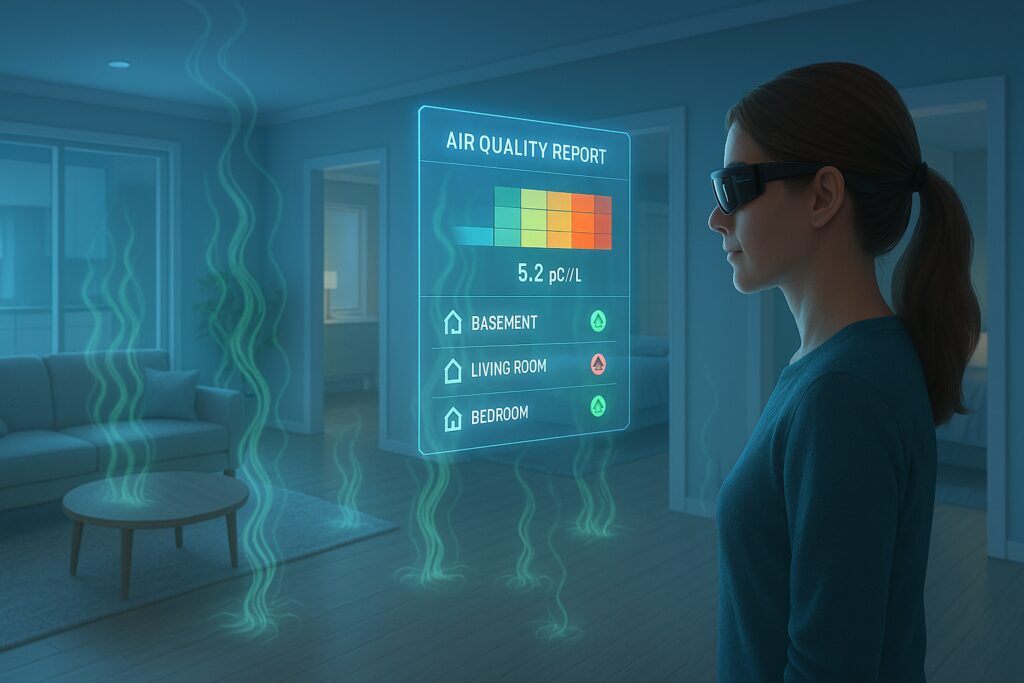
Radon levels are measured in picocuries per liter of air (pCi/L). The outdoor ambient level in the United States averages about 0.4 pCi/L. The EPA has set 4.0 pCi/L as the action level, meaning that if your home tests at or above that concentration, you should take steps to reduce it.
To put that in perspective, the EPA estimates that living in a home with radon at 4.0 pCi/L carries roughly the same lung cancer risk as smoking half a pack of cigarettes per day. At 8.0 pCi/L, the risk is comparable to smoking a full pack daily. These are not alarm tactics — they are the EPA’s own risk models, developed from extensive epidemiological research. The World Health Organization recommends a lower reference level of 2.7 pCi/L, and the EPA acknowledges that no level of radon exposure is without risk. Any reduction in concentration reduces risk.
Georgia’s Radon Landscape
Georgia is divided into three EPA radon zones based on predicted average indoor levels. Zone 1 (highest potential) includes much of north Georgia. Zone 2 (moderate potential) covers the Piedmont region, including parts of the Augusta and CSRA area. Zone 3 (lower potential) covers the coastal plain.
The zone map does not tell the full story. The Georgia Department of Public Health has documented elevated radon levels in every region of the state. A Zone 2 or Zone 3 designation means the average predicted level for a county is lower — it does not mean any specific home in that zone is safe. Soil composition, foundation type, construction methods, and seasonal weather patterns all influence radon entry and accumulation. A home in a Zone 2 county can test well above 4.0 pCi/L.
Homes with basements and those built on slabs with cracks or inadequate sealing tend to have higher levels. Crawl space homes can also accumulate radon, particularly when the crawl space is enclosed and poorly ventilated. In the CSRA — spanning Augusta, Richmond County, Columbia County, and communities such as Evans, Martinez, and Grovetown — foundation types vary widely and so do radon levels.
How Testing Works
Radon testing is non-invasive and straightforward. There are two general approaches.
Short-Term Testing
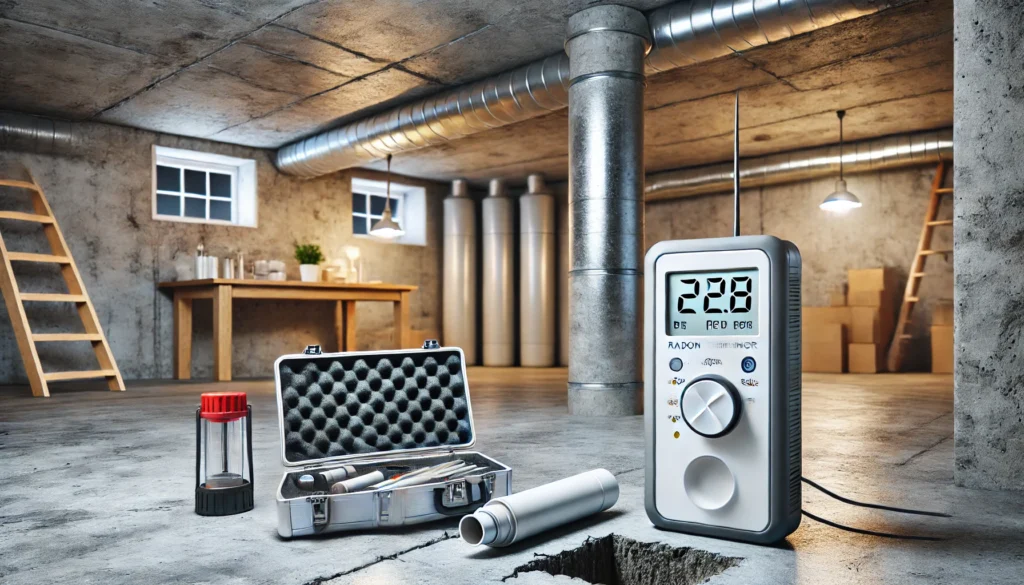
A short-term test typically runs for 48 to 96 hours. A calibrated testing device is placed in the lowest livable level of your home — usually a ground-floor room or finished basement — with doors and windows kept closed throughout the test period. Continuous radon monitors (CRMs) provide hour-by-hour readings and are the most accurate short-term method. Short-term tests give you a snapshot and are useful for initial screening and real estate transactions where time is limited.
Long-Term Testing
Long-term tests run for 90 days or more and provide a more accurate picture of your home’s average annual radon exposure. Because radon levels fluctuate with weather, barometric pressure, soil moisture, and season, a longer test smooths out those variations. If you are not under a real estate timeline, a long-term test gives you the most reliable data.
In either case, professional testing with calibrated equipment produces results you can trust and documentation that holds up for real estate transactions, mitigation planning, and property records.
What Happens If Your Levels Are Elevated
A result at or above 4.0 pCi/L means a radon mitigation system should be installed. The most common approach is sub-slab depressurization (SSD): a licensed mitigation contractor drills through the foundation slab, installs a PVC pipe, and attaches a fan that draws radon from beneath the foundation and vents it above the roofline. The system runs continuously on about as much electricity as a light bulb and requires minimal maintenance.
SSD systems routinely reduce indoor radon levels by 80% to 99%. A home testing at 8.0 pCi/L can typically be brought below 2.0 pCi/L with a properly designed system. Installation usually takes less than a day. After installation, a post-mitigation retest confirms the system is performing correctly.
When to Test
The EPA recommends that every home be tested for radon, regardless of location or age. Key moments to test include:
- Before buying a home. Radon testing should be part of every real estate transaction. Standard home inspections do not include radon, and buyers in the Augusta area often do not know to ask. A pre-purchase radon test takes 48 hours and can prevent moving into a home with elevated long-term exposure risk.
- If you have never tested. If you have lived in your home for years without testing, you do not know your levels. The test is quick and the only way to find out.
- After major renovation. Changes to your foundation, HVAC system, or building envelope can alter radon entry pathways. If you have finished a basement, replaced your HVAC, or done significant foundation work, retest.
- Every two to five years. Conditions change. Soil settles, foundations develop new cracks, and seasonal patterns shift. Periodic retesting confirms your levels remain acceptable.
Radon is a problem that is genuinely dangerous and genuinely fixable. Testing takes a couple of days. Mitigation, if needed, takes a few hours. The risk of doing nothing is real and well-documented.
Schedule Radon Testing in Augusta or the CSRA
EnviroPro 360 provides professional radon testing for homeowners throughout Augusta, Evans, Martinez, Grovetown, North Augusta, Aiken, and the broader CSRA. Testing follows EPA measurement protocols and results are explained in plain language. If your level is elevated, EnviroPro 360 can explain your options and conduct the post-mitigation retest after a contractor installs a system.
Contact EnviroPro 360 to schedule radon testing for your Georgia home.