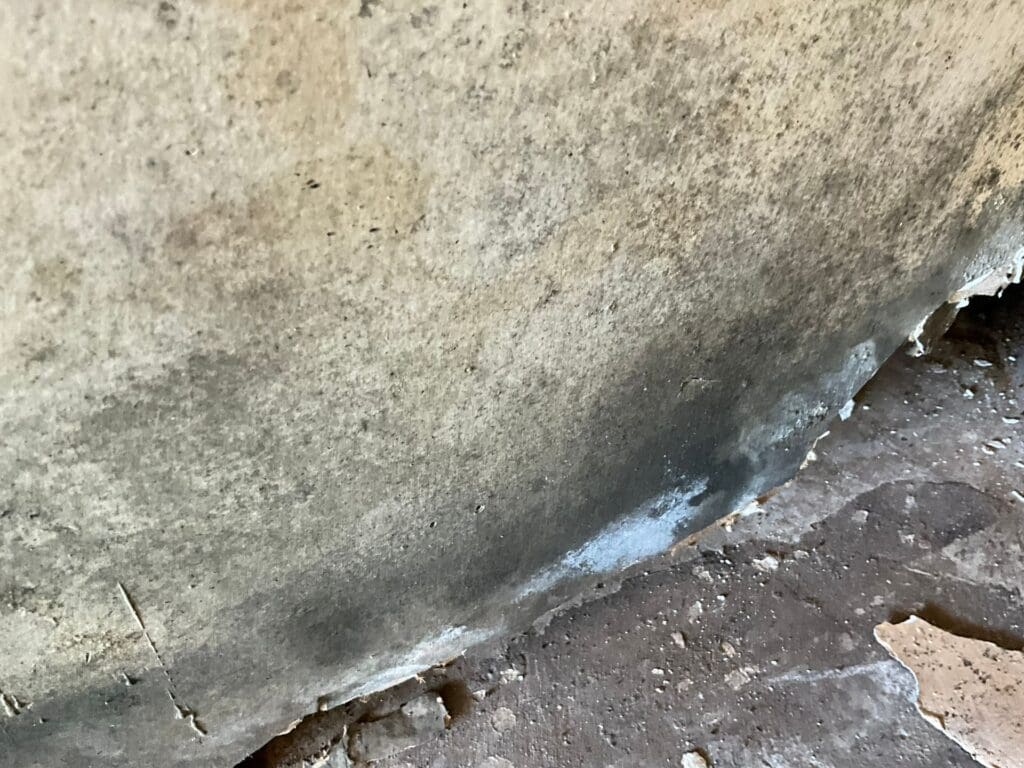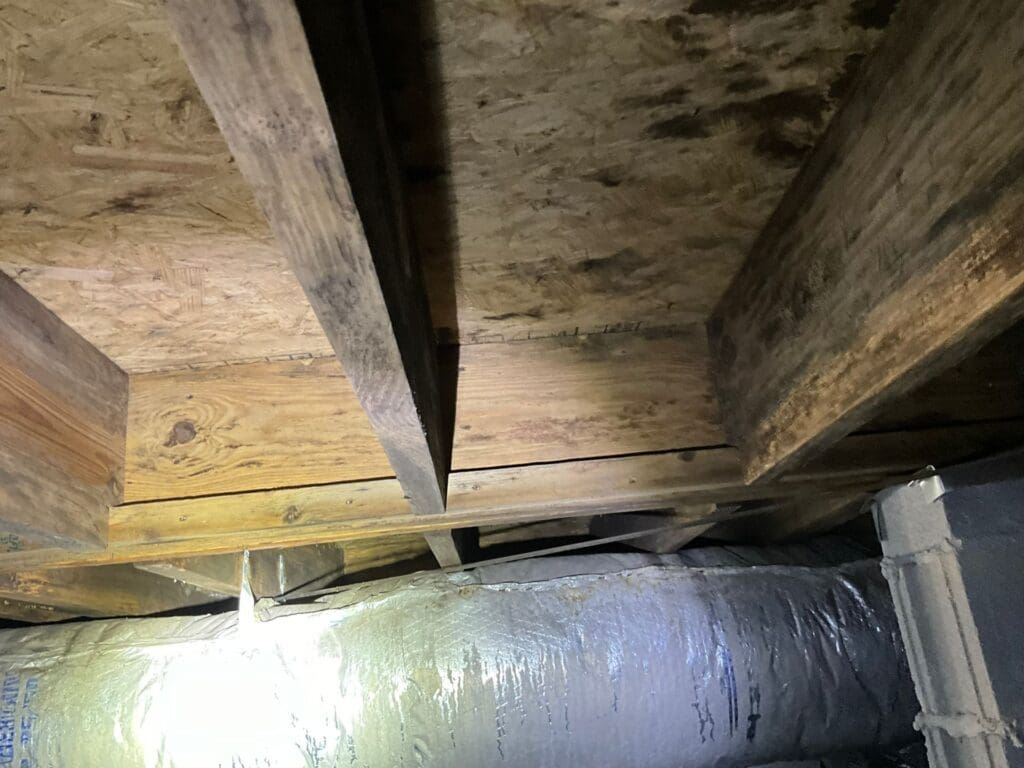
Here’s an example scenario: a family in North Augusta came home from vacation to a burst washing machine supply line. Water had been running for about four days before they walked through the door. Restoration crews arrived within six hours. Fans and dehumidifiers ran for the next three weeks. The visible water was gone, the carpet was out, the drywall was cut to 24 inches above the floor. They thought the job was done.
Six weeks later, their daughter developed a chronic cough. Eight weeks after that, mold testing of the wall cavities behind the kitchen cabinets showed Stachybotrys chartarum (one type of mold often called “black mold”) and Chaetomium at levels that required full remediation. The restoration had addressed what was visible. It had not addressed a wall cavity where insulation had stayed wet behind drywall the crew could not see past.
This is the pattern with water damage. You have a short window to get ahead of mold growth. Miss it, and the repair cost doubles or triples. Miss it badly, and you replace more than materials.
The 24-to-48-Hour Window
The EPA’s mold remediation guidance is explicit: wet porous materials should be dried within 24 to 48 hours, or they should be assumed to be growing mold. This is not a conservative estimate. It is based on the biology of how fast common indoor molds germinate on wet organic surfaces.
Within 24 hours of wetting, mold spores on drywall paper, wood framing, carpet backing, or fabric can absorb enough water to activate. Between 48 and 72 hours, microscopic hyphae (the threadlike structures that become visible mold) start to colonize the material. By day 7 to 10, visible growth is usually present if conditions stayed right.
Conditions matter. In Georgia’s summer humidity, with ambient relative humidity often above 70% indoors after a water loss, mold growth runs at the fast end of that curve. In winter with central heat running, surfaces can dry faster but only if the HVAC is pulling humidity out of the space.
Speed is everything in the first two days. Restoration that starts on day three is remediation, not prevention.
What Dries and What Does Not
Not all wet building materials are worth saving. Restoration professionals use a rough categorization that homeowners should understand because it drives real decisions about repair costs.
Usually Salvageable if Dried Within 48 Hours
- Solid wood framing: studs, rafters, subfloor. Can tolerate wetting if dried before fungal colonization.
- Hardwood floors: salvageable if dried aggressively within days, though some cupping or cracking is common.
- Concrete and masonry: resistant to water damage but can harbor mold on any organic coating or surface residue.
- Metal, glass, and most plastics: unaffected by water itself, though they can be secondary substrates for mold growth on the organic film that accumulates on them.
Usually Not Salvageable
- Drywall that has been wet more than 24 hours: the paper facing is an ideal mold substrate, and water wicks upward through gypsum, so cut lines need to extend well above the visible water line.
- Fiberglass or cellulose insulation: once wet, both lose insulating value and serve as long-term moisture reservoirs. Cellulose is especially prone to mold.
- Carpet pad: porous open-cell foam that cannot be cleaned to a sanitary level after extended wetting. Almost always replaced.
- Carpet: sometimes salvageable after clean water exposure if dried within 24 hours. Almost never salvageable after sewage contamination (Category 3 water) regardless of timing.
- MDF (medium-density fiberboard) and particle board: swell, crumble, and support mold growth.
- Upholstered furniture and mattresses: depending on the contamination level, often discarded for sanitary reasons.
The Institute of Inspection, Cleaning and Restoration Certification (IICRC) S500 standard is the industry reference for what gets removed and what gets dried. Any reputable restoration company in the CSRA operates under this standard.
Where Hidden Mold Hides After Water Damage
Even with a competent restoration crew, certain spaces are easy to miss because they are not accessible without cutting into the building:
- Behind and below cabinetry: kitchen cabinet kick plates and bathroom vanity bases often hide saturated subfloor and wall bases.
- Inside wall cavities above the visible water line: water wicks up drywall paper faster than the gypsum itself appears wet. A standard 24-inch cut may leave saturated paper and insulation above.
- Under finish flooring that was not removed: water can migrate several feet sideways under vinyl, laminate, or engineered wood before anyone sees the surface damage.
- HVAC ducts and return plenums: flood water that reaches duct openings deposits contamination inside the system and travels with every cycle after restart.
- Crawl space insulation and vapor barriers: water that drained from upper floors through ceiling penetrations ends up here. If the crawl space is not inspected, insulation can stay saturated for weeks.
- Inside hollow-core doors, base cabinetry, and furniture: sealed interior surfaces dry slowly and harbor mold for months after the exterior looks fine.
These are the locations where professional post-restoration mold testing catches problems that are otherwise invisible until symptoms appear.
The Case for Post-Restoration Verification
There is a persistent gap in many residential water damage jobs: the restoration company’s job technically ends when drying equipment comes out and meter readings hit target. But “dry” as measured by a moisture meter on accessible surfaces is not the same as “free of mold growth” behind surfaces that were never opened.
An independent post-remediation verification (PRV) inspection and testing protocol exists precisely because of this gap. PRV typically includes:
- Visual inspection of the affected area under strong lighting for any visible growth
- Moisture measurements across multiple surfaces and cavities
- Air sampling comparing levels inside the affected area to an outdoor baseline and to an unaffected area of the building
- Surface sampling of any suspect material, tested by an accredited laboratory
PRV is most important after significant losses involving multiple rooms, Category 2 or 3 water (contaminated or sewage), or any situation where the drying process took longer than the 24-to-48 hour window.
The CDC’s guidance on flood cleanup recommends professional remediation assessment when affected area exceeds about 10 square feet, when a hidden mold problem is suspected, or when any occupant has asthma, allergies, or a compromised immune system.
What Insurance Will and Will Not Cover
Most standard homeowner’s policies in Georgia cover sudden and accidental water damage (a burst pipe, an appliance failure, a roof leak from a storm event). Most specifically exclude:
- Gradual seepage and leaks that existed for more than 14 days before discovery
- Flooding from surface water (this requires separate NFIP flood insurance)
- Mold damage beyond a sub-limit, often $5,000 to $10,000, unless scheduled coverage was purchased
The mold sub-limit is what turns a $12,000 water damage claim into a $40,000 out-of-pocket mold remediation. The mold sub-limit typically does not grow in proportion to the underlying water loss. If the restoration fails to dry the structure in time and mold develops, policyholders often discover their coverage caps well below what the mold repair actually costs.
This is the financial case for acting fast on water damage and for verification testing before closing out the job. A post-restoration test that catches missed moisture within the covered water damage timeframe keeps the remediation inside the water damage claim. A test done three months later when the mold has become obvious is much more likely to fall into the excluded mold category.
Your Next Steps
- If you are in the first 48 hours of a water event, act now rather than schedule. Extract standing water, remove wet porous materials that cannot be saved, and get high-volume drying equipment running. Call a restoration professional rather than try to DIY anything beyond a small, clean-water spill.
- Document everything: photos before cleanup, photos during, moisture meter readings, and written scope of work from the restoration company.
- Before closing out restoration, request written verification that all cavities behind cabinetry, under appliances, and above the water line were opened and verified dry. If your crew did not do this, ask why.
- If water damage occurred more than 48 hours before it was addressed, or if the space involved is more than 10 square feet, plan for independent post-remediation testing before you rebuild. The $500 to $1,500 for testing is cheap compared to finding out six months later that you walled mold into a bedroom.
If you are in the middle of a water damage event in the CSRA and you want an independent look at whether the restoration did what it needed to, the EnviroPro 360 team is happy to help. Reach out any time.