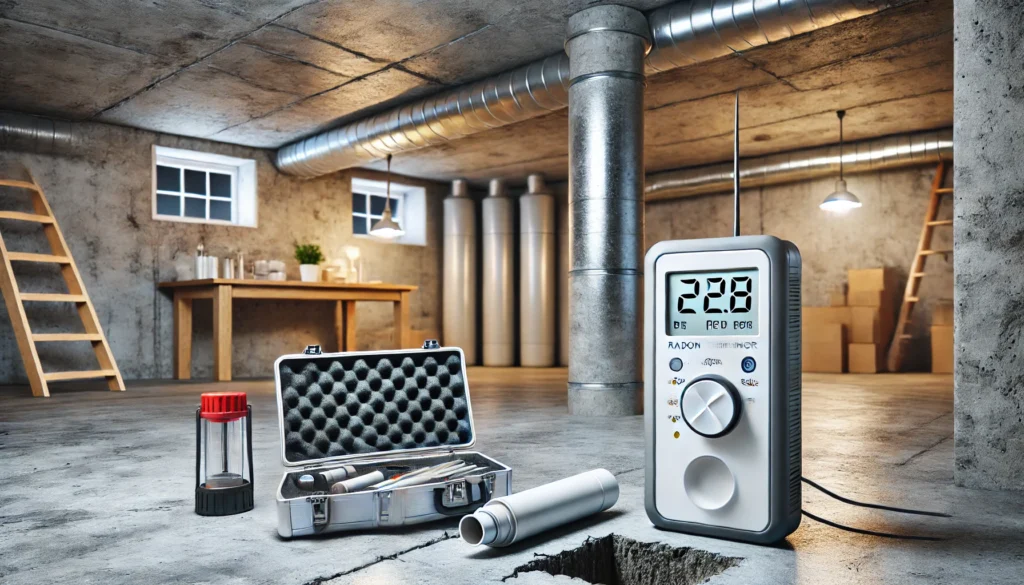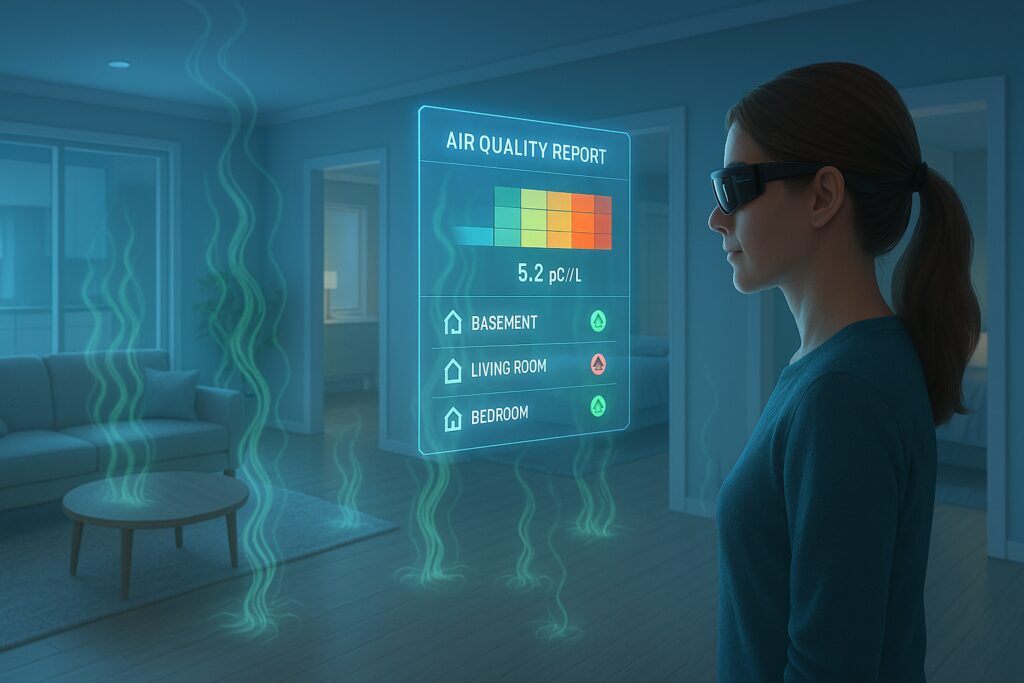
When you hire someone to test your home for radon, you are entrusting them with a result that cannot be double-checked by sight or smell. If the test is placed incorrectly, conducted without following proper protocol, or analyzed by an uncalibrated lab, you could walk away with a number that does not reflect your actual exposure. That is why radon testing certification exists, and why it matters regardless of whether local regulations require it.
Why Radon Is Taken Seriously as a Health Risk
The U.S. Environmental Protection Agency estimates that radon causes approximately 21,000 lung cancer deaths in the United States each year, making it the second leading cause of lung cancer after smoking. The EPA has established an action level of 4.0 pCi/L (picocuries per liter), meaning that when a home’s radon concentration meets or exceeds that threshold, steps should be taken to reduce it. For context, outdoor air averages approximately 0.4 pCi/L — about ten times lower than the indoor action level.
The Centers for Disease Control and Prevention also recognizes radon as a significant public health concern, noting that the risk of lung cancer from radon can be meaningfully reduced through testing and appropriate action when levels are elevated. The CDC and EPA align on the core message: the only way to know if your home has elevated radon is to test, and that test should be conducted correctly.
What Radon Testing Certification Means
Certification for radon measurement professionals typically involves completion of approved training, passage of an examination, and ongoing continuing education requirements. The most widely recognized national certification program for radon measurement is administered by the National Radon Proficiency Program (NRPP). Providers certified through NRPP have demonstrated a working knowledge of EPA measurement protocols, quality assurance requirements, and proper test placement procedures.
In practice, certification matters because radon levels can shift significantly based on where and how a test is placed. A test positioned too close to a window, an HVAC vent, or an exterior wall can yield a reading that underestimates actual exposure. A test placed in an infrequently used area rather than the space where your family spends time may not reflect meaningful risk. Certified testers understand these variables and follow protocols designed to produce results that reflect real-world conditions in your home.
What Proper Radon Testing Protocol Looks Like
A professional radon test for a residential property generally follows these steps:
- Pre-test closed-building conditions: Windows and exterior doors should remain closed for at least 12 hours before testing begins and throughout the test period. This ensures the measurement reflects typical indoor air rather than diluted outdoor air.
- Test placement: The monitor or device should be placed in the lowest livable level of the home, away from drafts, windows, exterior doors, and direct sunlight.
- Duration: Short-term tests run for a minimum of 48 hours, while long-term tests run for 90 days or more. For real estate transactions, short-term tests are common due to time constraints, but long-term tests provide a more complete picture of annual average exposure.
- Lab analysis or continuous monitoring: Charcoal canisters must be sent to an accredited lab for analysis. Continuous radon monitors record data throughout the test and produce a report showing hour-by-hour variation along with the average result.
Any deviation from these protocols can compromise the accuracy of the result. A certified tester knows when deviation has occurred and whether the result can be relied upon.
Georgia and South Carolina Radon Regulations
Georgia does not currently have a mandatory state radon testing law for homeowners or sellers. South Carolina also lacks a statute requiring radon disclosure in residential real estate transactions by default. However, the absence of a legal mandate does not diminish the health rationale for testing or the importance of using a qualified provider when you do.
In real estate contexts, buyers in the Augusta and CSRA market increasingly request radon testing as part of the inspection contingency period. If your home has never been tested, a seller-initiated test conducted by a certified provider gives you a defensible result you can present to prospective buyers. If a buyer requests their own test, they will often specify that the test must be conducted by a certified professional.
Why Post-Mitigation Retesting Also Requires Certified Testing
If radon levels in your home are elevated and a mitigation contractor installs a system, retesting is the only way to confirm the system is performing correctly. A mitigation system that is not venting properly, or a home with multiple radon entry points not all addressed, can still have elevated levels even after installation. Retesting with a certified professional provides documentation that the system worked and that your home now falls below the EPA action level.
This retesting documentation is also useful for property records and future real estate transactions, giving you a verifiable record of the home’s radon history.
How EnviroPro 360 Approaches Radon Testing in Augusta
EnviroPro 360 provides professional radon testing for homeowners across Augusta, Evans, Martinez, Grovetown, North Augusta, Aiken, and the broader CSRA. Every test follows EPA measurement protocols, and results are explained in plain language so you understand what the number means and what options are available if action is needed.
EnviroPro 360 focuses specifically on testing and result interpretation. If your radon level is elevated, the next step is to consult with a certified mitigation contractor. After installation, EnviroPro 360 can conduct the post-mitigation retest to confirm the system is performing correctly.
Contact EnviroPro 360 to schedule radon testing for your Augusta-area home and get results you can trust.