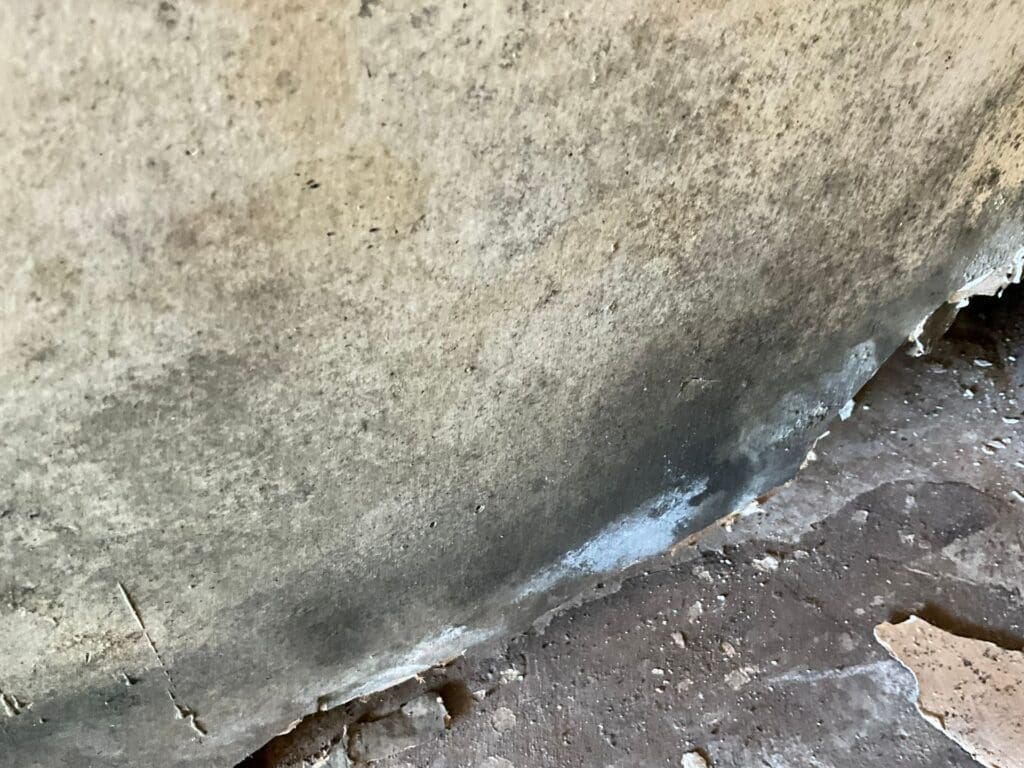
If you think you have mold, don’t rush to clean it up. The first step is a proper mold inspection. A good one tells you what you have, where it comes from and what to do next.
In Augusta and the rest of the CSRA, many companies offer mold services. The quality of their work varies a lot. Some are home inspectors. Some are restoration companies. Some only do testing. This guide explains how to tell them apart, what the certifications mean and what to ask before you hire anyone.
Does Georgia or South Carolina license mold inspectors?
No. Georgia has no state license for mold inspectors or mold remediation contractors. South Carolina doesn’t have one either. A bill to create one was filed in the South Carolina legislature in 2026, but it has not become law as of this writing.
There is no federal license, either. The EPA says it does not certify mold inspectors or keep a list of them. It tells you to ask about training and experience and to check references.
That means almost anyone can call themselves a mold inspector here. The only checks are the certifications a company chooses to earn and the questions you ask.
What mold inspector certifications actually mean
A few groups certify mold professionals. Each one tests different skills. Here are the ones you’ll see most often.
CMI (Council-certified Microbial Investigator)
The CMI comes from the American Council for Accredited Certification (ACAC). To earn it, a person has to show real field experience with mold sampling. They also have to pass a hard exam. Then the ACAC board has to approve them. The CMI program is accredited by an outside group that reviews certification programs.
Be careful with the letters “CMI.” Some other groups use the same letters for “Certified Mold Inspector,” and their rules are different. Ask who issued it.
CSMI (Council-certified Structural Mold Investigator)
The CSMI also comes from the ACAC. It covers how mold grows inside buildings. That includes how water moves through walls, roofs, crawl spaces and HVAC systems. An inspector with a CSMI knows how to trace mold back to the moisture that caused it.
IICRC certification
The IICRC (Institute of Inspection, Cleaning and Restoration Certification) trains people in cleaning, drying and mold work. It publishes the ANSI/IICRC S520 standard. S520 is the industry standard for professional mold remediation. Remediation means the actual removal and cleanup of mold. An IICRC-certified firm knows what proper remediation should look like. That helps when an inspector checks someone else’s work.
Other credentials you may see
- NORMI. This group certifies both mold assessment and mold remediation. It keeps the two roles separate.
- IAQA. This is a trade group for indoor air quality professionals.
- OSHA 10 or OSHA 30. These are safety training cards. They show basic job-site safety training.
You can check most certifications online with the group that issued them. Ask for the certificate number and look it up.
What a certified mold inspection should include
A good inspection starts with moisture, not with the stain you can see. Mold is a sign that something stayed wet. If no one finds the water source, the mold comes back.
The EPA says to dry wet materials within 24 to 48 hours to keep mold from growing. It also says to keep indoor humidity below 60 percent, and ideally between 30 and 50 percent.
A standard inspection usually includes these steps:
- Questions about the home. The inspector asks about leaks, odors, health complaints and past repairs.
- A visual check. They look at bathrooms, kitchens, the attic, the crawl space and the HVAC system.
- Moisture readings. A moisture meter shows how wet drywall, wood and flooring are.
- Thermal imaging. An infrared camera shows cool spots that can point to hidden water.
- Sampling when needed. Air samples show how many mold spores are in the air. Surface samples show what is growing on a spot.
- Lab analysis. Samples go to an accredited lab for testing.
- A written report. It should explain what was found in plain words and what to do next.
Want more detail? See what happens during a mold assessment.
Why Augusta homes need a careful inspection
Augusta has hot summers and high humidity for much of the year. Many homes sit over crawl spaces. Crawl spaces pull moisture up from the ground. Low areas near the Savannah River stay damp longer after rain.
So a quick walk-through is not enough here. A good inspector checks for:
- Damp air and wet wood in the crawl space.
- Condensation in the attic from poor airflow.
- Mold in the air handler or return vents. An HVAC system that runs most of the year can spread spores through the whole house.
Types of mold companies in Augusta, and what each one does
When you search for a mold inspector, you’ll find four main kinds of companies.
Home inspectors
A home inspector checks the whole house for a buyer or seller. They may spot water stains, musty smells or possible mold. Most do not take air or surface samples. Most don’t send samples to a lab or test after cleanup. A home inspection is a good first look. It often leads to a mold inspection.
Mold removal companies
Some companies both test for mold and remove it. They can be handy if you already know you need removal. Ask who runs the lab tests. Ask who checks the work when it’s done.
Restoration companies
Restoration companies handle water, fire and mold damage. They are the right call after a flood or burst pipe. Their main job is drying and cleanup. Testing is one small part of what they do. Many owners still want an independent test before and after the work.
Independent testing companies
An independent testing company only inspects and tests. It does not remove mold or rebuild anything. Its only job is to find out what’s going on and report it.
Why independence matters
This is the question most people forget to ask: Do you do the testing, the remediation or both?
A company that does both has a conflict of interest. If it finds mold, it gets the cleanup job. When the job is done, it can also sign off on its own work. That doesn’t mean the company is dishonest. It does mean you can’t be sure the results are neutral.
An independent inspector has nothing to sell you after the test. The results reflect the conditions in your home. That matters when the report goes to a buyer, a landlord, an insurance company or a contractor.
It also matters after cleanup. Post-remediation verification is a test done after mold removal. It checks that the work was done right and the mold levels are back to normal. It means more when someone other than the remediator does it. Read more in why pre- and post-remediation mold inspections matter.
Questions to ask before you hire a mold inspector
Ask every company these questions. A qualified one will answer each one clearly.
- What certifications do you hold, and who issued them?
- Can I check your certification with the group that issued it?
- Do you also do mold remediation?
- Do you use an accredited outside lab?
- Do you take air and surface samples when they’re needed?
- Do you look for the moisture source, with meters or thermal imaging?
- Will I get a written report that explains the results?
- Do you offer post-remediation verification testing?
- Are you insured to work in Georgia or South Carolina?
Questions to ask a mold remediation contractor
If you need mold removed, the contractor should answer these questions too:
- Do you follow the IICRC S520 standard?
- Will you give me a written scope of work before you start?
- Do you use containment and negative air pressure? Containment seals off the work area. Negative air pressure keeps spores from drifting into the rest of the house.
- Who will do the post-remediation verification testing?
Red flags to watch for
Be careful if a company:
- Can’t name the standards it follows.
- Gives vague answers about certifications.
- Pushes you to skip testing after cleanup.
- Offers to “find and fix” mold for one price before anyone has looked.
- Tells you a spray or fog will solve the problem without fixing the water source.
Poor mold work can make things worse. Without containment, spores can spread to clean rooms. If the water source isn’t fixed, mold can grow back within weeks. Harsh chemicals used the wrong way can leave residue in your home. The CDC notes that people with asthma, allergies or weak immune systems face higher risks from mold.
How EnviroPro 360 handles mold inspections
EnviroPro 360 is an independent testing company. We do mold inspection and testing only. We don’t do remediation. So our findings are never tied to a cleanup job.
Our team includes Council-certified Microbial Investigators (CMI) and Council-certified Structural Mold Investigators (CSMI). We are also IICRC certified. Our mold inspections can include:
- Moisture readings and thermal imaging to find the water source.
- Air and surface sampling, with analysis by an accredited lab.
- ERMI and ARMI testing. These DNA-based dust tests look at mold in the home over a longer period.
- Post-remediation verification after another company does the cleanup.
- A clear written report and next steps.
We serve Augusta, Evans, Grovetown, Martinez, Hephzibah, North Augusta and nearby towns. If a contractor has already told you to tear out walls, read they said “trust us,” then tore out my walls.
Your next steps
- Write down what you’ve noticed: smells, stains, leaks and any health symptoms.
- Ask any company you call the questions above. Check their certifications.
- Choose an independent inspector who tests and reports, and has nothing to sell you after.
EnviroPro 360 provides mold inspection and testing for homes and businesses in Augusta, Aiken, Columbia and nearby towns. If you have questions about choosing a mold inspector or want to talk through your situation, the EnviroPro 360 team is happy to help. Reach out any time.