Your water bill shows up, and it is much higher than last month. Nothing changed. You have the same staff and the same hours. Your customer count is about the same. So where did the water go?
For many small businesses, the answer is a hidden leak. It might sit under the slab, inside a wall, or above the ceiling tiles. You can’t see it. But you pay for it every month.
This guide is for owners of shops, restaurants, salons and small offices in the CSRA. It covers the warning signs and a simple meter test. It also explains why guessing can cost more than the leak itself.
Warning Signs Your Business Has a Hidden Leak
Hidden leaks leave clues. Most owners notice one or two and brush them off. Here are the signs worth a closer look.
Signs on Paper
- Your water bill jumps, but your use did not change. Compare it to the same month last year. A steady climb is also a clue.
- The meter moves when everything is off. We cover how to test this in the next section.
Signs in the Building
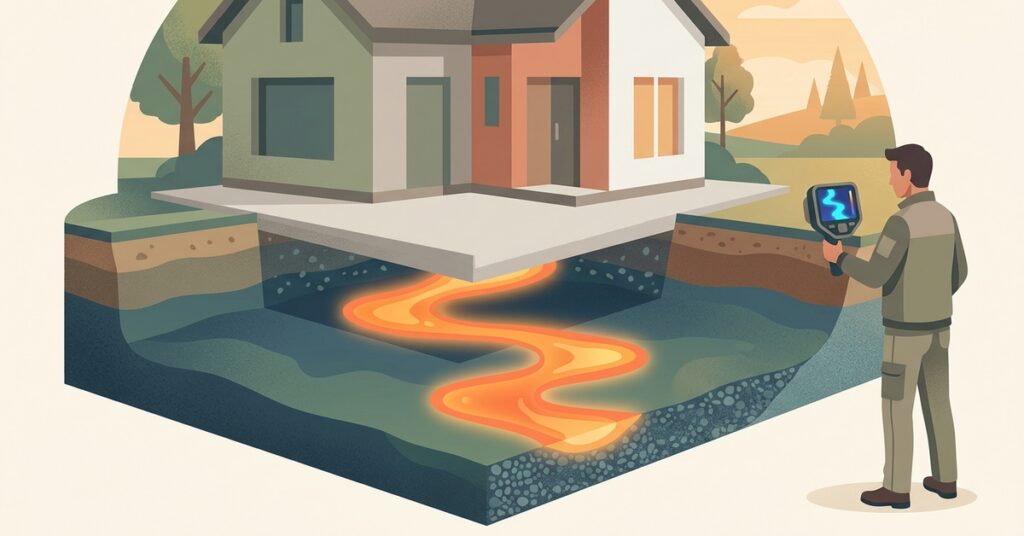
- A warm spot on the floor. A leak in a hot water line under a slab can warm the floor above it. Staff may notice it first.
- New cracks in a slab floor or tile. Water under the slab can wash out soil and move the concrete.
- A musty smell. This often means damp material and the start of mold.
- Stained ceiling tiles. Brown rings or sagging tiles point to water above them.
- The sound of running water. Listen when the building is quiet. A hiss or trickle with no tap open is a red flag.
- Damp or soft drywall near restrooms. Restrooms and kitchens have the most pipes. Walls near them show leaks first.
One sign alone may mean nothing. Two or more signs together deserve a test.
How to Do the Meter Test After Hours
This test is free, and it takes about an hour. Do it after you close, when no one is using water.
- Turn off every water user. Shut off faucets, ice machines, dishwashers and toilets. Turn off any irrigation. Make sure no one is in the building.
- Find your water meter. It is often in a box near the street or the property line. Some buildings have one inside.
- Look at the leak indicator. Many meters have a small triangle or dial. If it spins with everything off, water is moving somewhere.
- Write down the reading. Take a photo with your phone too.
- Wait at least one hour. Do not use any water during this time.
- Read the meter again. If the number went up, you likely have a leak.
The EPA WaterSense Fix a Leak Week page uses this same check. EPA stands for the Environmental Protection Agency. The page says leaks in an average home can waste nearly 10,000 gallons of water a year. A business with more fixtures has more places for leaks to start.
A shared meter makes this harder. If you lease space in a strip center, your unit may share a meter with others. In that case, talk to your landlord before you test.
Why Guessing Costs You More
Say the meter test shows a leak. The next step is finding it. This is where costs can climb fast.
Without the right tools, a plumber may have to hunt. That can mean cutting holes in drywall. It can mean breaking up a concrete floor in more than one spot. Each wrong guess adds repair work.
For a business, the bigger cost is often downtime. A restaurant can’t serve food with a torn-up kitchen floor. A salon can’t book clients with jackhammers running. Every day you are closed is a day of lost sales. Your staff may lose hours too.
There is also the cleanup. Broken concrete and open walls make dust and debris. Then the floor and walls need to be patched and finished.
Finding the leak first, then opening one small spot, avoids most of this.
How Non-Invasive Leak Detection Works
Non-invasive leak detection means finding a leak without tearing into your building. The goal is to mark the spot before anyone breaks a floor or wall.
EnviroPro 360 uses several tools to do this:
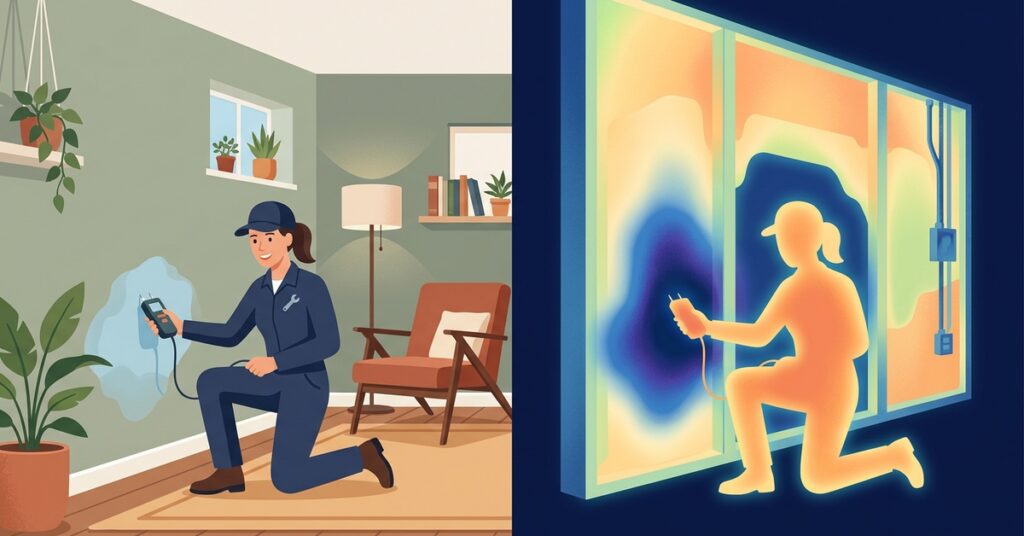
- Moisture meters read how wet a wall, floor or ceiling is. They show where water has spread.
- Infrared cameras, also called thermal cameras, see small changes in surface heat. Wet areas and warm pipes show up as a different color. Our post on thermal imaging for leak detection goes deeper.
- Acoustic listening equipment picks up the sound of water escaping a pressurized pipe. A pressurized pipe is one that holds water under force, like your main supply line. You can read more about acoustic leak detection.
- Drones help check roofs and large outdoor areas quickly.
Using more than one tool helps confirm the spot. If you suspect the leak is under your floor, our guide to slab leaks explains the signs in more detail.
Who Does What
Here is an important point. EnviroPro 360 finds the leak. We do not do plumbing. Your plumber makes the repair.
This split helps you. We have no stake in how big the repair is. Your plumber gets a marked spot and can go straight to work. That means less digging and a shorter job.
Learn more on our leak detection service page.
Hidden Water Leads to Mold
Fixing the pipe does not always end the problem. Water that sat in a wall or under a floor can leave materials damp. Damp drywall, wood and carpet pad can grow mold.
The EPA’s mold guidance says the key to mold control is moisture control. It also says to dry wet materials quickly. The CSRA’s humid weather slows drying, so a damp wall can stay wet longer here.
That is why a moisture check after the repair matters. It shows whether the area has dried out. If a musty smell stays, a mold inspection can tell you if mold has started. Mold inspection means a trained inspector looks for mold growth and the moisture behind it.
Our post on the cost of hidden leaks and moisture assessment covers this step in more depth.
Document Everything for Insurance and Your Landlord
Good records protect you. Start them the day you notice a problem.
- Save your water bills. They show when the jump started.
- Photograph the meter readings. Note the date and time.
- Take photos of damage. Get stains, cracks and damp spots before any repair.
- Keep the leak detection report. It shows where the leak was and what caused the damage.
- Keep the plumber’s invoice. It shows what was fixed and when.
Your insurance company may ask for these records. Coverage depends on your policy, so call your agent early.
If you lease, tell your landlord in writing right away. Your lease likely says who pays for plumbing and water damage. A written report helps settle that question fast. It also shows you acted quickly.
What to Do Next
If your water bill looks wrong, take these steps:
- Run the meter test this week. Do it after hours with every fixture off. Write down both readings.
- Walk your space and look for signs. Check ceiling tiles, restroom walls and floors. Note any musty smells or warm spots.
- Get the leak found before anyone digs. Call for a quote on leak detection. Then hand the marked spot to your plumber.
The EPA WaterSense page for commercial buildings also has tips for saving water at work once the leak is fixed.
If you have questions about a high water bill or a possible leak, the EnviroPro 360 team is happy to help. We serve businesses in Augusta and across the CSRA in Georgia and South Carolina. Reach out any time to talk through your situation.