You’re getting ready to list your home. Your agent mentions radon. Do you have to test? What if the buyer tests and the number comes back high?
Here is the short answer. Neither Georgia nor South Carolina requires a radon test to sell a home. But buyers often test anyway. A surprise result during the inspection period can slow down or even sink a sale.
This guide explains the rules in both states, when to test, and what to do if the level is high.
Is radon testing required to sell a home?
No. There is no law in Georgia or South Carolina that says a seller must test for radon. There is also no law that says a buyer must test before buying.
What the law does care about is what you already know. That is where disclosure comes in.
What you have to disclose about radon
South Carolina
South Carolina has a Residential Property Condition Disclosure Act. Most home sellers must give the buyer a disclosure form. The law lists radon gas as one of the environmental items the form must cover. Others on the list include lead-based paint and asbestos.
You don’t have to test to fill out the form. But if you know about high radon, you must not hide it. A seller who gives false or misleading answers can be held liable for damages.
Georgia
Georgia has no state disclosure form required by law. Instead, Georgia sellers must not hide known hidden defects. Most Georgia agents use the seller’s property disclosure statement from the Georgia Association of REALTORS. That form has asked whether the home has ever been tested for radon. If you tested and the result was high, you should say so.
The exact wording changes from year to year. Ask your agent to show you the current form.
The bottom line on disclosure
If you never tested, you have nothing to disclose about radon. If you tested and the result was high, you need to share it. Many sellers find it easier to test early, fix any problem, and share a clean result.
Should I test for radon before selling my house?
Testing is not required, but it often helps. Here is why.
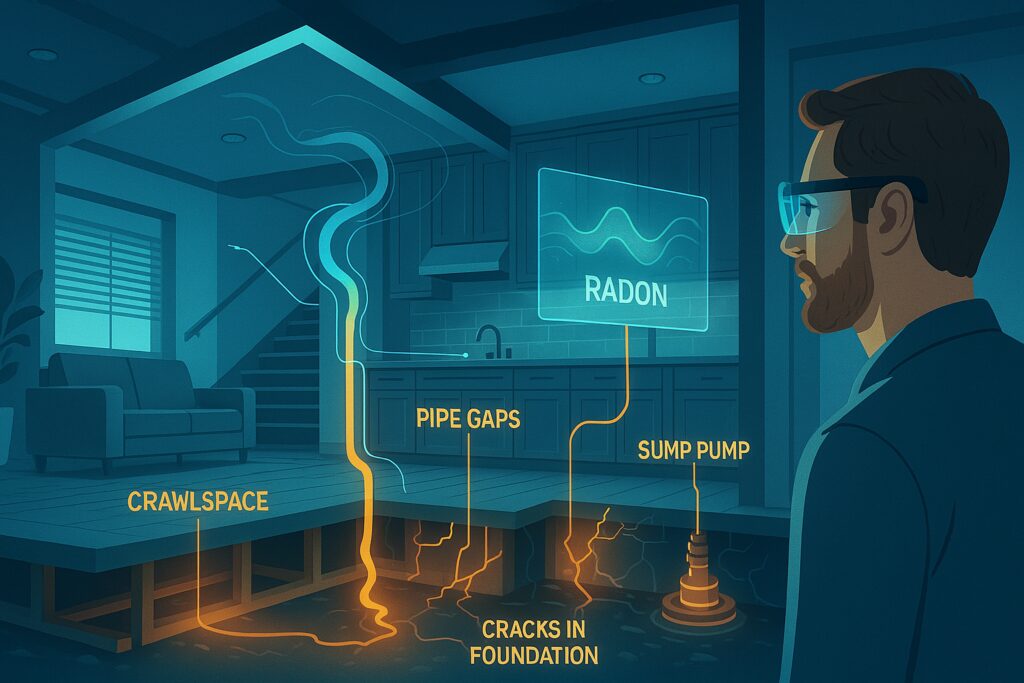
Radon is a radioactive gas from the soil. You can’t see it or smell it. The EPA says it is the second leading cause of lung cancer in the U.S. The CDC says it causes about 21,000 lung cancer deaths each year. Buyers and their agents know this. Many will ask for a test.
If you test before listing:
- You find out first, not in the middle of a deal.
- You have time to fix a high level on your own schedule.
- You can show buyers a recent result.
- You avoid last-minute repair requests and price talks.
If you don’t test, the buyer’s result becomes the one that counts.
Is a radon test required when buying a home?
No. A buyer chooses whether to test. In Georgia, buyers usually test during the due diligence period. In South Carolina, they test during the due diligence or inspection period in the contract. These windows are short. A radon test has to fit inside them along with the home inspection and other checks.
The EPA’s Home Buyer’s and Seller’s Guide to Radon recommends testing for any home sale. The EPA sets an action level of 4.0 pCi/L. pCi/L means picocuries per liter. It measures how much radon is in a liter of air. At 4.0 or higher, the EPA says to fix the home. Between 2.0 and 4.0, it says to think about fixing it.
Timing your test around the listing
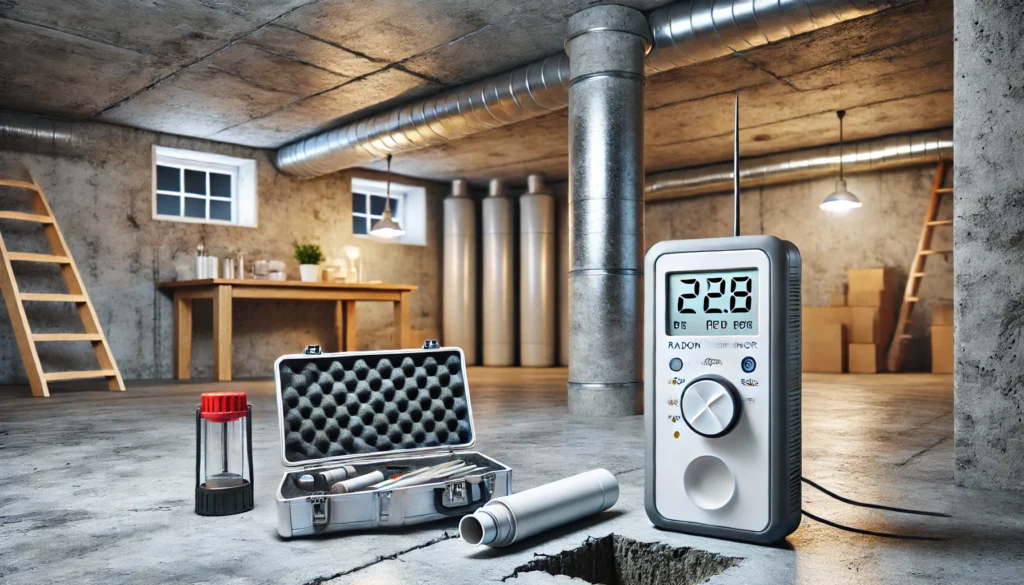
A professional short-term radon test runs for at least 48 hours. Most results are ready 24 to 48 hours after the test ends. So plan for about four to five days from setup to report.
Here is a simple plan:
- Test before you list. Two to four weeks before listing is a good window. That leaves time to fix a problem if you need to.
- If the result is high, fix it before you list. Then retest to show the new level.
- If the buyer tests too, you will already know what to expect.
If you are already under contract, test as soon as the contract is signed. Every day counts in a short due diligence period.
Closed-house conditions during showings
A radon test needs what the EPA calls closed-house conditions. That means:
- Windows stay shut.
- Outside doors stay closed except for normal coming and going.
- Whole-house fans and window fans stay off.
- Heat and air conditioning run as normal.
The house should be closed for 12 hours before the test starts. It stays closed for the whole test.
Showings make this tricky. A few tips:
- Tell your agent when the test is running.
- Ask agents not to open windows or prop doors during showings.
- Don’t move or touch the test device.
- Don’t schedule an open house during the test if you can avoid it.
Most professional testers use a continuous radon monitor. Many of these can flag changes that may mean the test was disturbed. That helps protect the result for both sides.
What happens if the radon level is high?
A high result does not stop a sale. Homes with radon sell every day. But the buyer will expect a plan.
What the buyer may ask for
Common requests include:
- The seller pays for a radon mitigation system before closing.
- A price cut or credit at closing.
- A retest after the system is in place.
Radon mitigation is the work of lowering radon in a home. The most common method is a fan and pipe system. It pulls radon from under the house and vents it outside. Our post on how radon mitigation systems work covers the basics.
EnviroPro 360 does not install mitigation systems. We only test. That means we have no reason to push a fix you don’t need. After a system goes in, an independent retest shows the buyer that it worked.
As a realtor, how should I handle a high radon result before closing in Georgia?
Start by checking how the test was done. Was it a professional test? Did it run at least 48 hours under closed-house conditions? Was the device placed in the lowest lived-in level? A bad setup can give a bad number.
If the result holds up, help both sides agree on next steps. Most deals choose one of these:
- The seller hires a certified mitigation contractor before closing.
- The parties agree on a credit and the buyer handles it after closing.
Either way, plan a post-mitigation retest. The EPA suggests waiting at least 24 hours after the system starts. Put the retest in the timeline so closing isn’t delayed. For more on this, see our guide to radon testing during a home sale.
Is radon testing necessary in my part of Georgia or South Carolina?
Radon levels vary a lot from house to house. Two homes on the same street can test very differently. The only way to know is to test.
In Georgia, the EPA radon zone map shows higher potential in many northern counties. But any home can have high radon, no matter which zone it is in. The only way to know is to test.
In South Carolina, SCDES (the South Carolina Department of Environmental Services) says high radon has been found in homes in almost every county. Aiken County gets extra attention. Our post on why Aiken, SC has higher radon levels explains why.
Does a newer home need a radon test?
Yes, if you want to know the level. New homes can have radon too. A tight, energy-efficient house can even trap more of it. A buyer of a 2019 home in South Carolina may still want a radon test. Whether to add mold or termite checks depends on the home. Your inspector can help you decide. Our post on radon in new construction has more.
Should I share the test results with buyers?
If the result is low, yes. A recent professional report gives buyers proof, not a promise. Keep the report with your listing papers.
If you installed a mitigation system, share that too. Include the before and after results. A working system is a selling point.
Keep in mind that a buyer may still run their own test. That’s normal. If your home was tested properly, their result should be close to yours.
Why use a professional test for a home sale?
A store kit can be fine when you just want to check your own home. In a sale, both sides need to trust the result. A certified tester:
- Follows ANSI standards for where and how to test.
- Uses calibrated equipment.
- Documents the test conditions.
- Gives you a report that agents and buyers accept.
Our testers are certified by the National Radon Proficiency Program (NRPP). NRPP is a national program that certifies radon professionals.
Your next steps
- Talk with your agent about timing. Aim to test two to four weeks before you list.
- Book a professional radon test and keep the house closed during the test.
- If the level is 4.0 pCi/L or higher, get mitigation quotes and plan a retest before you list.
Selling soon? A pre-listing radon test is a simple way to avoid surprises at the closing table. Call for a quote, and we can work around your showing schedule.
EnviroPro 360 provides radon testing for homes and businesses in Augusta, Aiken, Columbia and nearby towns. If you have questions about radon testing for a home sale or want to talk through your situation, the EnviroPro 360 team is happy to help. Reach out any time.