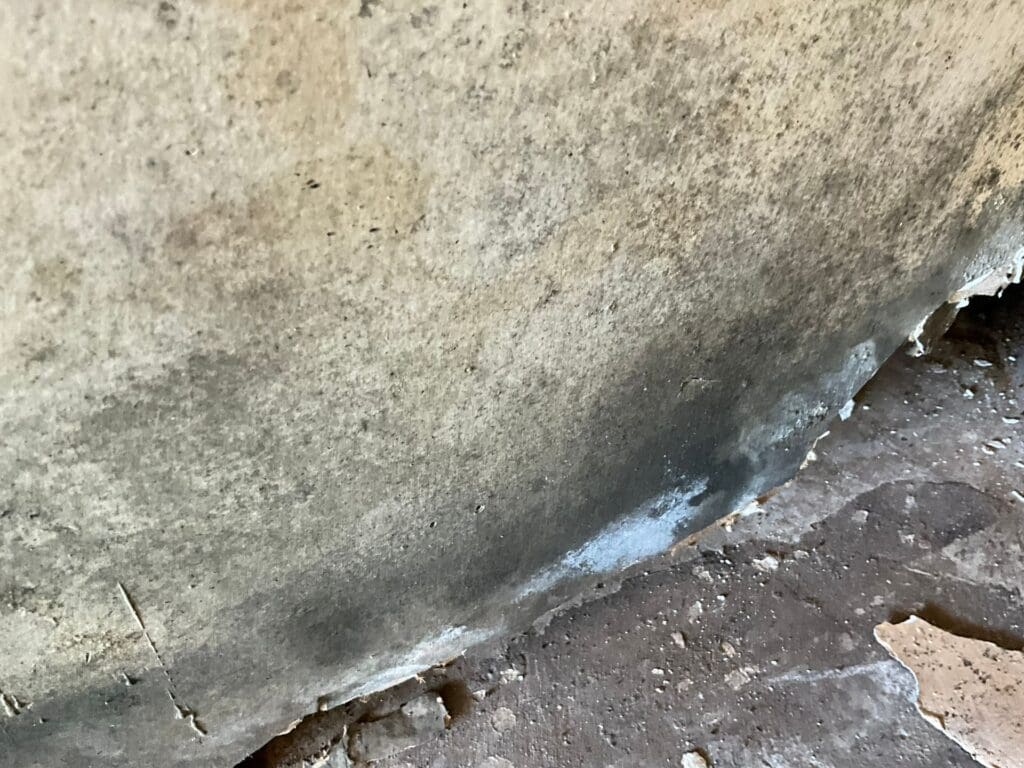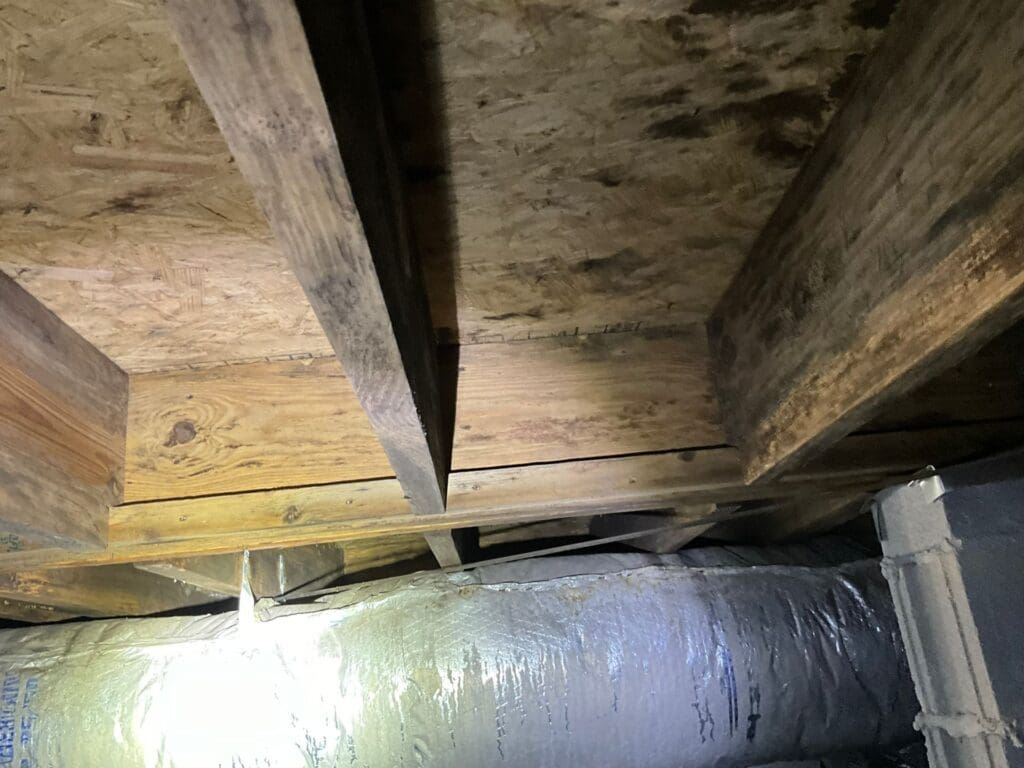
Attics and crawl spaces are the two locations in CSRA homes where mold problems most commonly go undetected for extended periods. Both are low-traffic areas that most homeowners access infrequently or not at all. Both have conditions that are particularly favorable for mold growth. And both connect directly to the living areas of the home — the attic through ceiling assemblies and HVAC ductwork, the crawl space through the subfloor. Mold established in either location affects indoor air quality even when no one goes near it.
Why Attics Develop Mold
Attic mold in Augusta-area homes most often develops from one of three sources: roof penetration leaks, improperly terminated bathroom exhaust fans, and inadequate attic ventilation.
Roof penetrations — around chimneys, attic vents, skylights, and pipe boots — are the most common entry points for water. In Georgia and South Carolina, where heavy summer storms and occasional hurricane remnants produce driving rain, flashing that performs adequately under normal conditions fails during high-wind precipitation events. A leak that starts at a chimney flashing in October may not produce a visible ceiling stain until January, by which point the attic framing around the penetration has been wet for months.
Bathroom exhaust fans are the second most common attic mold source. Many fans installed in homes built before the 1990s, and some installed since, vent into the attic rather than through the roofline to the exterior. Every shower sends a concentrated burst of humid air directly into the attic space, where it condenses on the cold roof sheathing and framing. This cycle — repeated daily for years — produces mold on the sheathing boards and rafters near the fan termination point.
Attic ventilation failures are the third source. When soffit vents are blocked by insulation that was installed without baffles, or when ridge vents are covered over during roofing work, humid air that would normally exhaust through the attic is trapped. Combined with summer heat, trapped humidity in the attic creates conditions that support mold growth across a wide area of the sheathing.
Why Crawl Spaces Develop Mold
CSRA homes are predominantly built over vented crawl spaces rather than basements or slabs. Vented crawl spaces are effective at preventing radon accumulation but create a persistent mold risk. When warm, humid outdoor air enters through crawl space vents in spring and summer, it contacts the cooler surface of the floor framing above. Condensation forms on the joists and subfloor sheathing. Ground moisture evaporating from the soil adds additional humidity. The result is an environment that stays at or above the humidity threshold for mold growth for much of the year.
Crawl space mold grows on floor joists, blocking material, and the underside of subfloor panels. It is rarely visible from above and cannot be smelled from the living area until the colony is well established. By that point, mold-laden air is rising through subfloor penetrations and through the floor assembly itself, contributing to elevated indoor spore concentrations.
Plumbing failures in the crawl space add to the problem. Supply line drips and condensate drain overflows that fall below the subfloor go unnoticed and create localized wet conditions on top of the baseline humidity problem.
Signs of Attic or Crawl Space Mold
Because direct inspection is infrequent, attic and crawl space mold most often signals its presence through indirect indicators:
- Musty odor. A musty smell that is stronger in specific rooms, in the morning after the home has been closed overnight, or when the HVAC runs, can indicate mold in the attic (distributed through ductwork) or crawl space (rising through the floor).
- Dark streaks or discoloration on attic framing or rafters. Visible during any attic access, even with just a flashlight from the hatch opening.
- Wet or fallen insulation in the crawl space. Insulation that has dropped from between joists has usually been saturated repeatedly and is a strong indicator of mold on the framing above it.
- Rusted metal components. HVAC ductwork connectors, metal bridging, and pipe hangers in the crawl space that show orange rust indicate sustained moisture exposure.
- Location-specific respiratory symptoms. Household members with coughing, congestion, or eye irritation that is consistently worse at home and better when away, with no other identified cause.
Why Professional Testing Matters
The EPA recommends professional inspection when hidden mold is suspected, since mold growing in attic framing or crawl space joists is not accessible to DIY testing methods. Professional inspection includes moisture meter readings on framing materials, visual assessment from inside both spaces, and air sampling that quantifies spore concentrations and identifies species.
The CDC notes that mold exposure can cause chronic respiratory symptoms, eye irritation, and worsened asthma — outcomes that improve when the mold source is identified and remediated. For homes where the source is in the attic or crawl space, that process starts with professional inspection confirming the extent and location of the growth.
Schedule an Attic and Crawl Space Inspection
EnviroPro 360 provides mold inspection and moisture assessment across Augusta, Aiken, Evans, North Augusta, and the CSRA, including dedicated attic and crawl space evaluation with air sampling and moisture meter readings. Contact EnviroPro 360 to schedule an inspection.