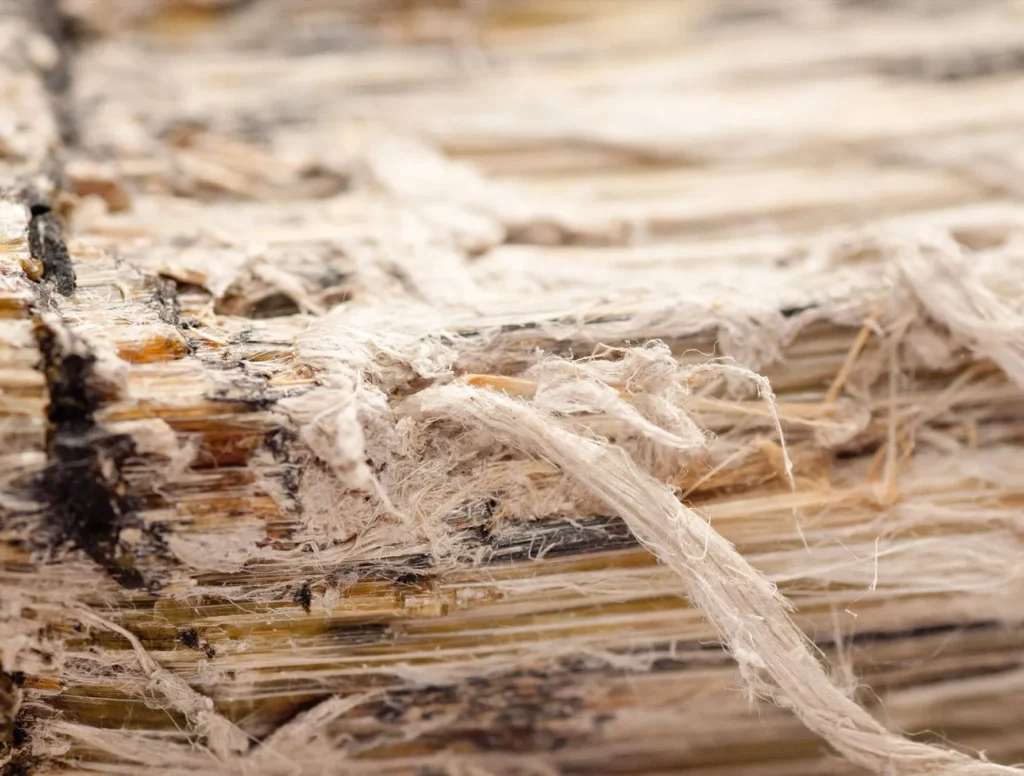
If your home was built before 1980, there is a reasonable chance that asbestos-containing materials are somewhere in it. That is not cause for immediate alarm — asbestos that is intact and undisturbed generally does not release fibers at harmful levels. The risk comes when those materials are cut, drilled, sanded, broken, or removed, as happens during renovation and repair work.
Knowing where asbestos was commonly used, how to recognize it visually, and when testing is warranted helps you make informed decisions before starting any project in an older home.
Why asbestos was used so widely
Asbestos is a naturally occurring mineral with properties that made it genuinely useful in building materials: it is fire-resistant, a good thermal and acoustic insulator, chemically inert, and inexpensive. From the 1930s through the 1970s, it was mixed into hundreds of construction products — not because manufacturers were indifferent to health, but because the long latency period between exposure and disease meant the consequences were not yet understood at scale.
Regulatory restrictions came gradually:
- 1973: EPA banned spray-applied asbestos surfacing materials
- 1975: EPA banned asbestos pipe insulation for new installations
- 1977: The Consumer Product Safety Commission banned asbestos in patching compounds and artificial fireplace embers
- 1978: EPA banned most remaining spray-on asbestos applications
- 1989: EPA attempted a comprehensive ban — it was largely overturned by a federal appeals court in 1991, leaving many legacy uses unaddressed
- 2024: EPA finalized a ban on chrysotile asbestos, the form most commonly still in commercial use
The practical takeaway: any home built before 1980 should be assumed to potentially contain asbestos-containing materials until specific materials have been tested. Homes built between 1980 and the early 1990s may also contain some materials manufactured before restrictions fully took effect.
Where asbestos is commonly found in homes
Popcorn and textured ceiling coatings
Spray-applied textured coatings — commonly called popcorn ceilings — were widely used from the 1950s through the late 1980s. Asbestos was added to improve fire resistance and adhesion. These coatings appear as a rough, bumpy, or cottage cheese-like surface on ceilings and sometimes walls.
Popcorn ceilings installed before 1979 are prime candidates for asbestos testing. Even those installed after the 1978 spray ban may contain asbestos if the product was manufactured from existing stock. The material poses little risk if it remains intact and is not scraped or disturbed. Removing it without prior testing can release significant fiber concentrations.
Vermiculite attic insulation
Vermiculite is a lightweight, pebble-like mineral that was poured loose into attic spaces as insulation through the 1980s. It looks like small silver-gray or tan pellets. The majority of vermiculite sold in the United States during this period came from a mine in Libby, Montana, which was contaminated with naturally occurring tremolite asbestos — one of the more hazardous asbestos fiber types.
If your attic has loose, pebbly insulation that looks like this, treat it as asbestos-containing until tested. Do not disturb, move, or remove it without professional evaluation. This material should never be handled without appropriate respiratory protection, and standard DIY attic work — installing recessed lights, running cables, adding insulation — should not proceed until the material is confirmed asbestos-free.
Vinyl and asphalt floor tiles and mastic adhesive
Floor tiles manufactured from the 1950s through the 1980s — typically 9-inch by 9-inch or 12-inch by 12-inch vinyl or asphalt composition tiles — often contained asbestos. The mastic adhesive used to bond these tiles to the subfloor is frequently asbestos-containing as well, even when the tile itself is not.
These tiles are commonly found under newer flooring. When a homeowner removes carpet or laminate during a renovation and discovers old resilient tile underneath, the underlying tile and adhesive should be tested before any attempt to scrape, grind, or remove them. Intact tile that is covered by new flooring and will remain undisturbed does not typically need to be removed.
Pipe insulation and duct wrap
Asbestos was used extensively to insulate steam and hot water pipes, particularly in homes with older heating systems. It appears as a white or light gray wrapping — sometimes chalky and crumbling, sometimes smooth — around pipes in basements, crawl spaces, and utility areas. Cloth-wrapped or corrugated cardboard-like pipe insulation from this era is a common source.
Duct insulation on older HVAC systems may also contain asbestos, often as a gray or white fibrous blanket around ductwork. Deteriorating or friable pipe insulation — material that crumbles when handled — is higher risk than insulation that remains firmly intact.
Roofing shingles, siding, and exterior panels
Asbestos cement products were used widely in residential roofing and siding from the 1940s through the 1970s. These appear as flat or corrugated sheets with a cement-like texture, often in gray. Asbestos cement siding — sometimes called transite — was used as an alternative to wood siding on homes built through the 1970s.
These materials are generally durable and low-risk when intact. Cutting, drilling, or breaking them during renovation or demolition releases fibers. If you are replacing a roof or re-siding a home of this era, test the existing material before any cutting work begins.
Drywall joint compound and taping mud
Joint compound used to tape and finish drywall seams was commonly manufactured with asbestos through the mid-1970s. Sanding old joint compound during renovation — which creates fine dust — is one of the higher-risk activities for asbestos exposure in older homes. The compound itself is difficult to identify visually and is often hidden beneath multiple layers of paint.
In any home built before 1980, sanding or disturbing drywall surfaces should be approached with caution. If major drywall work is planned, bulk sampling of the joint compound before sanding is a straightforward step that removes significant uncertainty.
Textured wall coatings
Beyond ceilings, textured paint and skim-coat products applied to walls before the late 1970s may contain asbestos. These appear as a slightly rough or sandy wall surface. Like popcorn ceilings, the risk is low if the coating remains intact — it increases when the surface is sanded, scraped, or demolished.
Furnace and boiler insulation
Older furnaces, boilers, and wood stoves were often wrapped in asbestos-containing insulation boards, blankets, or tape. These appear as gray or white fibrous panels or wrap around the unit and associated ductwork. Deteriorating insulation near heat sources — material that is flaking, crumbling, or visibly damaged — is a higher-priority testing candidate than intact material.
Window glazing putty and door caulk
Some window glazing compounds and caulks manufactured before the mid-1970s contained asbestos as a filler and binder. Old putty around window panes that is cracking, crumbling, or being replaced during a window renovation should be considered for testing, particularly in homes built before 1970.
Fireplace and wood stove components
Rope seals, door gaskets, and insulating board inside older wood stoves and fireplace inserts were commonly made with asbestos. Millboard — a dense, rigid insulating material used behind wood stoves and as heat shields in older homes — is another source. If you are renovating around a fireplace or replacing an older wood stove, inspect these components before work begins.
If you can see it, that does not tell you whether it contains asbestos
Asbestos cannot be identified by sight. A material that looks identical to an asbestos-free product may contain asbestos, and a visually suspicious material may be clean. The only way to know is laboratory testing of a collected sample by an accredited analyst using polarized light microscopy or transmission electron microscopy.
This is why the standard guidance — do not disturb suspect materials without testing first — applies regardless of what the material looks like or how certain you feel about it.
What to do if you suspect asbestos
- Do not disturb the material. Do not scrape, sand, drill, cut, or attempt to remove it. Disturbance is what creates risk.
- Do not sweep or vacuum any debris. Standard vacuum cleaners recirculate fine particles, including asbestos fibers. Only HEPA-equipped vacuums are appropriate for asbestos contamination.
- Contact a state-licensed asbestos inspector. A licensed inspector will collect a bulk sample using proper containment and personal protective equipment, and submit it to an accredited laboratory. In Georgia, inspectors must hold EPD licensure. In South Carolina, DHEC certification is required.
- Await results before proceeding. Standard laboratory turnaround is 5 to 7 business days; rush processing is available. Once you have results, your inspector can advise on next steps based on what was found and whether the material will be disturbed by your planned work.
Do you always have to remove it?
No. Asbestos-containing materials that are in good condition and will not be disturbed can remain in place. The EPA’s position is that in-place management — leaving intact asbestos alone and monitoring it — is often preferable to removal, which itself creates exposure risk if not done correctly.
Removal is warranted when:
- The material is deteriorating, friable, or already releasing fibers
- Planned renovation or demolition will disturb it
- It is in a location where ongoing physical contact or damage is likely
- You are selling the home and the material will be flagged in inspection or disclosure
When removal is necessary, it must be performed by a licensed asbestos abatement contractor — not a general contractor — under proper containment and worker protection protocols.
Home sales, disclosure, and liability
Georgia and South Carolina both have real estate disclosure requirements that can create liability for sellers who know about environmental hazards, including asbestos, and fail to disclose them. Even where specific disclosure is not legally mandated, a buyer whose inspector identifies suspected asbestos-containing materials will typically request either testing, abatement, or a price concession.
Having your home tested before listing gives you a clear picture of what is present and the ability to address it on your terms — rather than in the middle of a transaction under buyer pressure. It also removes uncertainty from the negotiation.
For investment properties and landlords, undisclosed asbestos-containing materials in deteriorating condition can create tenant exposure claims and regulatory liability. Testing and documented management plans are a straightforward way to manage that exposure.
Homes in Augusta and the CSRA
Augusta and the surrounding Central Savannah River Area have a significant stock of homes built during the peak asbestos-use decades. Post-World War II development through the 1970s — including neighborhoods built to support the area’s military and industrial growth — resulted in large numbers of homes that are likely to contain at least some asbestos-containing materials.
Common findings in CSRA homes of this era include popcorn ceilings, 9×9 vinyl floor tiles with black mastic, pipe insulation in crawl spaces and basements, and asphalt shingle roofing materials. If your home was built between the 1940s and 1980 and has not been fully renovated, a pre-renovation survey before any significant work is the most straightforward way to understand what you are working with.
What testing costs and how long it takes
Residential asbestos inspections and bulk sampling in Georgia and South Carolina typically range from $300 to $800 for a standard single-family home, depending on the number of materials sampled and the size of the property. Larger homes or those with more suspect materials will be toward the higher end.
Laboratory analysis takes 5 to 7 business days under standard turnaround. Rush processing — typically 24 to 48 hours — is available if you have a tight project or transaction timeline. Results are reported as a percentage of asbestos content by material type, along with the inspector’s assessment of condition and recommended management.
FAQ
My home was built in 1985. Should I still be concerned about asbestos?
Possibly. While major regulatory restrictions were in place by the late 1970s, some manufacturers continued using existing product stock into the early 1980s. Homes built through about 1985 warrant at least a visual assessment of suspect materials before renovation, and testing of anything that will be disturbed. Homes built after 1990 carry much lower risk.
Is there a way to tell if floor tiles are asbestos-containing just by looking?
Not reliably. The most useful visual indicator is size — 9×9 inch tiles manufactured in the 1950s through 1960s have a high likelihood of containing asbestos. But 12×12 tiles from the same era can also be positive, and appearance alone is not sufficient. The only confirmation is laboratory analysis of a bulk sample.
The popcorn ceiling in my bedroom looks fine. Does it need to be tested?
If you are not going to touch it, and it is in good condition with no visible damage or deterioration, you are not required to test it. If you plan to scrape it off, paint it, or renovate the room in any way that involves the ceiling, testing before work begins is strongly advisable.
Can I collect a sample myself and send it to a lab?
Technically yes — some labs accept homeowner-collected samples. However, improper collection without protective equipment can release fibers and create the exposure you are trying to avoid. A licensed inspector collects samples with appropriate controls and provides chain of custody documentation. For renovation projects, results from a licensed inspector are also more useful for contractor compliance and any regulatory purposes.
We found loose gray pebble-like insulation in our attic. What should we do?
Treat it as vermiculite and assume it may be asbestos-contaminated until proven otherwise. Do not disturb it. Keep the attic access closed and limit entry. Contact a licensed asbestos inspector to collect a sample for testing. Do not proceed with any attic work until you have results.
The previous owner did renovations without testing. Should I be worried?
If significant renovation work was done on an older home without prior asbestos testing, there is a possibility that asbestos-containing materials were disturbed. In most cases the resulting fiber levels will have dispersed over time, but if the renovation was recent or if you have concerns, an indoor air quality assessment can provide additional information.
Does homeowner’s insurance cover asbestos removal?
Standard homeowner’s insurance policies generally exclude asbestos removal as a pollution or environmental exclusion. Some policies cover removal when asbestos disturbance results from a covered peril such as fire or storm damage. Check your policy language directly, and consult your insurer before assuming any abatement costs will be covered.
EnviroPro 360: Residential asbestos testing in Augusta and the CSRA
EnviroPro 360 provides certified asbestos inspections and bulk material testing for homeowners, buyers, sellers, and property managers across Augusta, GA and the Central Savannah River Area. Our state-licensed inspectors identify suspect materials, collect samples safely, and provide clear written reports you can use to make informed renovation and real estate decisions.
- Residential asbestos inspections and bulk sampling
- Pre-renovation surveys before remodeling, re-roofing, or flooring projects
- Pre-sale inspections for buyers and sellers
- Accredited laboratory analysis with written results
- Coordination with licensed abatement contractors when removal is needed
- Add-on testing: mold, radon, lead paint, and Legionella
If you are planning work on an older home in the CSRA or want to know what materials are present before a renovation or sale, contact EnviroPro 360 to schedule a residential asbestos inspection.