Why Older Buildings Deserve a Second Look
If your office, warehouse, or commercial building was constructed before 1980, there’s a good chance it still contains asbestos-based insulation or materials. Once praised for its heat resistance and durability, asbestos was commonly used in insulation, ceiling tiles, and floor backing.
The problem? Decades later, those same materials can release microscopic fibers into the air — fibers that, once inhaled, can lead to asbestosis, lung cancer, and mesothelioma.
Even though asbestos use is now heavily restricted, it’s still present in thousands of older structures across Georgia and South Carolina, making professional testing essential before any renovation, demolition, or maintenance work.
How Asbestos Was Used in Insulation
Asbestos was once a go-to material for thermal insulation and fireproofing. It was blended into:
- Pipe insulation and boiler wraps
- Sprayed-on ceiling insulation (often found in warehouses or schools)
- Loose-fill attic insulation
- Cement panels, wallboard, and floor tile backing
The U.S. Environmental Protection Agency (EPA) explains that asbestos becomes dangerous when disturbed — such as cutting, drilling, or removing old insulation. Once airborne, fibers can linger for hours, making exposure possible long after the work stops.
Georgia and South Carolina Regulations on Asbestos Testing
Both states enforce strict asbestos rules under the EPA’s National Emission Standards for Hazardous Air Pollutants (NESHAP). These laws require a certified asbestos inspection before disturbing materials in older buildings.
In Georgia:
The Georgia Environmental Protection Division (EPD) mandates asbestos surveys for all demolition or renovation projects. You must:
- Hire a state-licensed asbestos inspector before any work begins.
- Notify the EPD at least 10 working days before demolition or asbestos removal.
- Use licensed contractors for abatement and proper waste disposal.
Failing to comply can lead to civil penalties up to $25,000 per day and even criminal charges for repeat violations.
In South Carolina:
The South Carolina Department of Health and Environmental Control (DHEC) enforces nearly identical standards through Regulation 61-86.1. Any commercial renovation or demolition must include:
- A professional asbestos inspection of the entire affected area.
- Written notification to DHEC before work starts.
- Licensed abatement supervision and air quality clearance before re-occupancy.
Even if your building looks clean or “modernized,” insulation behind walls or around old pipes could still contain asbestos. Only certified testing can confirm safety.
Warning Signs That Insulation May Contain Asbestos
Because asbestos fibers are invisible to the naked eye, you can’t identify them without lab analysis. However, there are a few red flags to look for:
- Building age: Built before 1980 and never fully renovated.
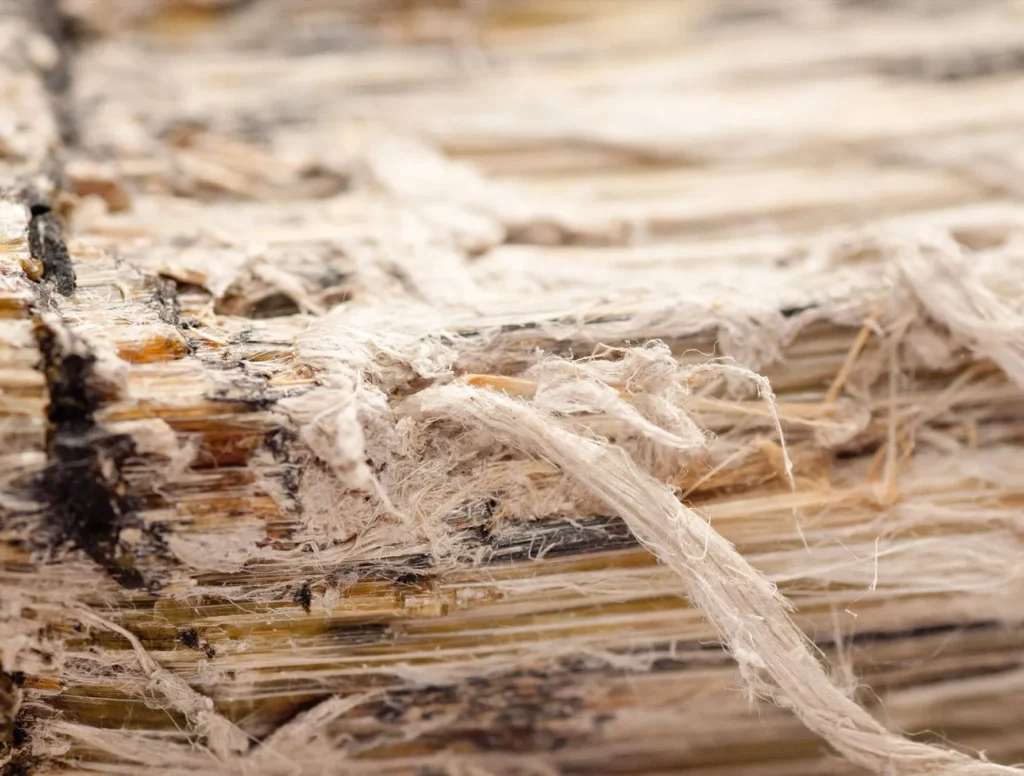
- Fibrous, fluffy insulation: Especially around old piping or boilers.
- Cracked or dusty ceiling tiles: Sprayed insulation from mid-century construction often contained asbestos.
- Deteriorating materials: Fraying, crumbling, or damaged insulation is a high-risk situation — fibers may already be airborne.
If any of these apply, do not disturb the area until it’s been professionally tested. Attempting to clean, remove, or “patch” materials can release dangerous fibers.
Health Implications of Asbestos Exposure
According to the Occupational Safety and Health Administration (OSHA), long-term exposure can cause:
- Asbestosis: A chronic lung condition from inhaled fibers.
- Mesothelioma: A rare, aggressive cancer that develops decades after exposure.
- Lung cancer and pleural disease in both smokers and non-smokers.
Even minimal, repeated exposure over time can have serious health effects. That’s why testing before renovation isn’t just recommended — it’s required by law.
Why Professional Testing Is the Only Safe Option
Certified environmental inspectors use industry-approved sampling methods to confirm asbestos presence and concentration.
A full asbestos inspection typically includes:
- Visual survey and sample collection of suspect materials.
- Laboratory analysis using polarized light microscopy (PLM).
- Comprehensive report detailing location, quantity, and type of asbestos.
At EnviroPro 360, all asbestos samples are handled by AIHA-accredited laboratories, ensuring full compliance with EPA and OSHA regulations.
What to Do If Asbestos Is Found
Don’t panic — not all asbestos needs immediate removal. In some cases, materials can be safely sealed (encapsulated) rather than removed, depending on their condition and location.
However, any damaged or friable material must be handled by a licensed asbestos abatement contractor. EnviroPro 360 partners with certified abatement teams across Georgia and South Carolina to ensure every job is performed safely and legally.
EnviroPro 360: Your Trusted Partner in Asbestos Safety
At EnviroPro 360, we combine over two decades of experience with industry-leading certifications — including OSHA, IICRC, AIHA, IAC2, and IAQA.
Our services include:
- Asbestos testing and pre-renovation surveys
- Mold and indoor air quality inspections
- Leak detection and radon testing for complete environmental safety
We serve commercial and residential clients across Georgia and South Carolina, ensuring your property remains compliant, safe, and healthy.
Call to Action
If your building was constructed before 1980 — or if you’ve noticed deteriorating insulation — it’s time to schedule a professional asbestos test.
Contact EnviroPro 360 today to protect your employees, tenants, and business from hidden hazards.
Safe Environment Begins with Us.