Mold does not always announce itself with a visible patch on the ceiling. In many cases the growth has been active for weeks or months before it becomes visible, releasing spores and gases into the air the whole time. In Augusta and the CSRA, where humidity stays elevated from spring through fall and crawl spaces rarely dry out completely between rain events, finding mold early requires knowing where to look and what to look for beyond the obvious.
What Mold Needs to Grow
Mold requires three things: a moisture source, an organic material to grow on (wood, drywall, insulation, carpet, grout), and time. It does not need a flood or a burst pipe. A slow plumbing drip behind a cabinet, condensation from an HVAC system that does not drain properly, or ground moisture migrating through a crawl space can each sustain mold growth for months before the problem becomes visible.
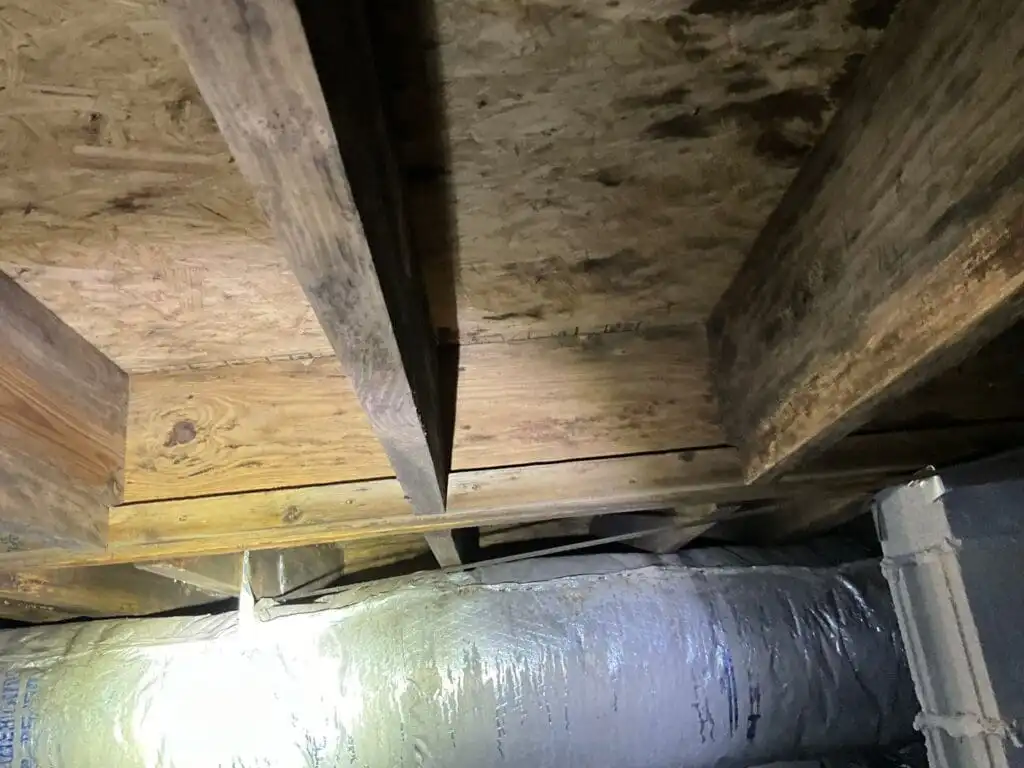
The conditions most likely to produce an active mold problem in CSRA homes are: crawl space humidity that contacts floor joists and subfloor sheathing, HVAC condensate drain failures, roof penetrations that allow water into the attic framing, and plumbing supply lines that develop slow leaks inside wall cavities.
Odor: Usually the First Indicator
The smell of active mold — earthy, musty, and persistent — is frequently detectable before visible growth appears. The odor is produced by microbial volatile organic compounds (MVOCs), gases released by actively metabolizing mold colonies. A musty smell that is stronger in the morning after the house has been closed overnight, or that intensifies in specific rooms or closets, points toward a hidden source in that area.
Pay particular attention to odor from: HVAC vents when the system first turns on, crawl space access points, attic access hatches, and the interior of closets on exterior walls. These are the locations where hidden mold most often accumulates to the point of generating a detectable smell.
Visible Signs of Mold
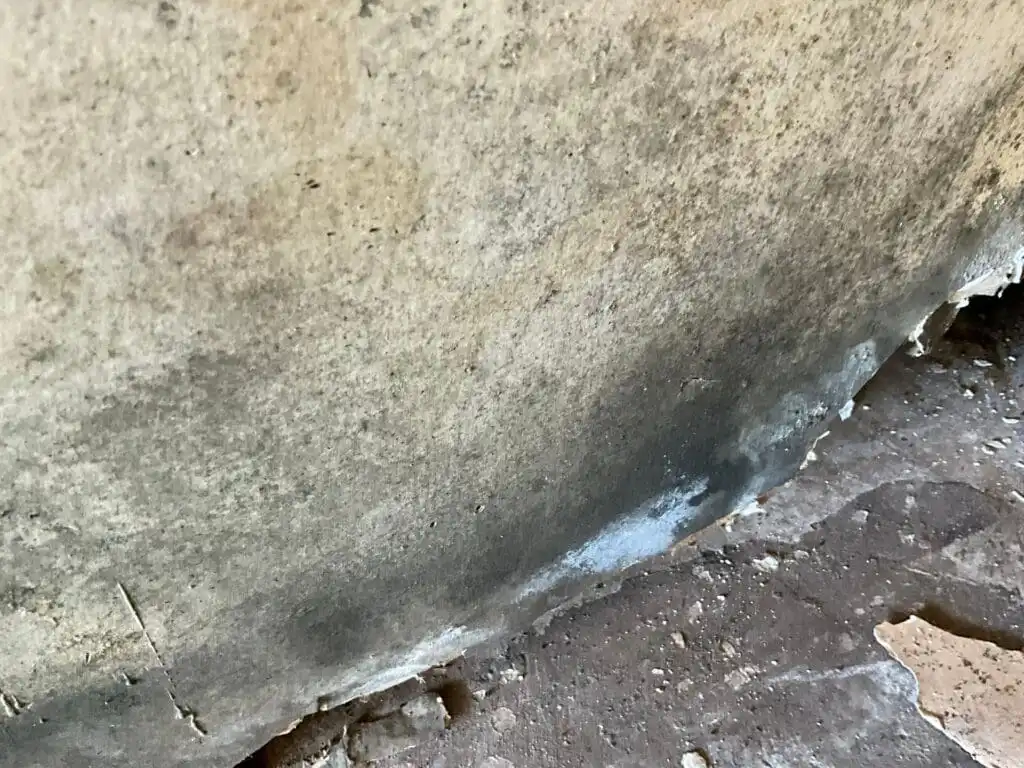
When mold is visible, it appears as surface discoloration: black spots, green or gray fuzz, orange-brown streaking, or white powdery growth, depending on the species and the substrate it is growing on. In Augusta-area homes, common locations for visible mold include bathroom grout and caulking, ceilings near HVAC supply registers, the underside of sink cabinets, and interior corners where furniture sits flush against exterior walls limiting air circulation.
Stains that reappear after cleaning, or that expand slowly over weeks, indicate ongoing moisture and active growth rather than dried, inactive mold left over from an old event.
Where Mold Hides
Many mold problems develop in areas that are not visible during normal household activity:
- Behind large appliances — refrigerators, washing machines, and dishwashers pushed against walls create low-airflow pockets where condensation accumulates
- Inside cabinets and under sinks — slow supply line or drain leaks in kitchens and bathrooms go undetected for months
- Crawl spaces — the most common hidden mold source in this region, where ground moisture contacts floor joists year-round
- HVAC components — evaporator coils, drain pans, and the interior liner of attic-routed ductwork are common mold growth sites
- Attic framing near penetrations — around bathroom exhaust fans, roof vents, and chimney flashings where water can enter or condensate
- Exterior wall closets — where the cold exterior wall surface and limited air movement create condensation on stored items and wall surfaces
Health Indicators
The CDC notes that mold exposure can cause nasal congestion, coughing, throat irritation, and eye irritation, with more severe effects in people with asthma or weakened immune systems. The location-specific pattern — symptoms worse at home and consistently better when away — is the strongest health indicator of an indoor mold source, and distinguishes mold-related symptoms from seasonal allergies or illness, which do not follow location patterns.
Detection Tools
Professional mold inspectors use moisture meters to measure moisture content in building materials, thermal imaging cameras to identify temperature anomalies that indicate concealed moisture in walls and ceilings, and hygrometers to document indoor humidity levels throughout the home. Indoor humidity sustained above 60 percent creates mold-growth conditions even without a visible leak.
DIY mold test kits provide limited useful information. They cannot reliably distinguish between baseline mold spore levels present in all indoor environments and elevated concentrations that indicate an active colony. Professional air sampling with laboratory analysis from an AIHA-accredited lab produces results that can be interpreted in context and acted on.
What Not to Do When You Find Mold
- Do not paint or caulk over mold. Surface coatings do not kill the colony and the mold continues to grow beneath them. The staining returns within weeks.
- Do not disturb large mold areas without containment. Disturbing an active colony releases spores into the air and can spread contamination throughout the house via the HVAC system.
- Do not ignore recurring spots. Mold that is cleaned and returns is a sign the underlying moisture source has not been addressed. The mold will return until the water source is eliminated.
When Professional Inspection Is the Right Step
The EPA recommends professional assessment when hidden mold is suspected, since mold growing inside walls, under flooring, or in HVAC components is not detectable through visual inspection. Professional inspection is the right step when:
- A musty odor is present but no visible mold can be located
- Visible mold has been found but its extent is unknown
- Household members have location-specific respiratory symptoms
- A water event occurred and materials were not professionally dried within 24 to 48 hours
- A home is being bought or sold and documented air quality results are needed
Schedule a Mold Inspection
EnviroPro 360 provides professional mold inspection, air sampling, and moisture mapping across Augusta, North Augusta, Aiken, Evans, and the CSRA. Contact EnviroPro 360 to schedule an inspection.