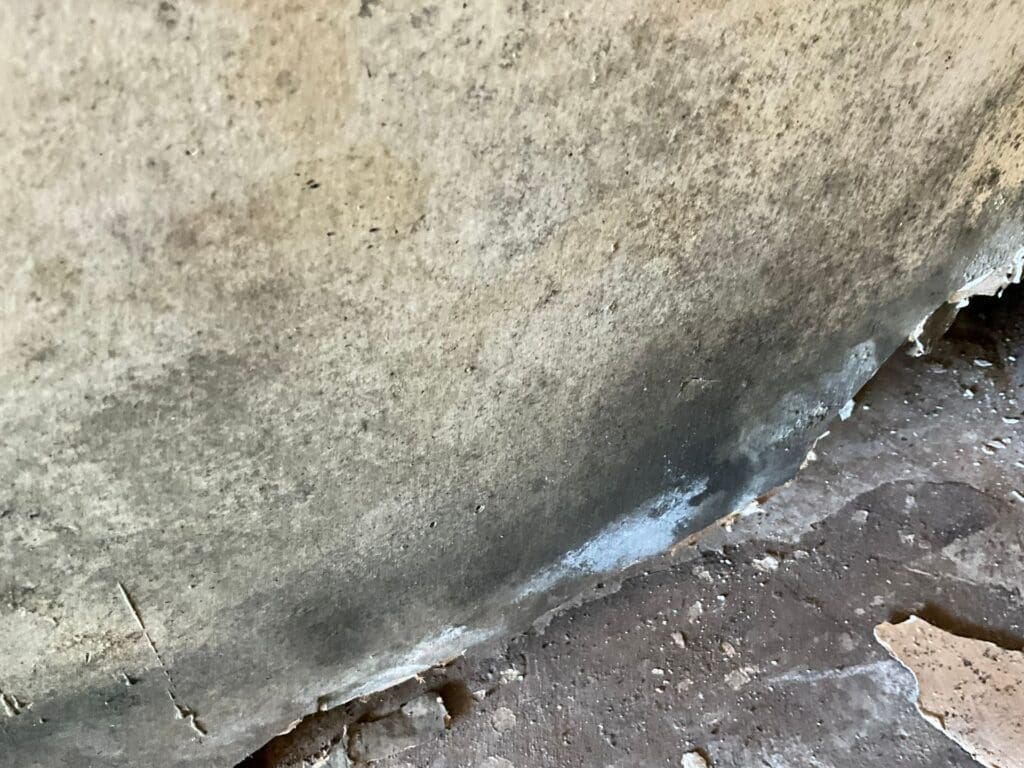
Most people don’t think about mold until they see it. A dark stain in the shower. A musty closet. A spot on the ceiling that grows a little each month.
By the time mold is visible, it has usually been there a while.
If you live near Augusta or Aiken, you know how heat, humidity and summer storms affect a house. That is why the best plan is to stop mold before it starts. And the way to do that is to control moisture.
This guide explains what stops mold from growing. It then walks through each part of the house, from the bathroom to the crawl space.
What stops mold from growing?
Mold needs three things:
- Moisture. Damp materials or humid air.
- Food. Wood, drywall paper, dust, fabric and many other common materials.
- Time. Mold can start growing on wet materials within 24 to 48 hours.
Mold spores are everywhere, indoors and out. You can’t get rid of them all. You also can’t remove every food source from a house. So moisture is the one thing you can really control.
The EPA says the key to mold control is moisture control. Keep things dry and mold can’t grow, even when spores are present.
What indoor humidity stops mold?
Relative humidity is how much water vapor the air holds compared to the most it can hold at that temperature. The EPA recommends keeping indoor humidity below 60%, and ideally between 30% and 50%.
Below 30%, the air can feel too dry. Above 60% for long periods, mold has an easier time. In a Georgia summer, outdoor humidity often sits well above 70%. So your AC and dehumidifier do a lot of work.
A hygrometer is a small gauge that reads indoor humidity. They are inexpensive and sold at most hardware stores. Put one in a central room and one in any damp area. Check them weekly.
Mold vs. mildew: is there a difference?
Mildew is a common name for mold that grows flat on surfaces. It often looks gray or white and powdery. You see it on shower grout, window sills and damp fabric.
Both are types of mold, and both need moisture. The same steps prevent both. If mildew keeps coming back in the same spot, it is a sign that area stays too wet.
Where does moisture in a home come from?
The most common sources we see in local homes are:
- Roof leaks and flashing problems
- Plumbing leaks under sinks, behind walls and at water heaters
- Damp crawl spaces with poor drainage
- Humidity from showers, cooking and laundry
- Condensation on windows, AC ducts and outside walls
- AC drain lines that clog and overflow
If you focus on these, you are already ahead.
Bathroom mold prevention
Bathrooms mix heat, water and often poor airflow.
- Run the exhaust fan during every shower and for 20 to 30 minutes after.
- Make sure the fan vents outdoors, not into the attic.
- If you don’t have a fan, open a window when you can. Think about adding a fan.
- Squeegee or wipe down shower walls after use.
- Re-caulk around tubs and showers when gaps appear.
- Fix dripping faucets and loose toilets soon.
Peeling paint near the ceiling or spots above the shower can mean moisture damage has started. For more, see How to Tell If Your Bathroom Fan Is Making Mold Worse.
Kitchen and laundry room prevention
Kitchens and laundry rooms hide many slow leaks.
Check often for:
- Damp spots or stains under sinks
- Drips from fridge or ice maker lines
- Soft flooring near the dishwasher
- Moisture around washer hoses and drains
Practical steps:
- Pull appliances out once or twice a year to look behind and under them.
- Replace brittle or bulging supply hoses before they fail.
- Make sure the dryer vents outside, not into the attic or crawl space.
- Use the range hood when you cook, and make sure it vents outside.
Small leaks that sit for months are one of the most common causes of mold we find during inspections.
Crawl space mold prevention
Crawl spaces are common in Georgia and South Carolina. They are also one of the biggest mold risks. Damp soil and humid summer air both add moisture. Damp crawl space air can also rise into the living space above.
What helps:
- Keep water away from the house. Clean gutters. Make sure downspouts carry water at least 4 to 6 feet from the foundation. The ground should slope away from the house.
- Cover the soil. A plastic vapor barrier over the dirt floor slows moisture coming up from the ground. Check it for tears and gaps.
- Watch the humidity. Put a hygrometer in the crawl space. If it often reads above 60%, talk to a contractor about a crawl space dehumidifier.
- Look after rain. Check for standing water, wet soil or sagging insulation after heavy storms.
Some homeowners choose crawl space encapsulation. This seals the crawl space with heavy plastic and adds drying. It can work well, but it is a bigger project. Get a moisture assessment first so you know the real source of the water.
To learn more, read Why Georgia Crawl Spaces Are a Mold Magnet.
Attic mold prevention
- Look in the attic after major storms for wet insulation or roof stains.
- Make sure soffit and ridge vents are open and not blocked by insulation.
- Check around bathroom fans, chimneys and plumbing vents for stains.
- Make sure bath and kitchen fans vent through the roof or wall, not into the attic.
Controlling humidity in the whole house
Even without a leak, high humidity can slowly create mold-friendly conditions.
- Keep indoor humidity between 30% and 50%.
- Use bathroom and kitchen fans every time.
- Dry clothes in a vented dryer when you can, not on indoor racks.
- Use a dehumidifier in damp rooms. Empty it or set it to drain on its own.
- Leave a few inches between furniture and outside walls so air can move.
- Keep closet doors open now and then, or use louvered doors.
Your AC is a dehumidifier too
Your air conditioner removes moisture as it cools. But an AC unit that is too big for the house cools quickly and shuts off. It doesn’t run long enough to pull much water from the air. The house feels cool but clammy.
If your home feels damp even with the AC on, have an HVAC contractor check the system. Also check the AC drain line each month. A clog can overflow the drain pan into the ceiling or floor.
Does bleach or vinegar prevent mold?
Not really. Cleaners can remove mold from hard surfaces like tile and glass. But they don’t stop it from coming back if the area stays wet. The EPA notes that bleach is usually not needed to clean mold. Soap and water often work on hard surfaces.
Porous materials, like drywall, ceiling tiles and carpet, are harder. Mold can grow inside them. Those materials may need to be removed and replaced.
The real fix is always the same. Stop the water.
What to do right after a leak or flood
Even with good habits, things happen. Pipes burst. Storms damage roofs. Appliances fail.
- Stop the water as soon as you can.
- Dry the area fast. Use fans and dehumidifiers.
- Remove soaked items like rugs, carpet pad and cardboard boxes.
- Take photos and notes for your insurance company.
The EPA recommends drying wet materials within 24 to 48 hours to prevent mold. If water soaked into walls, floors or cabinets, or sat for more than a day or two, think about professional mold testing.
When prevention isn’t enough
Prevention helps, but it isn’t perfect. Consider a professional inspection if:
- You smell a musty odor that won’t go away.
- Spots keep coming back on walls or ceilings.
- You had a big leak, roof problem or flood.
- Someone in the home has symptoms that seem worse at home.
- You are buying or selling a home.
The CDC says mold can cause stuffy noses, coughing, itchy eyes and worse asthma. People with allergies, asthma or weak immune systems are more sensitive.
How EnviroPro 360 helps
EnviroPro 360 is an independent testing company. We don’t do mold remediation. So we have no reason to find a problem that isn’t there. Our mold inspectors are Council-certified and IICRC certified.
When you call us, we can:
- Inspect and sample. Air and surface samples show whether mold levels are high and what kind is growing.
- Map moisture. Moisture meters and thermal imaging find wet spots inside walls, floors and ceilings. Thermal imaging shows temperature changes that often point to hidden water.
- Check crawl spaces and attics. We photograph problem areas you may not want to climb into.
- Verify cleanup. Post-remediation verification testing confirms that a cleanup worked.
Your next steps
- Buy a hygrometer and check your indoor humidity this week. Aim for 30% to 50%.
- Walk the house with a flashlight. Look under sinks, behind the washer, in the crawl space and in the attic.
- If you find stains, notice a musty smell or had a recent leak, schedule a mold inspection.
EnviroPro 360 provides mold inspection and testing for homes and businesses in Augusta, Aiken, Columbia and nearby towns, including Evans and North Augusta. If you have questions about mold prevention or want to talk through your situation, the EnviroPro 360 team is happy to help. Reach out any time.