DIY mold test kits are cheap and easy to find. Many people buy one the first time they smell something musty. A kit can answer a simple question. It can’t answer every question.
This guide explains how mold test kits work and how to use one the right way. It also covers when an at-home test is worth it, and when a professional mold inspection is the better first step.
What mold is and why testing is tricky
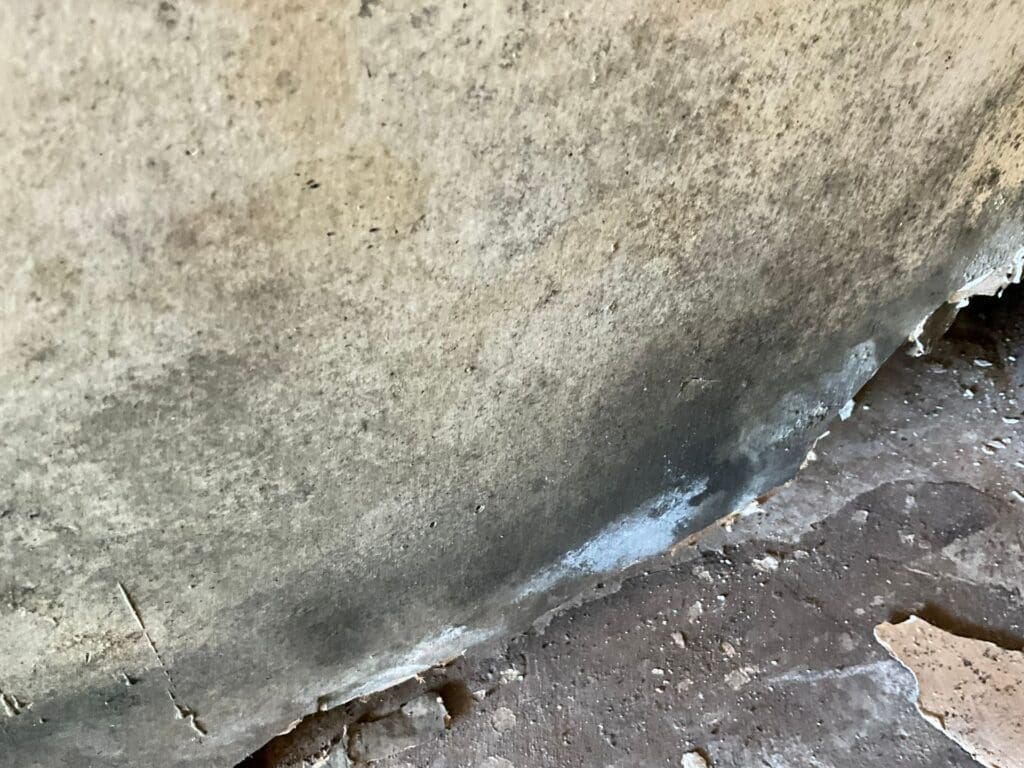
Mold is a fungus. It spreads by releasing tiny spores into the air. Spores are in every home and every yard. Finding some spores indoors is normal.
The real question is whether mold is growing inside your home. A growing patch is called a colony. A colony releases more spores than you would find in outdoor air.
The CDC says mold can cause a stuffy nose, coughing, wheezing and itchy eyes. People with asthma, allergies or weak immune systems can have stronger reactions.
In Augusta, Aiken and the rest of the region, summers are humid and storms are common. Many homes have crawl spaces and ductwork in the attic. These conditions help mold grow faster than in drier places.
How do mold test kits work?
Most kits use one of three methods. Some kits include more than one.
Settle plate kits (petri dish)
This is the most common kit in stores. It comes with a small dish filled with a growth gel. You open the dish and leave it in a room for a set time. Spores in the air land on the gel.
Then you close the dish and wait a few days. If mold grows, spots appear. Some kits stop there. Others let you mail the dish to a lab for a fee to learn which kinds of mold grew.
Surface swab or tape kits
These kits test a spot you can see. You rub a swab on the stain or press clear tape onto it. Then you mail the sample to a lab. The lab tells you if the spot is mold and what kind.
Air pump kits
A few kits come with a cassette that hooks up to a small pump. The pump pulls a set amount of air through the cassette. Spores get trapped inside. The lab then counts the spores and names the types.
This is closer to what a professional uses. But one sample in one room still has limits, which we cover below.
What about “black mold” test kits?
Some kits are sold as black mold test kits. They usually ask the lab to look for Stachybotrys chartarum. That is the mold most people mean when they say “black mold.” But a lab report names whatever mold it finds. The color of a stain doesn’t tell you the type. Read more in Black Mold Testing 101.
How to test for mold at home with a kit
Each brand has its own steps. Read the instructions first. These steps apply to most kits:
- Pick your spot. For a swab or tape kit, test the stain you are worried about. For an air or settle plate kit, choose the room that smells or bothers you most.
- Set up the room. Close the windows and doors. Many kits ask you to turn off the heat or air conditioning during the test. Follow your kit’s steps.
- Collect the sample. Follow the exact time and method in the instructions. Don’t touch the gel or the inside of the cassette.
- Label it. Write down the date, the room and the spot. Note anything useful, such as a recent leak or a musty smell.
- Ship it fast. Mail the sample within a day or two. Delays can change the result.
- Read the report. Look at the types of mold and any counts. Then think about what the report can’t show you.
How long does a mold test take?
Many settle plate kits ask you to leave the dish open for about 1 hour. Then the mold needs a few days to grow. If you mail it to a lab, add the shipping time and lab time. That often adds 1 to 2 weeks.
A professional mold inspection takes a few hours at your home. Air samples go to an accredited lab. Results often come back in a few business days, depending on the lab.
Do at-home mold tests work?
They work for a narrow job. They often fall short on the bigger questions. Here is the honest breakdown.
What an at-home kit can confirm
- A swab or tape kit can confirm that a stain is mold. That helps if you aren’t sure it isn’t dirt or soot.
- An air kit can show which spore types were in the air. It shows them only for the time the kit was open.
- A strong positive result can back up a request. For example, you may want to ask a landlord for a professional mold inspection.
What an at-home kit can’t tell you
- Whether your levels are high. Spores are in all indoor air. To know if your home is high, you have to compare indoor air to outdoor air taken at the same time. That outdoor sample is called a control sample. Most kits don’t include one.
- Whether mold is hiding. Mold often grows inside walls, under floors, in crawl spaces and in air ducts. A swab or one dish in one room can’t reach those places.
- Where the moisture is coming from. Mold needs water. If you don’t find and fix the water source, mold comes back after cleanup.
- How big the problem is. A kit can’t tell a small surface spot from a large hidden colony.
- What a reading means on a different day. Spore levels change with humidity, airflow and activity. One test on a dry day can miss a problem that shows up on humid days.
Settle plates have one more issue. Almost every dish grows something, because spores are everywhere. A dish full of spots doesn’t prove you have a problem. A clean dish doesn’t prove you don’t.
Are home mold test kits accurate enough to trust?
The lab work itself can be accurate. The problem is the sample and the missing context. The EPA says there are no federal limits for mold or mold spores. So there is no single number that means “safe” or “unsafe.” A kit report needs a trained person to read it next to an outdoor sample.
Is at-home mold testing worth it?
It depends on the question you are trying to answer.
When a DIY kit is a reasonable first step
- You see a small stain and want to know if it is mold before you clean it.
- You want some data to support asking a landlord or property manager for a mold inspection.
- You cleaned a small spot and want a basic check that the surface growth is gone.
In each case the kit is one input for a small decision. It isn’t the final answer.
When to skip the kit and get a professional mold inspection
The EPA says to consider an expert when you suspect hidden mold. Skip the kit and start with a professional when:
- Your home smells musty but you can’t find any mold.
- People in your home feel worse at home and better when they leave.
- You had a leak, flood or air conditioner overflow, and things weren’t dried within 24 to 48 hours.
- Your crawl space hasn’t been checked in a while, especially after a wet winter.
- You are buying or selling a home and need results that others will trust.
- You found mold and need to know how far it has spread before remediation. Remediation means removing mold and fixing the cause.
The EPA also notes that if you can see mold, testing usually isn’t needed to decide to clean it up. In that case, your money is better spent finding the moisture source.
Is a mold inspection worth it?
A professional mold inspection costs more than a kit. It is worth it when the answer affects your health, a home sale or a large repair. You get a full picture instead of one sample from one spot.
What a professional mold inspection includes
Our inspectors are Council-certified mold inspectors (CMI) and Council-certified structural mold investigators (CSMI). We are also IICRC certified. The IICRC is a group that sets standards for cleaning and restoration work.
A typical inspection includes:
- A visual check of living areas, the attic, the crawl space and the heating and cooling system.
- Moisture readings. A moisture meter shows wet drywall, wood and flooring without opening the wall.
- Thermal imaging. A heat-sensing camera shows cool, damp spots inside walls and ceilings.
- Air sampling. We take samples in more than one room plus an outdoor control sample.
- Surface sampling of stains when it helps.
- ERMI or ARMI dust testing when it fits your situation. ERMI (Environmental Relative Moldiness Index) and ARMI (American Relative Moldiness Index) compare the mold DNA in your dust to a large set of other homes. Learn more in what ERMI testing is.
- A written report that explains what we found and where.
We also offer post-remediation verification. That is a test after mold removal to confirm the work met its goal.
We don’t do mold remediation. So we have no reason to find more mold than is there. Our only job is to tell you what is going on. To see what a visit looks like, read what happens during a mold assessment.
How to get a mold test done
- Write down what you notice. Note smells, stains, leaks and any symptoms.
- Call a mold inspection company that does testing only. That avoids a conflict of interest.
- Ask about the inspector’s certifications and the lab they use.
- Ask if the inspection includes an outdoor control sample and moisture readings.
If you aren’t sure you need testing yet, read when your home actually needs mold testing.
Your next steps
- If you see a small stain, a swab kit can confirm it is mold. Then find and fix the water source.
- If you smell mold but can’t see it, or someone feels sick at home, skip the kit.
- Book a professional mold inspection. Ask for moisture readings and an outdoor control sample.
EnviroPro 360 provides mold inspection and mold testing for homes and businesses in Augusta, Aiken, Columbia and nearby towns. If you have questions about mold test kits or want to talk through your situation, the EnviroPro 360 team is happy to help. Reach out any time.