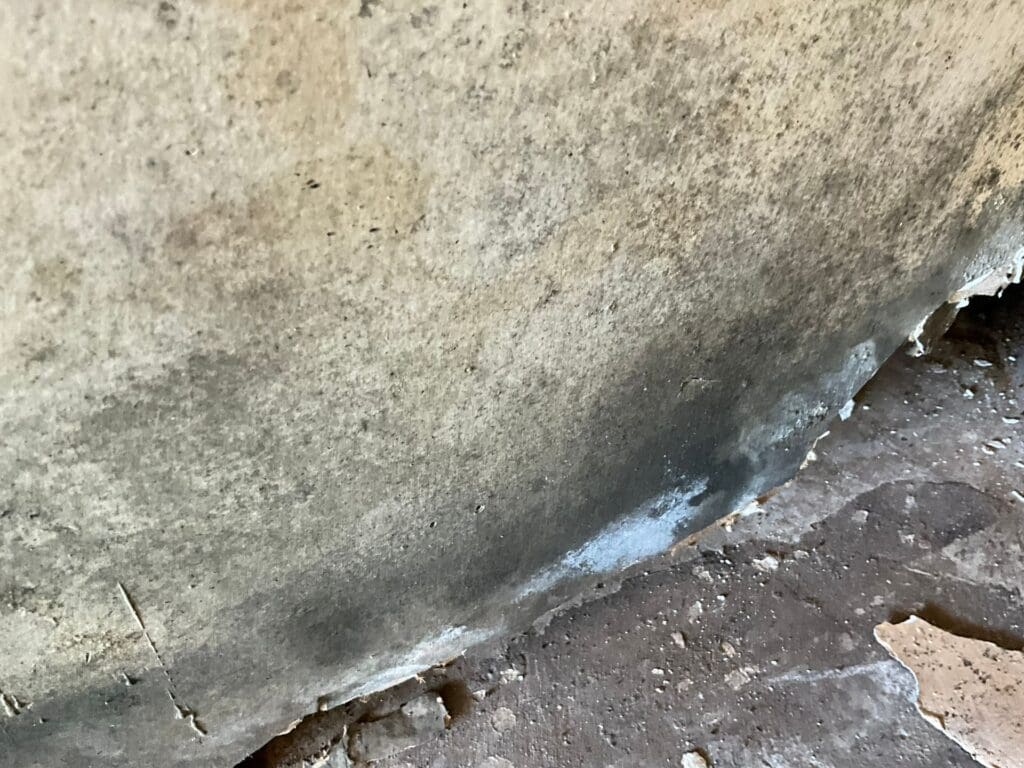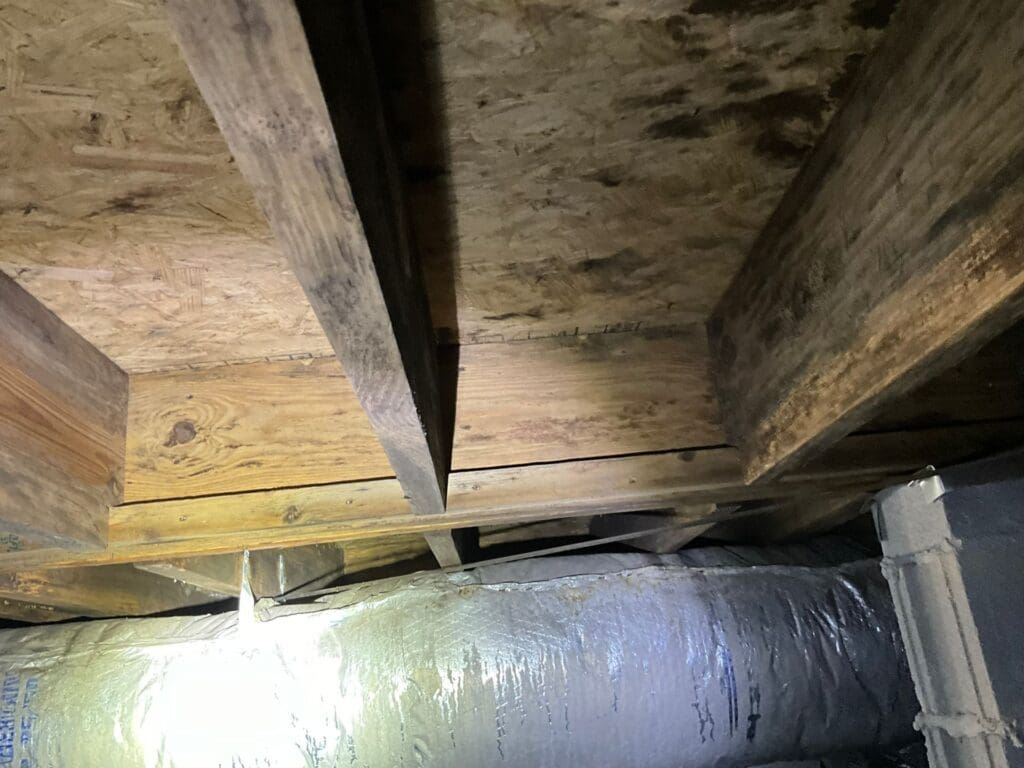
The assumption is understandable: ground-floor units deal with moisture rising from soil and slab, so the higher you live, the safer you are from mold. Many tenants in upper-floor apartments hold this belief until a mold inspection tells them otherwise.
Upper-floor apartments in Augusta and the CSRA carry their own set of mold risks. Those risks are often harder to identify because the moisture sources come from above and within the building structure, not from below.
Why Upper Floors Are Not Immune
Ground-floor mold typically traces to obvious sources: flooding, slab moisture, crawl spaces. Upper-floor mold originates differently:
- Roof leaks and flashing failures — Deteriorated roofing, aging flashing around HVAC penetrations and exhaust vents, and improperly sealed skylights allow water to track into ceiling assemblies and wall cavities. These leaks often move laterally before becoming visible, so the stain on your ceiling may not be directly below the roof entry point.
- HVAC systems in attic or mechanical closet spaces — Many apartment buildings in Augusta’s older housing stock install air handlers in attic crawls or upper closets. Condensate line blockages, pan overflows, and duct sweating in these locations introduce moisture into ceiling and wall cavities that goes undetected until the damage is significant.
- Roof-deck condensation — In the CSRA, attics above top-floor units reach extreme temperatures in summer. When the HVAC cools the unit below, the boundary between conditioned space and attic heat creates a condensation zone that can wet roof deck sheathing and insulation over time without any rain event.
- Shared plumbing from the unit above — In multi-story buildings, supply and drain lines for upper units run through the ceiling assemblies of the floor below. A slow supply leak or deteriorated drain fitting in the unit above introduces water into your ceiling without ever being visible in the unit where it originated.
The 24 to 48 Hour Window
According to the EPA, mold can begin growing on a wet surface within 24 to 48 hours at temperatures between 40 and 100 degrees Fahrenheit. In an attic-adjacent wall cavity in Augusta, those conditions exist for most of the year.
A roof leak that goes unreported for a week, a condensate pan overflow that drains slowly over several days — these are enough to establish mold colonies inside building materials that show no visible surface evidence for months. By the time a stain appears on your ceiling, the growth behind it may already be substantial.
Shared Systems, Shared Risk
Multi-unit buildings share more than walls. HVAC systems, exhaust stacks, and plumbing chases connect units across floors. The CDC notes that mold spores can travel through ventilation systems, meaning an active colony in a shared mechanical space, attic, or adjacent unit can affect air quality in units that have no visible mold of their own.
EnviroPro 360 recommends building-wide assessments for apartment complexes when mold is confirmed in one unit. A unit that tests within normal range on its own can show significantly elevated spore counts when the shared HVAC system is running and distributing spores from a contaminated section of the building.
Warning Signs in Upper-Floor Units
Physical signs to watch for:
- Staining, bubbling, or soft drywall on ceilings or upper walls, especially near HVAC vents or exterior corners
- Discoloration around skylight frames, ceiling light fixtures, or fan box cutouts
- A musty odor that intensifies when the HVAC runs or after rain
- Condensation on windows or ceiling surfaces during temperature changes
Health indicators that warrant investigation:
- Respiratory symptoms, fatigue, or headaches that improve when you leave the building
- Worsening asthma or allergy symptoms that do not respond to medication
- Symptoms concentrated in a specific room, particularly a bedroom that sits directly below the roofline
Tenant and Landlord Responsibilities in Georgia and South Carolina
Both Georgia and South Carolina require landlords to maintain rental properties in habitable condition, which includes addressing water intrusion and moisture damage. If you have reported a roof leak, HVAC problem, or visible mold to your landlord and the problem has not been addressed, you have grounds to request a written response and escalate to local housing authorities if needed.
A professional mold test provides an objective, documented record of conditions in your unit. That report belongs to you. It can support a maintenance request, a lease negotiation, or a formal complaint. Having independent test results rather than relying on an assessment arranged by the landlord ensures the data reflects your actual living conditions.
What a Professional Inspection Covers
A certified mold inspection in an upper-floor unit includes:
- Visual inspection of ceiling assemblies, HVAC components, and accessible attic or mechanical spaces
- Moisture meter readings on ceiling and wall surfaces, especially around penetrations and exterior corners
- Air sampling with the HVAC both running and off to assess whether the system is distributing spores
- Surface sampling of any visible biological growth for laboratory species identification
The written report identifies what was found, where moisture readings are elevated, and what action is appropriate. You receive the report directly.
How EnviroPro 360 Can Help
EnviroPro 360 serves renters, homeowners, and property managers across Augusta, Evans, North Augusta, Aiken, Columbia, and the surrounding CSRA. If you live in an upper-floor unit and have noticed any of the warning signs above, schedule a mold inspection with our certified inspectors.
Contact EnviroPro 360 to schedule an inspection. Same-day and 24-hour appointments are available.