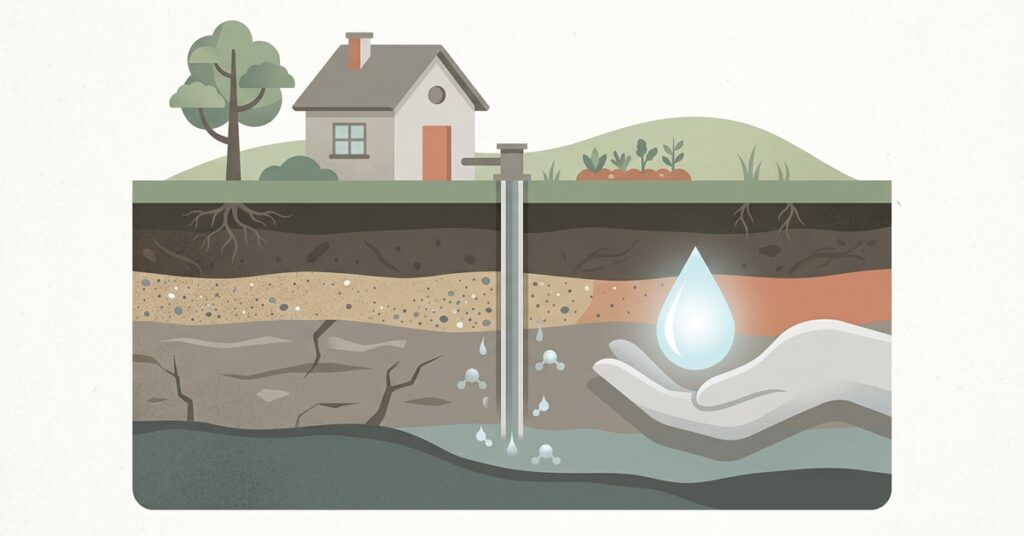
Consider this scenario: a family in Lincoln County had been drinking from their well for years with no issues. They ran a comprehensive water test when they first moved in, the results were clean, and they had never seen a reason to retest. During the extended dry summer of 2024, they started noticing the water tasted slightly different. Slightly metallic, maybe a hint of sulfur. They blamed it on a new dishwasher and ignored it.
A retest in late fall revealed total coliform bacteria, elevated iron, and elevated manganese. None of those had been present in the original test. The well had not broken. The aquifer conditions had changed because of drought. When the regional water table fell, the well’s effective catchment and the geology of the water’s path to the wellhead shifted in ways that exposed the household to contaminants that had not reached them during normal conditions.
Private wells are not static sources of water. They respond to what the water table is doing, what the soil above them is doing, and what is happening in the aquifer below. In a drought year, every one of those variables changes. If you rely on well water in the CSRA, understanding why drought matters is the first step to knowing when to test.
Why Drought Changes What Is in Your Well Water
Drought affects well water through several overlapping mechanisms. They interact, and their combined effect is often worse than any one of them alone.
Falling Water Tables Reduce Natural Filtration
Groundwater moves through soil and rock, and natural filtration during that movement is what makes groundwater generally safer to drink than surface water. Contaminants are filtered out, diluted, or broken down by the soil matrix as water percolates down.
In a drought, the water table drops. The distance water travels before reaching your well is reduced, and the direction water approaches your well from can change. Surface contaminants that previously had 30 or 40 feet of filtering soil between them and your aquifer may only have 10 or 15 feet during drought. Less distance means less filtration, which means more of what was on the surface can reach your glass.
Concentrated Contaminants
When water tables fall, the dissolved solids in the remaining groundwater become more concentrated. Iron, manganese, sulfur compounds, and various naturally occurring minerals can all rise to detectable or unpleasant levels during drought even when they were within acceptable ranges before.
For homeowners, this often first shows up as taste, odor, or staining issues: orange staining on fixtures from iron, black specks or laundry staining from manganese, a rotten-egg smell from hydrogen sulfide. These are warning signs that the chemistry of the water you are drinking has changed.
Changes in Flow Paths
Wells draw from fractures, porous zones, or specific aquifer layers depending on their depth and the geology of the area. When drought lowers the water table, different zones become dominant sources of flow to the well. A well that was drawing mostly from a deep confined aquifer during normal years may start drawing partially from shallower, less-protected zones during drought. Those shallower zones can bring in different contaminants, including nitrates from agricultural activity, bacteria from failing septic systems, and chemicals from surface runoff.
Septic System Interactions
In rural parts of the CSRA, most homes are on both well water and septic systems. Under normal conditions, a properly functioning septic drain field treats wastewater biologically before any of it reaches groundwater. During drought, the soil can become so dry that treatment is reduced, and contaminants can move more directly to groundwater when rainfall does come. Neighbor septic systems with similar dynamics contribute to broader groundwater issues that affect wells for miles around.
What Contaminants to Watch For After Drought
The CDC’s private well testing guidance recommends annual testing for well water. During and after drought conditions, the specific tests most worth running include:
Total Coliform Bacteria and E. coli
Coliform bacteria (a broad family of bacteria commonly found in soil and feces) and E. coli (a specific indicator of fecal contamination) are the primary microbiological tests for drinking water. Detection of either indicates a pathway for surface contamination to reach the well. Drought conditions, especially followed by heavy rain when drought breaks, dramatically raise the likelihood of coliform detection.
Nitrate and Nitrite
Nitrates come from fertilizer, septic systems, and animal waste. The EPA’s drinking water standard for nitrate is 10 milligrams per liter (as nitrogen). Infant methemoglobinemia (blue baby syndrome) is the primary health concern with nitrate-contaminated water. Drought can concentrate nitrates in shallow groundwater, and the first flush after drought often carries accumulated nitrate from the soil into aquifers.
Arsenic
Arsenic is a naturally occurring element that leaches from certain rocks and soils. The EPA limit is 10 micrograms per liter. Some parts of Georgia have naturally higher arsenic potential, and concentrations can change as aquifer dynamics shift during drought.
Iron, Manganese, and Sulfur Compounds
While not directly a health hazard at typical levels, these are aesthetic indicators that also signal changing water chemistry. Elevated iron and manganese can suggest corrosion in the well casing or changing anaerobic conditions in the aquifer. Hydrogen sulfide (rotten egg smell) is usually aesthetic but can also signal bacterial activity in the well itself.
Volatile Organic Compounds (VOCs)
If you are near agricultural operations, old landfills, industrial facilities, or abandoned fuel storage tanks, periodic VOC testing is a good idea. Drought conditions can mobilize VOCs from residual soil contamination that was otherwise slowly biodegrading.
pH and Total Dissolved Solids
These are general water chemistry indicators that help interpret other results. A pH shift during drought is not unusual and can affect both taste and the interaction of water with household plumbing.
When to Retest in a Drought Cycle
Standard recommendations from the Georgia Environmental Protection Division and the CDC call for annual testing of private wells. During drought, additional testing is worth the modest cost. Consider retesting:
- At the start of a noticeable drought (typically when you first notice dropping well yield, changes in water pressure, or taste changes)
- After drought-breaking rain events when the first flush of accumulated surface contamination can reach aquifers
- If you notice any change in taste, odor, color, or staining even without a clear drought trigger
- Before giving water to an infant, preparing formula, or to anyone with a weakened immune system if you have any concerns about recent changes
- After any flooding or heavy rain event regardless of season
A basic well water panel including coliform, E. coli, nitrate, and a common contaminant suite typically costs between $150 and $350 depending on the lab and the parameters tested. Comprehensive panels with VOCs, metals, and additional parameters run higher but are worth it periodically or when specific concerns warrant.
Short-Term Protection While You Wait for Results
If you suspect your water has changed and you have not yet retested, several short-term steps protect your family:
- Boil water for drinking, cooking, and infant formula for at least one minute (at least three minutes at higher elevations, though this is less relevant in the CSRA). Boiling kills bacteria and most viruses but does not remove chemical contaminants or metals.
- Use bottled water for drinking and food preparation until you have test results.
- Certified point-of-use filters can reduce specific contaminants. Look for filters certified to NSF/ANSI 53 or 58 standards for the specific contaminant of concern. A generic carbon filter will not reliably remove nitrates or bacteria.
- Do not rely on water softeners as treatment for contaminants other than hardness. Softeners do not remove biological contamination, nitrates, or most VOCs.
Longer-Term Solutions
If testing reveals contamination, treatment options depend on what was found. Some common approaches:
- UV disinfection systems for bacterial contamination
- Reverse osmosis for a broad range of dissolved contaminants at the point of use
- Ion exchange systems for specific contaminants like nitrate
- Aeration or oxidation systems for iron, manganese, and sulfur
- Well repair or deepening if shallow zones are the persistent source of contamination
The right solution depends on the well’s construction, the nature and severity of the contamination, and budget. A water treatment professional can design a system around your specific test results rather than selling a generic “whole-house filter” that may or may not address the actual problem.
Your Next Steps
- If you have a private well in the CSRA and you cannot remember the last time you tested, you are overdue. Schedule a test.
- If the region is in or coming out of a drought cycle, add drought-specific contaminants to your test panel, including coliform, E. coli, nitrate, and metals, rather than assuming your baseline test from years ago still applies.
- Pay attention to taste, odor, and staining. These are your early warning system. Changes that persist for more than a few days are worth testing rather than ignoring.
- If you have infants, pregnant women, or immunocompromised individuals in your household, tighten your testing schedule. The populations most vulnerable to waterborne contaminants deserve the most conservative approach.
If you want help selecting the right test panel for your well or interpreting results you already have, the EnviroPro 360 team can help. Contact EnviroPro 360 to schedule well water testing in the CSRA.