Here’s an example scenario: a real estate investor in Augusta buys a 1965 duplex and wants it certified lead-free before marketing it as family-friendly rental housing. He orders what he thinks is a thorough lead inspection from a general home inspector, who uses lead test swab chemistry on suspect surfaces. The swabs come back negative. The investor advertises the property as “lead-free” and rents it to a family with young children.
Months later, one of the children comes back with elevated blood lead levels on routine pediatric screening. A proper lead risk assessment finds lead-based paint in multiple locations that the swab tests had missed, along with lead dust contamination on window sills, floor near painted trim, and interior stair treads. It’s a preventable outcome — and in Augusta, the stakes are real. According to Georgia Health News, Richmond County has three of the top 20 ZIP codes in Georgia for elevated blood lead levels in children. The type of test matters.
The swab tests had not been wrong, technically. They had been asked to do a job they were not designed to do, and answer a question they were not designed to answer.
There is a real difference between a quick test, a proper inspection, and a full risk assessment. If you are dealing with lead in a home, in a rental property, in a renovation, or around children, knowing what each test can and cannot tell you is the first step to getting useful results.
The Three Main Types of Lead Testing
Paint Chip Sampling
A small chip of paint is removed from a specific location, sent to an accredited laboratory, and tested for lead content. Results are reported in milligrams per square centimeter (mg/cm²) of the painted surface or in weight percentage (% by weight) depending on the test method.
What it tells you: Whether a specific paint layer at a specific location contains lead. It is the most accurate method for confirming lead content in paint.
What it does not tell you: The condition of the paint elsewhere in the building, whether lead dust or chips have spread to other surfaces, or whether hidden layers of paint under the tested chip contain lead.
When to use it: When you need a definitive answer about a specific painted component. Often used in combination with XRF testing to confirm suspicious readings or to sample areas XRF cannot reach.
Regulatory basis: Paint chip testing is the gold standard for lead-based paint confirmation under HUD and EPA regulations. A positive paint chip result is considered definitive, while other methods are sometimes considered screening tools.
Dust Wipe Sampling
A standardized wipe (a specific type of moistened sampling cloth) is used to collect dust from a measured area (typically one square foot of floor or a specific window trough or sill area). The wipe is sent to an accredited laboratory for lead content analysis, and results are reported in micrograms of lead per square foot (µg/ft²).
What it tells you: Whether lead has actually made its way into the dust people can contact, swallow, or breathe. Dust lead is what children are actually exposed to, so dust wipe testing measures exposure potential directly.
What it does not tell you: Where the lead came from. Dust can come from deteriorating paint, soil tracked in on shoes, leaded gasoline residue on exterior surfaces brought in over decades, or renovation dust from any time in the building’s history.
When to use it: In post-renovation clearance testing, in risk assessments of occupied housing, and anywhere you want to know whether lead is present in the actual exposure pathway. The EPA dust lead hazard standards define hazardous levels at 10 µg/ft² on floors and 100 µg/ft² on interior window sills, among other specifications.
Regulatory basis: Dust wipe clearance testing is required under the EPA’s RRP (Renovation, Repair and Painting) rule for many renovation projects in pre-1978 homes and under HUD regulations for federally assisted housing.
XRF (X-Ray Fluorescence) Analysis
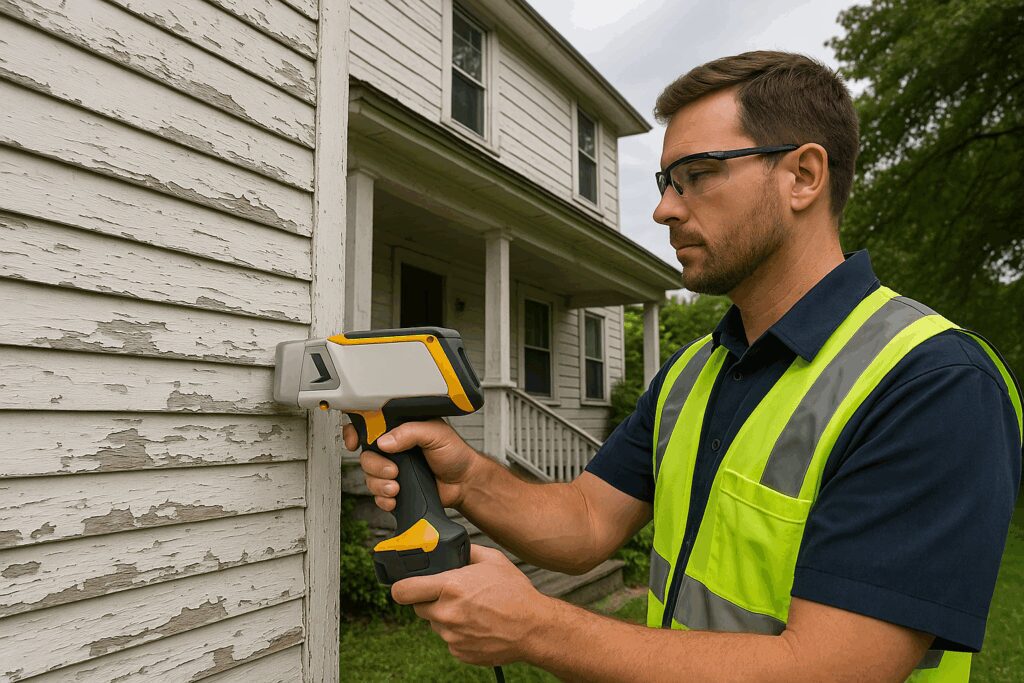
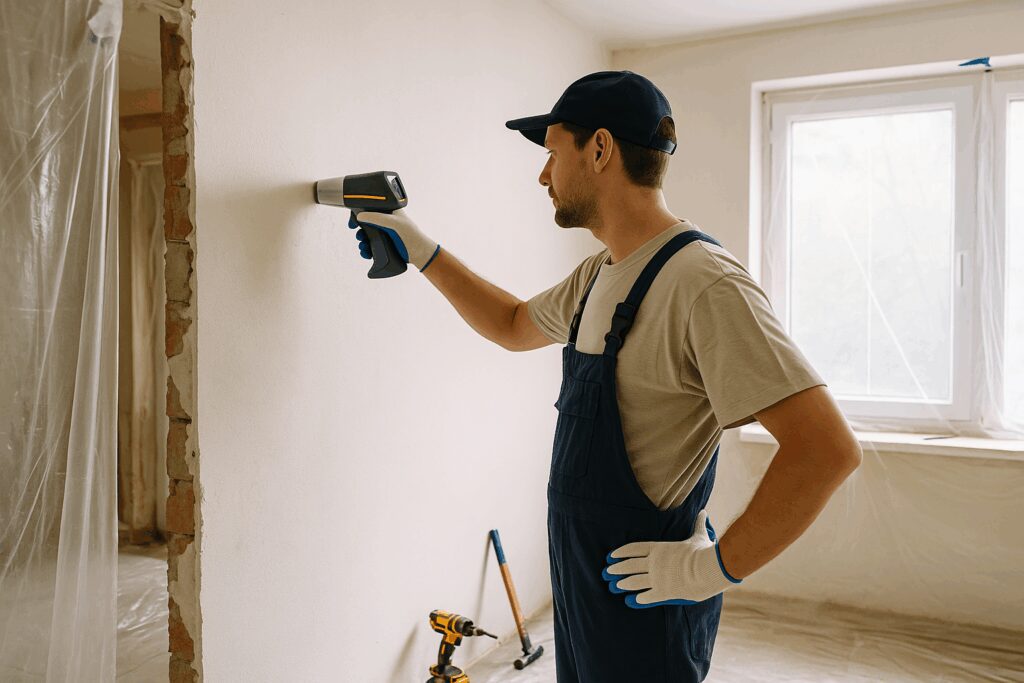
A portable handheld instrument emits X-rays at a painted surface and measures the fluorescent energy returned, which allows instant determination of the lead content of the paint without removing any material. Results are reported in mg/cm² and can be obtained in seconds per measurement.
What it tells you: The lead content of paint on a surface, including the lead content of every layer beneath the topmost layer (XRF reads through layers to substrate depth).
What it does not tell you: Whether the paint is intact or deteriorating, whether dust has spread from that paint to nearby surfaces, or whether any lead has leached into soil around the exterior.
When to use it: Comprehensive lead inspections where every painted component needs to be evaluated efficiently. XRF is the workhorse of professional lead inspections because it can survey hundreds of surfaces in a few hours.
Regulatory basis: XRF is recognized by HUD and EPA as an approved method for lead-based paint inspection when performed by a certified inspector using a calibrated instrument. Both the instrument and the operator must meet specific requirements.
What About Those Consumer Lead Test Swabs?
Consumer lead test kits using rhodizonate or sulfide chemistry are available at hardware stores and online. They work by producing a color change when the chemistry contacts a lead compound.
What they tell you: Whether a specific surface you tested right now has enough soluble lead in the topmost paint layer to produce a visible color change under test conditions.
What they do not tell you: Whether deeper paint layers contain lead, what the actual concentration is, whether lead has reached dust or soil elsewhere, or whether negative results mean the material is truly lead-free (many consumer swabs have a documented history of false negatives).
When to use them: As an inexpensive screening step to decide whether to pursue proper testing. A positive swab result is a reason to get professional testing. A negative swab result is not a reason to conclude that a surface is safe.
Regulatory basis: The EPA has evaluated several consumer test kit products and accepts specific kits for use under the RRP rule as a quick way for certified renovators to determine whether a surface is lead-free for that specific paint layer. Even EPA-accepted kits have published false-negative rates and specific use limitations.
For anything with legal, real estate, health, or compliance consequences, consumer test kits are not adequate. They are screening tools, not inspection tools.
Which Test Does Your Situation Call For?
The right test depends on what you are trying to accomplish:
I Want to Buy a Pre-1978 Home and Understand the Risk
Hire a certified lead inspector to perform a comprehensive XRF inspection of all painted components. This gives you a map of every surface in the home that contains lead-based paint. Combine with a risk assessment (which adds dust wipe sampling and a visual assessment of paint condition) if you want to understand current exposure hazards, not just presence of lead.
I Am Renovating a Pre-1978 Home
If the renovation is covered by the EPA’s RRP rule, either assume all affected painted surfaces are lead-based paint and follow lead-safe work practices, or have specific components tested by a certified renovator using an EPA-accepted test kit to confirm they are lead-free before disturbing them. Post-renovation, dust wipe clearance testing confirms that cleanup was adequate.
I Am a Landlord With Tenants Who Have Children
A lead risk assessment is the most useful step. The assessment combines visual inspection of paint condition, XRF or paint chip testing of deteriorated or disturbed surfaces, dust wipe sampling of floors and window components, and (in some cases) soil sampling. The output is a list of actual hazards in your specific property, prioritized for action. This is different from and more actionable than a lead inspection, which identifies presence but not priority.
My Child Has an Elevated Blood Lead Level
An environmental investigation at the home is standard. The investigator uses a combination of XRF, paint chip, dust wipe, water, and soil testing to identify the actual exposure source. The CDC’s guidance on responding to elevated blood lead levels emphasizes identifying and eliminating the source, not just treating the child.
I Just Want to Know if My Own Home Has Lead
If you are not in a regulated context, a certified lead inspector can perform a targeted XRF survey for a modest fee. For older homes, assume lead is present somewhere until proven otherwise. The highest priorities are friction and impact surfaces (windows, doors, stairs, door jambs) and any deteriorated paint.
Cost Ranges and What to Expect
Rough ranges for lead testing services in the CSRA:
- Consumer swab kits: $10 to $30 per kit
- Single paint chip sample, laboratory analysis: $25 to $75 per sample
- Single dust wipe sample, laboratory analysis: $25 to $75 per sample
- Full XRF lead inspection of a typical single-family home: $300 to $800
- Full lead risk assessment including XRF, dust wipes, and soil sampling: $500 to $1,500
- Post-renovation clearance testing: $200 to $600 depending on scope
Testing performed by a certified lead professional follows specific federal and state procedures. Testing performed by someone without credentials, even if labeled as a “lead inspection,” may not meet regulatory requirements and may not be accepted for legal or disclosure purposes.
Your Next Steps
- Match your testing approach to the question you actually have. “Is there lead anywhere?” is a different question from “Is there lead exposure right now?” which is different from “Is this room safe after renovation?”
- If a contractor or inspector tells you they “tested for lead” using swabs, ask specifically what test methods they used and whether the test was accepted under the applicable federal or state rules for your situation.
- If you need documentation for a real estate transaction, an insurance claim, or a compliance matter, use a certified lead professional. Non-certified results are rarely accepted.
- For pre-1978 homes with children, do not rely on negative swab results to conclude lead is not present. Plan for periodic dust wipe sampling in areas children contact as a reasonable precaution.
If you need help planning the right lead test for your specific situation, whether that is a home purchase, a renovation project, or a rental property inspection, the EnviroPro 360 team can help you figure out what you actually need. Reach out any time.