
EnviroPro 360 Blog

Explore the EnviroPro 360 Blog for expert insights on environmental testing in Georgia and South Carolina, from mold to radon and beyond.

Mold in a Multi-Tenant Building: Who's Responsible for Testing, the Landlord or the Tenant?

Mold in a Multi-Tenant Building: Who’s Responsible for Testing, the Landlord or the Tenant?

A tenant leasing office space in a multi-suite building in Augusta noticed a musty smell near the shared HVAC return vent and reported it to the property manager, who directed the tenant to their own commercial lease and pointed out language stating the tenant was responsible for maintaining “the interior of the leased premises.” The

Mold in a Multi-Tenant Building: Who’s Responsible for Testing, the Landlord or the Tenant? Read More »

Radon in Your Well Water: The Contaminant a Standard Water Test Doesn't Check For

Radon in Your Well Water: The Contaminant a Standard Water Test Doesn’t Check For

A homeowner outside Aiken had her well tested for the standard panel: total coliform, E. coli, nitrates, pH, and a metals screen. Everything came back within safe ranges, and she felt confident about her water. What that panel didn’t include, and what most standard well water tests don’t include, was radon. A separate test, prompted

Radon in Your Well Water: The Contaminant a Standard Water Test Doesn’t Check For Read More »

Asbestos in HVAC Duct Insulation: A Risk Contractors Often Miss

Asbestos in HVAC Duct Insulation: A Risk Contractors Often Miss

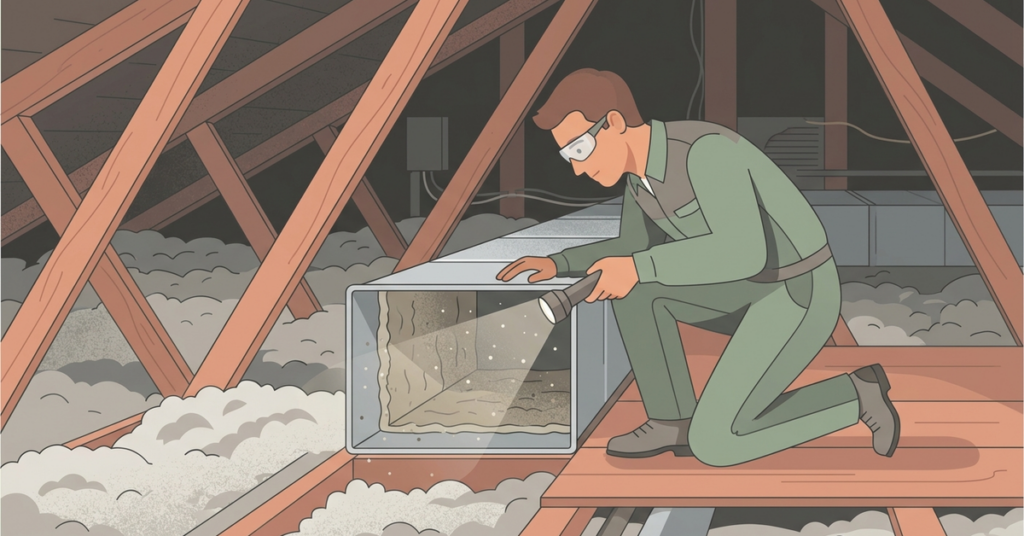
An HVAC contractor replacing a rooftop unit on a commercial building in downtown Augusta cut into the supply ductwork to connect new equipment, standard procedure on a straightforward swap. The building was constructed in 1974. The ductwork was original. What the crew didn’t check before cutting was the corrugated wrap insulation covering roughly forty feet

Asbestos in HVAC Duct Insulation: A Risk Contractors Often Miss Read More »

The RRP Rule Doesn't Cover DIY: Why Homeowners Renovating Their Own Home Still Need to Test for Lead

The RRP Rule Doesn’t Cover DIY: Why Homeowners Renovating Their Own Home Still Need to Test for Lead

A homeowner in Aiken spent a weekend sanding old paint off the exterior trim of her 1962 house before repainting it herself. She’d heard about lead paint rules for contractors and figured, since she was doing the work herself, none of it applied to her. She wasn’t entirely wrong about the rule. She was wrong

The RRP Rule Doesn’t Cover DIY: Why Homeowners Renovating Their Own Home Still Need to Test for Lead Read More »

Legionella Risk in Buildings That Sat Empty: Why Reopening a Water System Needs Testing First

Legionella Risk in Buildings That Sat Empty: Why Reopening a Water System Needs Testing First

A property management company in Augusta reopened a mostly vacant office building after a slow leasing period left two floors unoccupied for nearly five months. Water service had never been shut off, but almost nothing had run through the pipes on those floors: no faucets, no showers in the tenant break rooms, minimal flow through

Legionella Risk in Buildings That Sat Empty: Why Reopening a Water System Needs Testing First Read More »

Asbestos in Roofing, Siding, and Floor Tiles: What 'Intact' and 'Friable' Actually Mean

Asbestos in Roofing, Siding, and Floor Tiles: What ‘Intact’ and ‘Friable’ Actually Mean

One of the most persistent misconceptions about asbestos is that its presence in a building automatically constitutes an emergency. For homeowners in Augusta who live in pre-1980 structures, that misunderstanding causes unnecessary anxiety and sometimes unnecessary expense. The more useful framing is this: asbestos-containing materials in good condition, left undisturbed, present a different risk profile

Asbestos in Roofing, Siding, and Floor Tiles: What ‘Intact’ and ‘Friable’ Actually Mean Read More »

Thermal Imaging for Leak Detection: How Infrared Technology Finds Water Damage You Can't See

Thermal Imaging for Leak Detection: How Infrared Technology Finds Water Damage You Can’t See

The most expensive water damage in a home is rarely the kind you can see. A burst pipe that floods a basement is dramatic and obvious. You know it happened, you know approximately when, and you can see the scope of the damage. The more costly problems, in terms of both repair costs and long-term

Thermal Imaging for Leak Detection: How Infrared Technology Finds Water Damage You Can’t See Read More »

What an Indoor Air Quality Test Actually Measures: A Plain-Language Breakdown

What an Indoor Air Quality Test Actually Measures: A Plain-Language Breakdown

The phrase “indoor air quality test” gets used broadly, and that creates confusion about what testing actually involves and what it tells you. Someone whose tenant is complaining of respiratory irritation, someone who just finished a basement renovation, and someone who recently moved into a new home all might be told they need an indoor

What an Indoor Air Quality Test Actually Measures: A Plain-Language Breakdown Read More »

Scroll to Top