
EnviroPro 360

May 2026

Lead in the Soil: The Exposure Path Most Homeowners Never Consider

Lead in the Soil: The Exposure Path Most Homeowners Never Conside …

Here’s an example scenario: a pediatrician in Richmond County orders blood lead testing for a two-year-old whose parents had done everything right. Their older home had been professionally deleaded before they moved in. Every interior surface was covered with encapsulated or replaced paint. They tested the water. They bought a HEPA vacuum. The test result […]

Lead in the Soil: The Exposure Path Most Homeowners Never Conside … Read More »
Asbestos Pipe Insulation: The Hidden Hazard in Older Commercial Buildings

Asbestos Pipe Insulation: The Hidden Hazard in Older Commercial B …

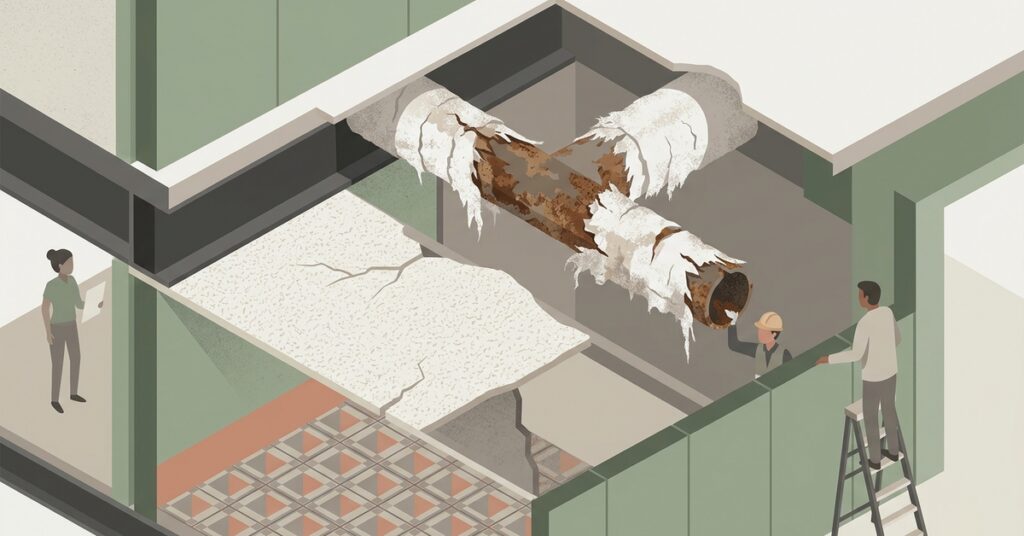
A facilities manager at an Augusta-area office building recently discovered white, flaking insulation on a hot water pipe that needed repair. He halted work before the plumber started cutting and had the material tested. Results confirmed chrysotile asbestos, the most common asbestos fiber type. Had that plumber cut into the line without precautions, he would

Asbestos Pipe Insulation: The Hidden Hazard in Older Commercial B … Read More »

high radon levels

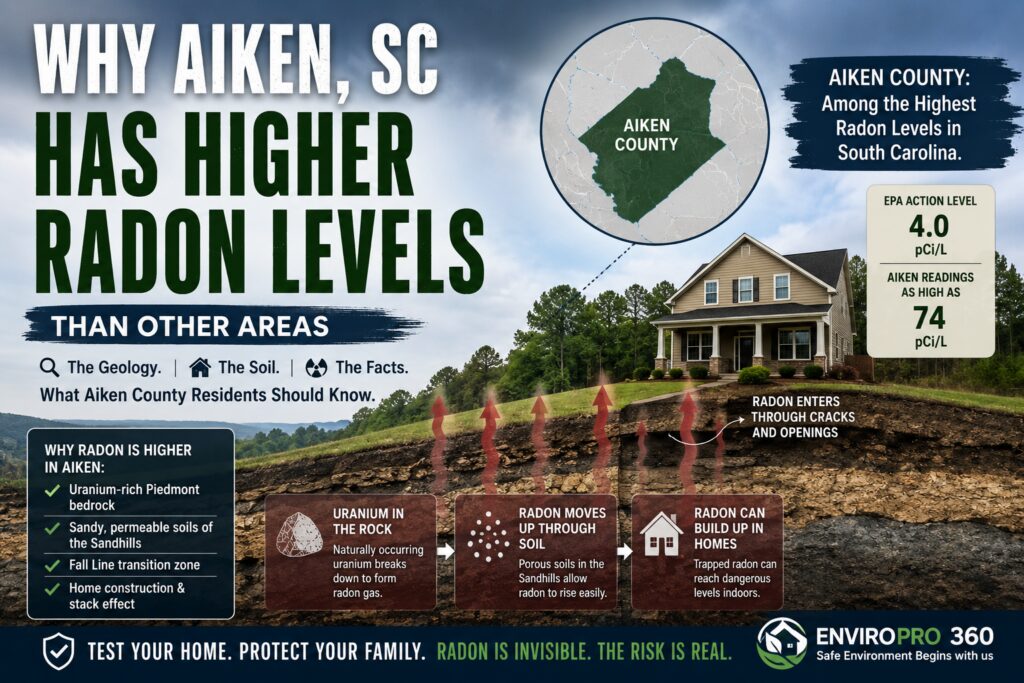
Why Does Aiken, SC Have Higher Radon Levels Than Other Areas?

If you live in Aiken County, you have likely heard radon come up during a home inspection, seen it mentioned in a local news investigation, or noticed that Aiken keeps appearing on elevated radon lists across South Carolina. The question that follows is a reasonable one: why does Aiken seem to have consistently higher radon

Why Does Aiken, SC Have Higher Radon Levels Than Other Areas? Read More »

Short-Term vs. Long-Term Radon Tests: Which One Tells You the Truth?

Short-Term vs. Long-Term Radon Tests: Which One Tells You the Tru …

Here’s an example scenario: a family in Columbia County ran a 48-hour charcoal canister test last October. The result came back at 2.8 pCi/L (picocuries per liter, the standard unit for radon measurement), comfortably below the EPA action level of 4.0 pCi/L. They felt good about the number and moved on. Eight months later, during

Short-Term vs. Long-Term Radon Tests: Which One Tells You the Tru … Read More »

The Real Cost of Ignoring Radon: Health Risks, Home Value, and What Buyers Expect

The Real Cost of Ignoring Radon: Health Risks, Home Value, and Wh …

Consider this scenario: a homeowner in Richmond County tested for radon eight years ago. The result was 5.6 pCi/L (picocuries per liter, the standard unit for radon measurement), above the EPA action level of 4.0 pCi/L. He meant to get it mitigated. Life got busy. He filed the test result in a drawer and forgot

The Real Cost of Ignoring Radon: Health Risks, Home Value, and Wh … Read More »

Black Mold vs. Other Mold: What's Actually Dangerous

Black Mold vs. Other Mold: What’s Actually Dangerous

Here’s an example scenario: a homeowner in Augusta finds dark growth on the drywall behind a bathroom vanity. She searches online for “black mold” and is immediately buried in alarming articles about toxic mold syndrome, neurological damage, and families forced to abandon their homes. Within an hour, she’s convinced her house is uninhabitable. Here’s what

Black Mold vs. Other Mold: What’s Actually Dangerous Read More »

VOCs, Particulates, and Formaldehyde: What's Really in Your Indoor Air

VOCs, Particulates, and Formaldehyde: What’s Really in Your …

Consider this scenario: a family in Evans moves into a newly built home and within the first week, two household members develop persistent headaches and one child complains of a sore throat that does not resolve. They check for mold: nothing visible. Radon test: normal. They assume the cause is seasonal allergies. Two months later,

VOCs, Particulates, and Formaldehyde: What’s Really in Your … Read More »

Vermiculite Insulation and Asbestos: What Homeowners Need to Know

Vermiculite Insulation and Asbestos: What Homeowners Need to Know

Here’s an example scenario: a homeowner in Thomson decides to add blown-in insulation to his attic for better energy efficiency. He climbs up to assess the existing insulation and finds a layer of small, gray-brown, accordion-shaped granules covering the attic floor. He scoops some into a bag to take to the hardware store and ask

Vermiculite Insulation and Asbestos: What Homeowners Need to Know Read More »

Scroll to Top