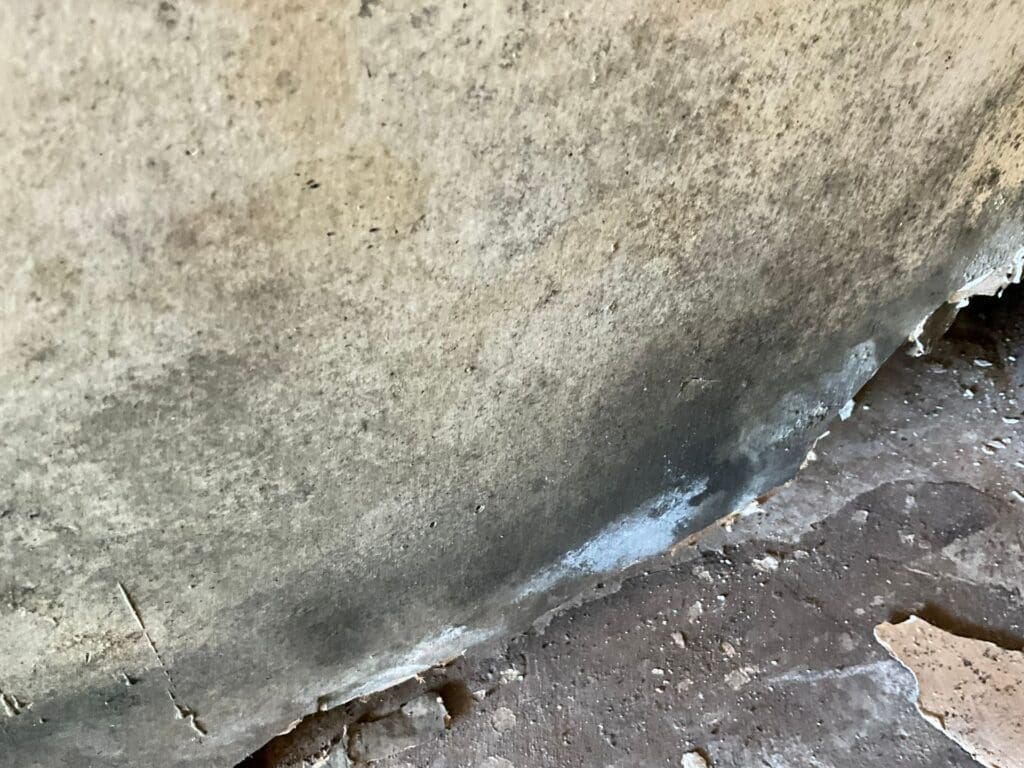
Sometimes a mold air test or visual inspection doesn’t explain what’s going on. Someone in the house keeps coughing. Or the home still smells musty after cleaning. In cases like these, an ERMI test can give a fuller picture.
ERMI looks at what has built up in your home’s dust over months or years. ARMI is a shorter version of the same idea. This guide explains both tests, what the scores mean and when each one is worth it.
What is ERMI testing?
ERMI stands for Environmental Relative Moldiness Index. Researchers at the EPA (Environmental Protection Agency) created it. They wanted a way to compare the mold burden in different homes. Mold burden means how much mold has built up in a home overall.
An ERMI test does not sample the air. It uses settled dust instead. Dust collects slowly, so it holds a record of the mold that has been in the home over time. An air sample only shows one moment.
How ERMI was developed
EPA scientists built ERMI using dust from about 1,100 homes across the U.S. These homes were part of a national survey run with HUD (U.S. Department of Housing and Urban Development). The results became a reference database. Your home’s score is compared to those homes.
The lab method is called MSQPCR. That stands for mold-specific quantitative polymerase chain reaction. It finds and counts the DNA of specific molds in a dust sample. It can detect molds that won’t grow in a lab dish. It can also detect mold that is no longer alive.
What does an ERMI mold test measure?
An ERMI test looks for 36 kinds of mold. They are split into two groups:
- Group 1 (26 species). These molds are linked to water-damaged homes. They include Stachybotrys chartarum, Chaetomium globosum and several Aspergillus and Penicillium species.
- Group 2 (10 species). These molds are found in most homes, wet or dry. They serve as a baseline.
What does an ERMI score mean?
The lab adds up the Group 1 results. Then it subtracts the Group 2 results. The answer is your ERMI score.
A higher score means more of the water-damage molds compared to the common ones. That points to past or current moisture problems. A low or negative score means your mix of molds looks more like a typical dry home.
Most lab reports also rank your score against the U.S. reference homes. They often use four groups, called quartiles. A score in the top quartile means your home has more mold than most homes in the database.
Your report also lists each of the 36 molds and how much of each was found. That detail can point to the kind of moisture problem you have.
Is ERMI an EPA-approved test?
No. This is important to know. The EPA says ERMI was peer reviewed for research. But the EPA’s ERMI fact sheet says it has not been validated for other uses. For that reason, the EPA does not recommend routine use of ERMI in homes, schools or other buildings.
That doesn’t mean ERMI is useless. It means an ERMI score should not be read alone. A qualified mold inspector uses it next to a visual inspection, moisture readings and air sampling. Together, they give a clearer answer than any one test.
ERMI vs. standard mold air testing
Can you measure mold in the air? Yes. Standard mold testing uses spore trap air samples. A pump pulls air through a cassette that catches spores. The lab counts them and compares the indoor air to the outdoor air.
Air testing and ERMI answer different questions:
- Air sampling shows what is in the air right now.
- ERMI shows what has built up in the dust over time.
An air sample can miss mold that isn’t releasing spores that day. A hidden colony in a crawl space is a good example. ERMI can still pick up DNA from mold that has been shedding into the home for months. That’s why ERMI is often used as a follow-up when air results don’t explain the problem.
The two tests work best together. Neither one replaces the other.
What is ARMI testing?
ARMI stands for American Relative Moldiness Index. The same researchers built it from the same HUD survey homes. ARMI uses a smaller set of molds from the ERMI panel. The goal was to lower the cost of analysis.
ARMI uses the same dust sample and the same MSQPCR lab method. In the original study, ARMI and ERMI scores tracked each other closely. Their correlation was 0.88. A correlation of 1.0 would mean they match exactly.
ARMI vs. ERMI: which is right for you?
| ERMI | ARMI | |
|---|---|---|
| Molds analyzed | 36 (26 water-damage, 10 common) | A smaller subset of the ERMI panel |
| Sample | Settled dust | Settled dust |
| Lab method | MSQPCR | MSQPCR |
| Best use | Detailed investigation, documentation, follow-up | Screening and baseline checks |
| Relative cost | Higher | Lower |
When ARMI makes sense
ARMI is a good fit when you want a lower-cost answer to one question: is the mold burden higher than normal?
- Screening a home before you buy, especially one with a crawl space or past leaks.
- Getting a baseline for a rental property between tenants.
- Checking after a minor water event to see if more testing is needed.
- Following up after remediation when an earlier ARMI test set the baseline.
When ERMI is the better fit
The full ERMI panel is the stronger choice in these cases:
- The home had major water damage and you need a full species list for remediation planning.
- Results will be used for insurance, legal records or a doctor.
- Someone in the home has severe symptoms or a weak immune system.
- An earlier ARMI score was high and you need more detail.
- Past tests gave mixed or unclear results.
When is ERMI testing the right choice?
ERMI isn’t needed for every mold question. If you can see the mold and know the leak, you don’t need a DNA test to confirm it. ERMI is most useful in these cases:
- Symptoms continue even though earlier testing found no clear problem.
- A doctor wants detailed records of mold exposure for a patient.
- Several earlier tests gave conflicting results.
- You need extra detail after remediation in a home with a complex history.
The CDC (Centers for Disease Control and Prevention) says some people face higher risk from mold. That includes people with asthma, allergies or weak immune systems. For these households, the species detail from ERMI can be useful.
In Augusta and across Georgia and South Carolina, ERMI often comes up in older homes. These homes have had decades of humid summers. Many sit over vented crawl spaces or have a history of plumbing leaks. Mold from these sources can build up in dust long before you see it.
ERMI and urine mycotoxin tests
Some people search for ERMI and urine mycotoxin testing together. They are very different tests. A urine mycotoxin test checks a person’s body for mold toxins. A doctor orders it.
ERMI checks your home, not your body. It tells you which molds have built up in the dust. If you have health questions, talk with your doctor. If you want to know what’s in your home, that’s where a mold inspector helps.
How the ERMI dust test is collected
A trained inspector collects the sample. They vacuum settled dust from set areas, often in the bedroom and living room. They use a special filter cassette and a set method. Rooms with recent heavy cleaning may not give a true picture, so timing matters.
The sample is sealed and logged with a chain of custody form. That form tracks who handled the sample and when. The sample then goes to an accredited lab for MSQPCR analysis. Results usually come back in several business days.
You can buy DIY ERMI kits. But the way dust is collected affects the result. An ERMI test from a qualified mold inspector comes with the visual inspection and moisture readings that give the score meaning.
Some people outside the U.S., such as in Canada, ask about ERMI too. Keep in mind that every ERMI score is compared to U.S. homes.
How we use ERMI and ARMI
Our inspectors are Council-certified mold inspectors (CMI) and Council-certified structural mold investigators (CSMI). They are also IICRC certified. We offer air and surface sampling, moisture readings, thermal imaging, ERMI and ARMI. We also offer post-remediation verification. That’s a test after cleanup to show the work was done right.
We are an independent testing company. We don’t do mold remediation. So we have no reason to push a bigger test or a bigger cleanup. We’ll suggest the test that fits the question you’re asking.
To learn more about how inspections work, read what happens during a mold assessment. You may also like the best mold detection techniques for homeowners and why pre- and post-remediation mold inspections matter.
Your next steps
- Write down your home’s history: leaks, floods, musty smells and when symptoms started.
- Start with a mold inspection that includes moisture readings and air sampling.
- Ask about ERMI or ARMI if earlier tests didn’t explain the problem, or if you need detailed records.
EnviroPro 360 provides mold inspection and ERMI testing for homes and businesses in Augusta, Aiken, Columbia and nearby towns. If you have questions about ERMI or ARMI testing or want to talk through your situation, the EnviroPro 360 team is happy to help. Reach out any time.