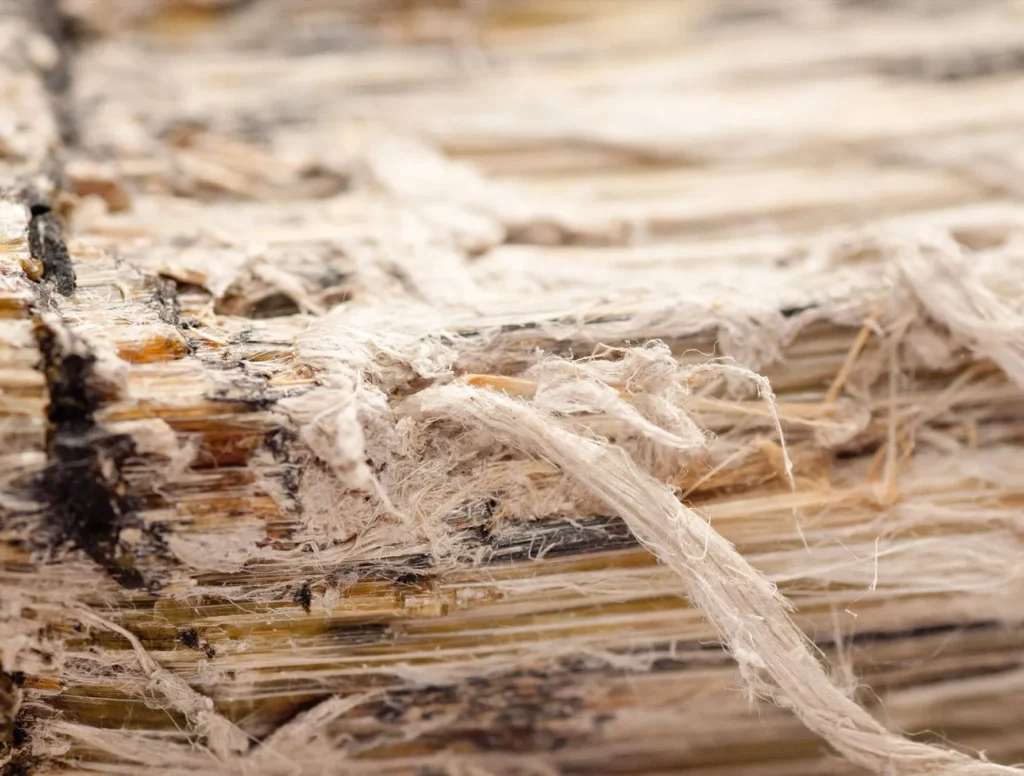
If you’ve just found out your home or building might contain asbestos, or you’re trying to understand what the risk actually is, this is where to start. Asbestos generates a lot of anxiety — some of it warranted, some of it not. This post covers the basics: what asbestos is, why it’s dangerous, where it’s commonly found, and what you should actually do about it.
What Is Asbestos?
Asbestos is a group of naturally occurring fibrous minerals mined and used extensively in construction from the early 1900s through the 1980s. The properties that made it so appealing — heat resistance, tensile strength, durability, and low cost — also made it nearly ubiquitous in building materials of that era.
There is no comprehensive federal ban on asbestos in the United States. The EPA has restricted specific uses, but asbestos remains in place in millions of older buildings. If your home or building was constructed before 1980, there is a reasonable chance asbestos-containing materials (ACM) are present somewhere.
Why Asbestos Is Dangerous
Asbestos in good condition, left undisturbed, poses minimal risk. The danger comes when asbestos-containing materials are cut, drilled, scraped, sanded, or otherwise disturbed and microscopic fibers become airborne.
Once inhaled, asbestos fibers cannot be expelled by the body. They lodge in lung tissue and the lining of the chest cavity, where they cause slow, cumulative damage over years and decades. According to the CDC/NIOSH, there is no established safe level of asbestos exposure. The diseases associated with asbestos include:
- Mesothelioma — an aggressive cancer affecting the lining of the lungs, abdomen, or heart. It is almost exclusively caused by asbestos exposure and is typically diagnosed 20 to 50 years after initial exposure.
- Asbestosis — progressive scarring of lung tissue that causes increasing difficulty breathing over time. There is no cure.
- Lung cancer — asbestos exposure significantly increases lung cancer risk, particularly in combination with smoking.
- Pleural disease — thickening and scarring of the membrane surrounding the lungs, which can restrict breathing even without a cancer diagnosis.
The long latency period between exposure and diagnosis is what makes asbestos particularly difficult to manage from a public health standpoint. Someone exposed during a renovation in 1985 may not receive a diagnosis until 2025 or later.
Where Asbestos Is Commonly Found
Knowing where asbestos was used helps you identify what materials in your building may need testing before any work begins.
In residential buildings (pre-1980):
- Popcorn ceiling texture — one of the most common residential sources. Learn more about popcorn ceilings and asbestos.
- Vermiculite attic insulation — particularly material sourced from the Libby, Montana mine. Learn more about vermiculite insulation.
- Vinyl floor tiles and the mastic adhesive beneath them
- Roofing shingles and felt underlayment
- Exterior siding panels (transite)
- Pipe and duct insulation
In commercial and industrial buildings (pre-1981):
- Pipe insulation and mudded fittings — a common source that deteriorates over time and is frequently disturbed during routine maintenance. Learn more about pipe insulation in commercial buildings.
- Sprayed-on fireproofing on structural steel
- Ceiling tiles and lay-in panels
- HVAC duct insulation
- Transite wall and ceiling panels in mechanical rooms
Visual identification is unreliable for all of these materials. Laboratory analysis of a bulk sample is the only way to confirm whether a material contains asbestos.
Worker and Employer Responsibilities
For contractors, renovation crews, and building maintenance staff working in pre-1980 buildings, asbestos is an occupational hazard with specific federal requirements under OSHA’s construction standard (29 CFR 1926.1101).
Employers must:
- Assess the presence of ACM before any demolition, renovation, or maintenance that could disturb suspect materials
- Treat pre-1981 thermal system insulation as presumed asbestos-containing material (PACM) unless testing confirms otherwise
- Maintain worker exposures at or below the permissible exposure limit of 0.1 fibers per cubic centimeter as an 8-hour time-weighted average
- Provide NIOSH-approved respirators and disposable protective clothing for workers with potential exposure
- Use wet methods and HEPA vacuuming to control dust during any work that disturbs suspect materials
- Enroll exposed workers in medical surveillance programs when exposures meet OSHA thresholds
Workers who suspect they have disturbed asbestos-containing materials should stop work immediately, leave the area without disturbing it further, and report to their supervisor. Attempting to clean up or continue working in a potentially contaminated area without proper equipment and procedures increases exposure.
When Testing Is Required
Testing requirements depend on the project type and building classification.
- Before any renovation or demolition of a commercial, institutional, industrial, or multi-unit residential building: a pre-renovation asbestos survey is required under EPA’s Asbestos NESHAP. See the full pre-renovation checklist for Georgia and South Carolina property managers.
- Before renovation work in any pre-1985 residential building: testing is strongly recommended even when not legally required, particularly if work will disturb ceiling materials, flooring, or insulation.
- When materials show signs of deterioration: crumbling, friable, or water-damaged materials in older buildings should be assessed before occupants or workers re-enter the space.
What Happens After a Positive Result
Finding asbestos doesn’t automatically mean the material needs to be removed. Intact, undisturbed ACM that isn’t scheduled to be disturbed can often be managed in place or encapsulated. The decision depends on the material’s condition, location, and what work is planned.
When removal is necessary — because materials are deteriorating, will be disturbed during renovation, or need to be cleared for demolition — the work must be performed by a licensed abatement contractor under controlled conditions, with proper containment, air monitoring, and regulated waste disposal. Learn what a commercial asbestos abatement project actually involves.
Getting Started
If you’re not sure whether your home or building contains asbestos, the first step is an asbestos inspection by a state-licensed inspector. In Georgia, inspectors are licensed by the Georgia EPD. In South Carolina, they are licensed by SC DHEC. Both states require licensing for inspectors who perform bulk sampling — verify credentials before any sampling work begins.
EnviroPro 360 provides certified asbestos inspections and testing for residential and commercial properties across Georgia and South Carolina. If you have questions about your specific situation, the team is happy to help. Reach out any time.