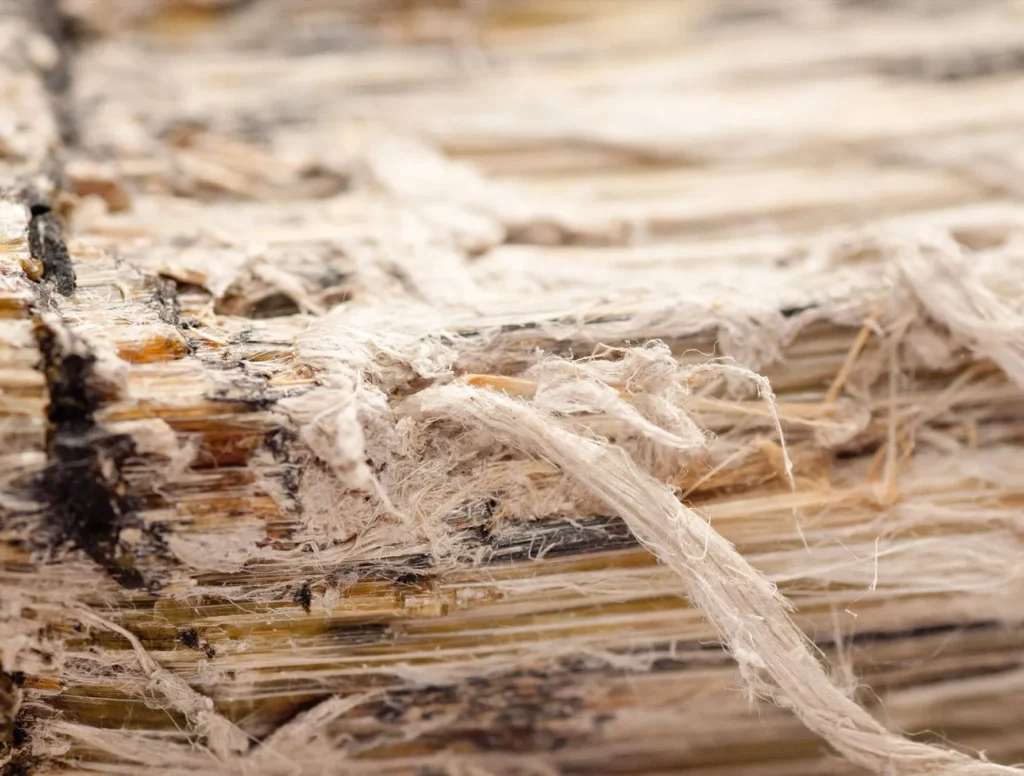
Here’s an example scenario: a property owner in downtown Augusta bought a 1958 office building as an investment and planned a nine-month renovation to convert the interior to mixed-use tenant space. The initial renovation budget assumed an asbestos survey would confirm the suspected ACM (asbestos-containing material) was limited to a small amount of floor tile that could be encapsulated in place.
The survey confirmed what the owner expected plus a lot more. Original floor tile and mastic throughout three floors. Pipe insulation in the mechanical room and mudded fittings throughout the basement distribution. Transite (asbestos cement) wall panels in the mechanical room. A layer of asbestos-containing ceiling spray on the second floor above a drop ceiling that had been installed decades after original construction.
The abatement scope tripled. The renovation timeline extended by four months. The total project cost rose by more than 40% of the original budget. None of it was avoidable. All of it was predictable with a proper pre-renovation survey.
This is what commercial asbestos abatement looks like when it is done correctly. If you are planning a renovation, acquisition, or demolition of a commercial building in the CSRA, understanding the full scope of the regulatory, technical, and financial process will help you plan realistically rather than get surprised.
The Regulatory Framework Governing Commercial Abatement
Commercial asbestos work in Georgia is governed by overlapping federal and state rules. Each addresses a different aspect of the process.
NESHAP (EPA)
The National Emission Standards for Hazardous Air Pollutants (NESHAP), 40 CFR 61 Subpart M is the primary federal rule for asbestos in renovation and demolition. NESHAP requires:
- Thorough inspection of any facility before renovation or demolition to identify regulated asbestos-containing materials (RACM)
- Written notification to the state NESHAP authority (Georgia Environmental Protection Division in Georgia) at least 10 working days before any abatement or demolition begins, even if no asbestos is present in the case of demolition
- Work practice standards that govern how RACM must be removed, wetted, contained, and transported
- Waste handling requirements including manifests, proper container labeling, and disposal at approved landfills
OSHA
OSHA’s asbestos construction standard, 29 CFR 1926.1101, governs worker protection during asbestos work. It defines four classes of asbestos work based on the material being handled and specifies different training, exposure monitoring, and PPE requirements for each.
Georgia State Rules
Georgia EPD administers both the state-level NESHAP program and the state asbestos licensing program. Contractors performing asbestos abatement in Georgia must be licensed by EPD, and their individual workers must hold current accreditation. The state also regulates air sampling professionals and project designers.
Pre-Project Requirements
Before any abatement work begins, a properly managed project completes several prerequisite steps.
Comprehensive Building Survey
An AHERA-style survey (modeled on the Asbestos Hazard Emergency Response Act standards for schools but widely used for commercial buildings) identifies all suspect materials, samples them for laboratory analysis, and documents the quantity and condition of each asbestos-containing material. This survey is the foundation for everything that follows.
Surveys that are inadequate are a leading source of project cost overruns. If the survey misses a category of material, or samples only one area of a building when the material was installed throughout, abatement crews will find surprise ACM during the project. By then, stopping work to re-sample, re-notify, and re-plan is significantly more expensive than having done the survey thoroughly upfront.
Project Design
For most regulated asbestos projects, a licensed project designer develops the abatement plan, including containment layout, negative air machine sizing, worker decontamination flow, and air sampling plan. Georgia EPD requires project designs for certain project types and sizes.
NESHAP Notification
The written notification to EPD includes the building description, quantity and type of RACM, abatement contractor, start and completion dates, and waste disposal site. The 10-working-day advance notice is not flexible. Starting work before notification is a violation that triggers substantial penalties.
Occupant Coordination
For an occupied commercial building, pre-project work includes coordinating with tenants, scheduling abatement around occupant hours or relocating occupants temporarily, and providing notice under any lease terms that require it.
What Happens During Abatement
The actual removal work follows a standardized sequence that protects workers, occupants, and the environment.
Containment Setup
The work area is isolated with polyethylene sheeting, typically two layers on walls and floors. Openings are sealed. HVAC equipment serving the area is shut down and sealed off. Negative air pressure machines equipped with HEPA (High-Efficiency Particulate Air) filters are installed to maintain the work area at slightly lower pressure than surrounding spaces, so any air movement flows into the containment rather than out of it.
Worker Decontamination
A three-chamber decontamination unit is set up at the entrance to the work area: a clean room for street clothes, a shower room for washing off contamination, and a dirty room for removing disposable protective equipment. Workers move through in a specific direction to avoid tracking contamination out.
Removal
RACM is thoroughly wetted with an amended water solution and removed carefully to minimize fiber release. Removed material is double-bagged in 6-mil polyethylene bags marked with the required asbestos warning labels. Friable materials (those that can be crumbled by hand pressure) require the most aggressive wetting and handling. Non-friable materials (intact floor tiles, for example) can sometimes be removed with less aggressive controls under Class III or Class IV work practices.
Cleaning
After bulk removal, the work area is cleaned in a specific sequence. Surfaces are wet-wiped, HEPA vacuumed, and often encapsulated with a thin coating of sealant to lock down any residual fibers.
Air Clearance
Before containment can be removed, air samples are collected under aggressive conditions (using fans and leaf blowers to agitate any settled dust) and analyzed by either phase contrast microscopy (PCM) or transmission electron microscopy (TEM). The counts must fall below regulatory thresholds (typically 0.01 fibers per cubic centimeter by PCM, or specific structure counts by TEM depending on the project type) before the area can be released for reoccupancy or subsequent construction work.
Waste Handling and Disposal
Asbestos waste is classified as RACM-contaminated material and regulated under both state and federal rules. Each load of waste leaves the site with a waste shipment record that tracks it from generation to disposal. The waste must be transported by a licensed hauler to a landfill specifically permitted to accept asbestos waste.
Georgia has a limited number of landfills permitted for asbestos. Most CSRA projects transport waste to approved sites in Georgia or to out-of-state approved facilities. The manifest process follows the waste from the generator through the transporter to the landfill, with each party signing off and copies returned to the generator for recordkeeping.
Post-Project Documentation
A completed project generates a documentation package that building owners should insist on receiving and retaining. At minimum it includes:
- Pre-project survey and bulk sample analytical results
- Project design document
- NESHAP notification with EPD acknowledgment
- Daily project logs showing work performed each day
- Personal and area air monitoring results
- Final clearance air sampling results
- All waste shipment records
- Contractor and worker accreditation documentation
This documentation becomes part of the building’s permanent record. It protects the owner during future property transactions, supports future renovation planning, and provides defense against potential future claims from tenants or employees.
Cost Drivers to Plan For
Commercial abatement costs vary dramatically based on several factors:
- Material type: Friable materials (pipe insulation, spray-on fireproofing) cost significantly more per square foot to remove than non-friable materials (floor tile, transite panels)
- Quantity: Square footage for surface materials, linear feet for pipe insulation, and total weight for bulk materials
- Accessibility: Material above high ceilings, in tight crawl spaces, or behind other work is more expensive to reach
- Building occupancy: Projects that must be performed outside of business hours or on a weekend-only schedule carry premium labor rates
- Waste disposal distance: Haul distance to the approved landfill affects per-cubic-yard disposal costs
Rough ranges for commercial abatement in the CSRA typically run from $5 to $15 per square foot for floor tile removal, $10 to $25 per linear foot for pipe insulation, and higher for friable surfacing materials and restrictive conditions. A serious commercial project should get at least two detailed bids from licensed Georgia contractors based on the same scope.
Your Next Steps
- If you are considering acquiring a commercial property built before 1981, make a current asbestos survey part of your due diligence, not a post-closing task. The cost of knowing before purchase is trivial compared to the negotiation leverage it provides.
- If you are planning a renovation of an existing commercial building you already own, commission the survey before any detailed design work. Design decisions (what walls to remove, what ceilings to open, what flooring to replace) depend directly on what materials are ACM and where.
- If your project is moving forward, require your abatement contractor to show current Georgia EPD licensure, current worker accreditations, and examples of similar projects completed in the past 24 months.
- Plan schedule and budget with realistic ranges. A contingency of 20% for abatement-related costs is not excessive on projects involving older buildings.
EnviroPro 360 provides commercial asbestos surveys and testing across the CSRA, with NESHAP-compliant reports, accredited lab results, and support for Georgia EPD and SC DHEC notification submittals. If you are planning a commercial project and want guidance on surveys, consulting, or project oversight, the team can help you structure the work from start to finish. Reach out any time.