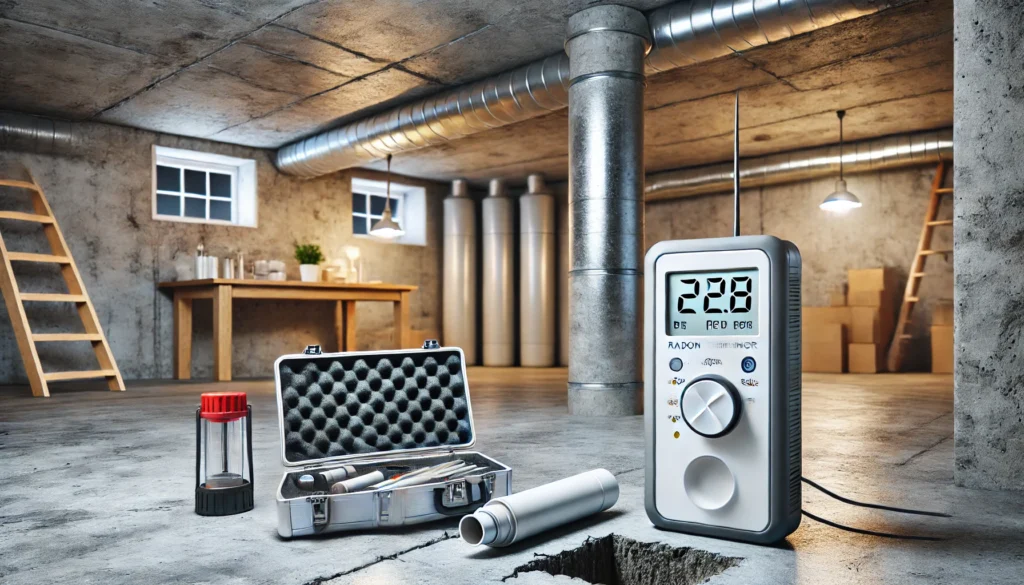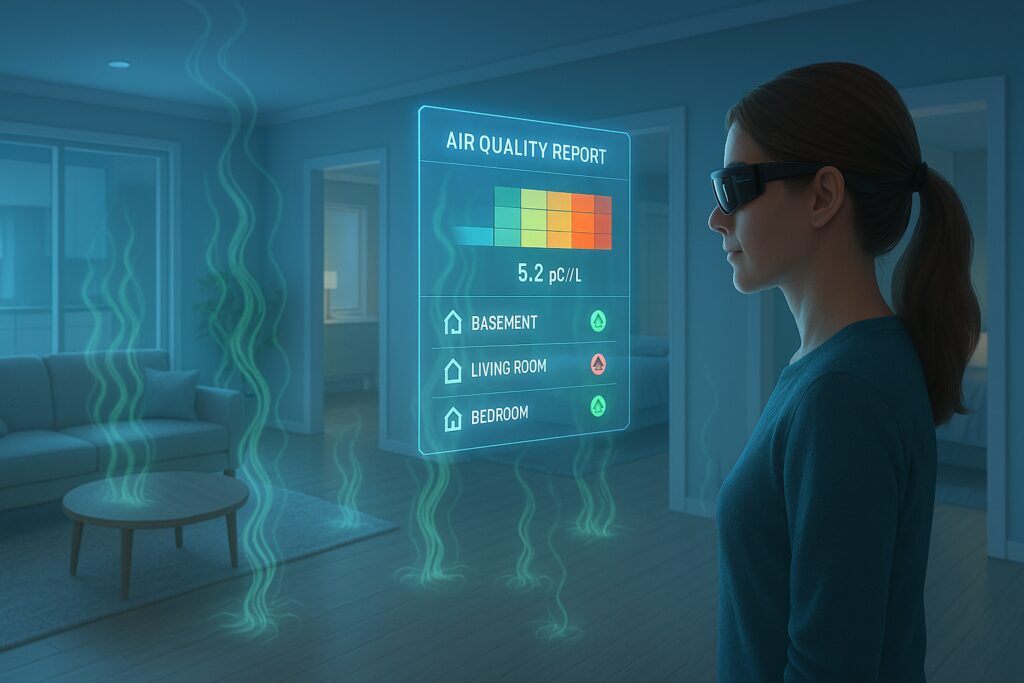
Here’s an example scenario: a homeowner in the Aiken area was convinced her slab-on-grade ranch could not have a radon problem. “I don’t have a basement,” she reasoned. “I thought radon was a basement issue.” She had skipped testing when she bought the home three years earlier based on that same assumption.
Her short-term test came back well above the EPA action level of 4.0 pCi/L. The mitigation she eventually had installed was a sub-slab depressurization system, the same kind commonly installed under basement floors. The foundation type changed the specifics of the installation. It did not determine whether she had a problem.
Radon does not care about your foundation style. It cares about the path between the soil under your home and the air you breathe. Every foundation type in the CSRA offers that path in one form or another.
Where Radon Comes From and How It Gets In
Radon is a naturally occurring radioactive gas produced by the decay of uranium in soil and rock. It rises through soil, enters buildings through cracks and gaps in the foundation, and accumulates in indoor air because most homes are not ventilated enough to keep up with the inflow. Georgia’s red clay soils contain varying amounts of uranium, and the CSRA has significant natural radon potential. The EPA radon zone map classifies several counties in the Augusta area as Zone 1 or Zone 2 (highest and moderate predicted radon potential).
The specific entry points are the same regardless of foundation type:
- Cracks in concrete floors
- Construction joints where the slab meets the foundation wall
- Gaps around plumbing and electrical penetrations through the slab or foundation wall
- Sump pits and floor drains that connect directly to soil
- Cavities inside masonry foundation walls
- Soil directly exposed under crawl spaces
The amount of radon that enters a home depends on the concentration in the soil, the number and size of entry points, the pressure difference between indoor and outdoor air, and how well the home is ventilated. Foundation type affects the specifics but not the fundamental physics.
Slab-on-Grade Homes
Slab-on-grade construction places the concrete floor directly on prepared soil with no crawl space or basement below. This is the most common foundation type for new construction in much of Georgia.
Why Slab Homes Can Still Have High Radon
The slab itself is a barrier, but it is not a seal. A typical residential slab has construction joints at the perimeter, cracks from normal concrete curing and minor settlement, and multiple plumbing and HVAC penetrations. Radon under pressure in the soil finds these paths.
Slab homes often have:
- A construction joint (the gap between the slab and the stem wall) that runs the full perimeter of the home
- Plumbing stub-outs for kitchen and bathroom fixtures that pass directly through the slab
- Hairline cracks that develop within the first few years after construction and grow slowly over decades
- Post-tension cable penetrations in some newer homes
The radon gas that enters through these pathways goes directly into the living space. There is no basement or crawl space to dilute it first.
Typical Mitigation for Slab Homes
Active sub-slab depressurization is the standard approach. A suction point is drilled through the slab, connected to a fan mounted outside the home, and the fan pulls air from beneath the slab so that radon is captured before it enters the house. Installation is straightforward in most slab homes.
Basement Homes
Full basements are less common in Georgia than in northern climates, but they exist, especially in older homes on sloped lots in the CSRA and in homes with walkout or daylight basement designs.
Why Basements Get Blamed
Basements are surrounded on multiple sides by soil. Foundation walls, floor slabs, and any cavities in the block all offer pathways for radon. The volume of soil in direct contact with the building envelope is larger than for any other foundation type, and concentrations inside basement spaces tend to run higher than elsewhere in the home.
Unfinished basements also usually have:
- Concrete block walls with hollow cavities that can act as plenums for radon to rise through
- Floor drains and sump pits connected directly to soil
- Exposed soil in some crawl space or utility areas off the main basement
- Poor ventilation compared to upstairs living spaces
The finished basement problem is worse. A basement used as a bedroom, home office, or family room has people spending long hours in the space where radon concentrations are typically highest.
Typical Mitigation for Basement Homes
Sub-slab depressurization works in basements much as it does in slab homes, with the suction point usually drilled through the basement floor and the fan and exhaust piping routed outside. Block wall depressurization is sometimes added if the walls themselves are a significant entry path. Sealing major cracks and joints is usually part of the process but is not a standalone solution.
Crawl Space Homes
Crawl spaces are common throughout the CSRA, especially in homes built between about 1940 and 1990. They present a distinct set of radon dynamics that many homeowners do not recognize.
Why Crawl Spaces Can Be Tricky
A crawl space is essentially a large area of exposed soil under your home. Even when the crawl space is vented to the outdoors, radon can accumulate in it and migrate up through floor joists, duct penetrations, plumbing and wiring chases, and gaps between the floor and the wall at the perimeter.
The EPA’s radon-resistant construction features for crawl spaces emphasize that a vented crawl space alone is not reliable radon protection, because radon can be drawn into the living space above whenever the pressure differential favors upward flow, which happens routinely when HVAC systems run.
Encapsulated crawl spaces (sealed with a heavy vapor barrier) are better for moisture and mold control but can be worse for radon if they are not designed with radon in mind. Encapsulation traps soil gases in the crawl space unless an active venting or depressurization system is part of the design.
Typical Mitigation for Crawl Space Homes
Crawl space mitigation usually involves installing a soil gas barrier (a reinforced plastic membrane sealed to foundation walls and piers) and an active sub-membrane depressurization system that pulls air from beneath the membrane and exhausts it outside. This captures radon before it can enter the crawl space air, and incidentally improves moisture conditions as well.
Homes with mixed foundation types (part slab, part crawl space) need mitigation designed for each section. A single fan can often serve both, but the piping layout has to account for the different soil conditions.
Why Testing Is Required Regardless of Foundation Type
The specific foundation influences the mitigation method, not the need for testing. The CDC recommends that every home be tested for radon regardless of foundation style because no foundation type can be assumed safe based on design alone. Concentrations vary wildly between neighbors on the same street with identical floor plans because soil conditions a few feet apart can differ substantially.
A 2018 Georgia DPH report on residential radon noted that elevated readings have been documented in every foundation type and every region of the state. The only reliable way to know what your home’s levels are is to test.
Your Next Steps
- If you have never tested regardless of foundation type, start there. A short-term test during a season when the house is closed up gives you your baseline.
- If you live in a home with a crawl space and the crawl space is open to the subfloor (no soil gas barrier in place), expect radon to be a consideration even if the home feels well-ventilated.
- If you are planning crawl space encapsulation for moisture or energy reasons, include radon in the design conversation. Encapsulation without radon consideration can make the situation worse before it makes it better.
- If your test shows elevated results and you are not sure which mitigation approach is appropriate for your foundation, a qualified mitigation contractor can match the method to your specific conditions.
If you want help figuring out what your foundation type means for your radon situation, the EnviroPro 360 team can help you plan testing and make sense of the results. Reach out any time.