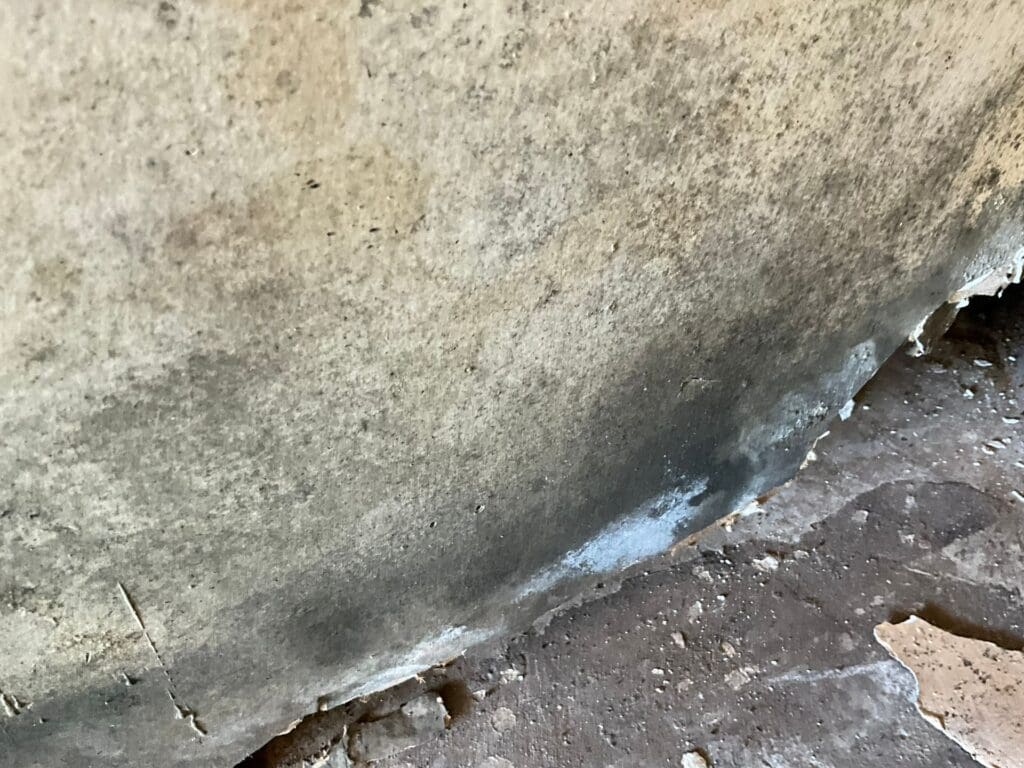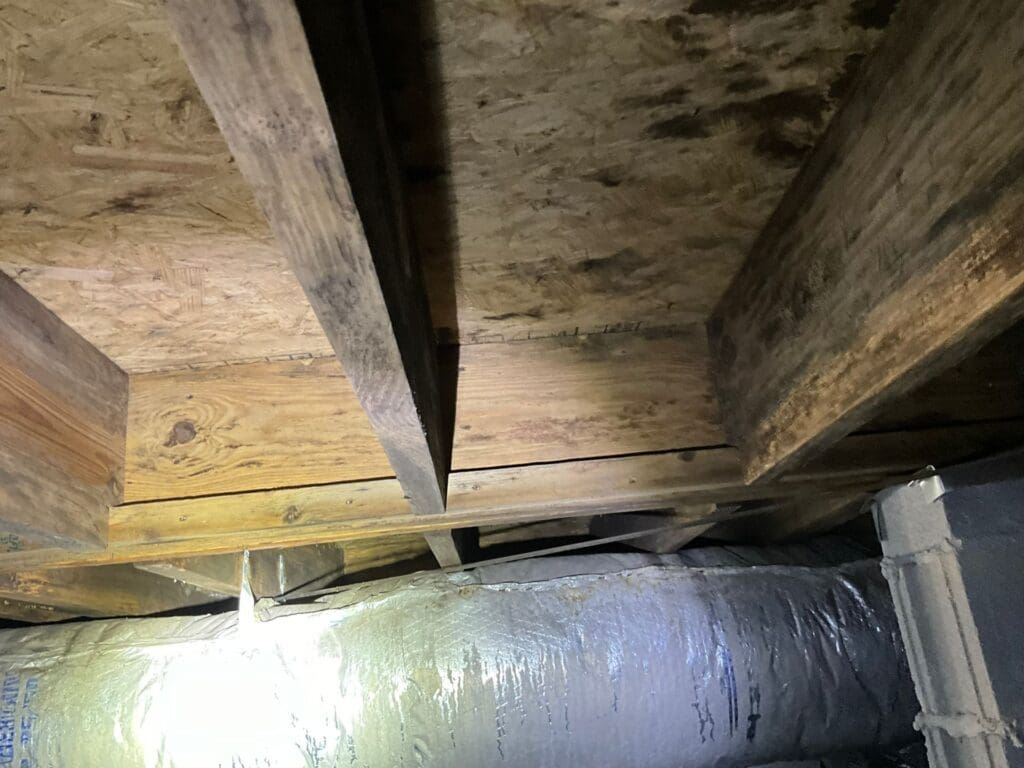
An AC leak feels like a minor inconvenience at first. A wet spot near the air handler. A drip from a ceiling vent. A little water under the unit in the closet.
Most people wipe it up and move on.
The problem is that HVAC leaks rarely stay small. When an AC leak goes unchecked, it can create one of the most expensive and frustrating problems a homeowner or property manager deals with: hidden mold growth and water damage.
If you are in Augusta, Aiken, or anywhere in the CSRA, this matters even more because humidity and long cooling seasons make moisture issues harder to control once they start.
Here is what can happen after an AC leak, how to spot it early, and why mold testing is the smartest next step.
Why AC Leaks Turn Into Mold Problems So Often
Your HVAC system naturally produces condensation. That moisture is supposed to drain away through a condensate line. When something fails, water ends up somewhere it should not be, usually in a hidden area.
Common reasons AC units leak:
- A clogged condensate drain line
- A cracked or overflowing drain pan
- A disconnected drain line
- A frozen evaporator coil that melts and overflows
- Poor installation or a unit not level
- Dirty filters causing airflow problems and icing
Once water starts leaking, it often soaks into materials that hold moisture, like drywall, insulation, carpet padding, and subflooring. Those materials dry slowly, especially inside walls or closets.
Mold only needs moisture, a food source, and time. AC leaks provide all three.
The Costly Aftermath of an Unchecked AC Leak
If an HVAC leak is not addressed quickly, it can lead to a chain reaction that gets expensive fast.
Hidden water damage
Water can travel farther than people expect. It can move:
- Down a wall cavity
- Across a subfloor
- Into insulation
- Into baseboards and trim
- Through ceilings into lower levels
Mold behind walls and floors
Even if you do not see mold, it can develop in:
- HVAC closets
- Attics with air handlers
- Ceiling drywall around vents
- Walls behind the unit
- Carpet and padding near registers
Indoor air quality problems
If mold develops near HVAC components or ductwork, spores can spread through the system and affect multiple rooms. Many people notice symptoms before they see anything.
Repairs that keep growing
What starts as a small leak repair can turn into:
- Drywall removal and replacement
- Flooring replacement
- Insulation replacement
- Full mold remediation in multiple areas
- Follow-up air testing and clearance
The biggest cost is usually not the AC repair itself. It is what the moisture does to the building materials and air quality over time.
Signs You Should Check for Mold After an AC Leak
If your AC leaked recently, look for these warning signs over the next days and weeks:
- Musty or damp odor near vents or the HVAC closet
- A stain on the ceiling near a vent that grows or darkens
- Peeling paint, bubbling drywall, or soft spots near baseboards
- Increased humidity in one room or a room that feels clammy
- Allergy-like symptoms that feel worse indoors
- Visible dark spotting around vent edges or on nearby drywall
If you notice two or more of these, it is time to take it seriously.
What To Do Right After You Discover an AC Leak
If you just found the leak, use this order:
- Stop the source of water
Turn off the system and call an HVAC technician to fix the cause. - Dry the area quickly
Fans and dehumidifiers can help, but they do not always dry hidden moisture inside walls or insulation. - Document what you see
Take photos of the leak area, stains, wet flooring, and affected materials. This helps with property management documentation and can help if insurance becomes involved. - Do not cover it up
Avoid painting over stains or replacing a small piece of drywall without confirming what is behind it. - Schedule a mold inspection and testing if needed
This is where EnviroPro 360 can save you time and money by confirming whether mold is present and whether the air is impacted.
Why Mold Testing Matters After an HVAC Leak
A lot of homeowners assume that if they cannot see mold, it is not there.
Unfortunately, HVAC leaks create mold in hidden zones, especially behind drywall, inside insulation, under flooring, and around duct openings. Testing helps answer questions you cannot answer by sight:
- Is mold present in the air, even if you cannot see it?
- Did moisture soak into building materials that are still wet?
- Is the HVAC system spreading contaminants?
- Does this require remediation, or can it be resolved with drying and repairs?
Testing also provides clear documentation for:
- Landlords and property managers
- Real estate transactions
- Insurance claim support when applicable
- Verification after remediation
How EnviroPro 360 Helps After an AC Leak
EnviroPro 360 specializes in environmental testing and inspection across Augusta and the CSRA. After an AC leak, we can provide:
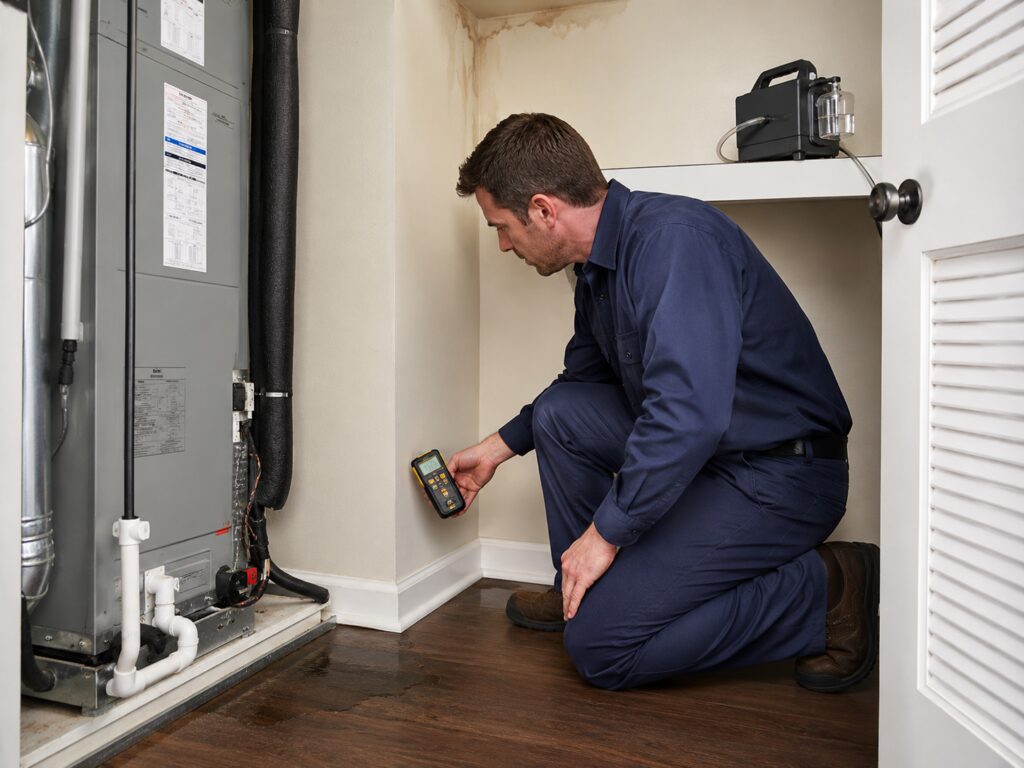
- Moisture detection to locate hidden damp areas
- Mold inspection of HVAC closets, ceilings, and adjacent rooms
- Air sampling and surface sampling when appropriate
- Indoor air quality assessment for broader comfort and health concerns
- Post-remediation verification testing if remediation is performed
If the leak affected multiple units in an apartment building or a commercial space, we can also help identify spread and support documentation for building management.
Do Not Let a “Small AC Leak” Turn Into a Big Mold Project
HVAC leaks are common. The expensive part happens when they are ignored. If your AC leaked and you are noticing stains, odors, humidity, or symptoms, it is smart to verify what is happening now before it spreads further.
If you are in Augusta, Evans, Martinez, Grovetown, North Augusta, Aiken, or surrounding areas, Contact EnviroPro 360 to schedule a mold inspection and testing after an AC leak.