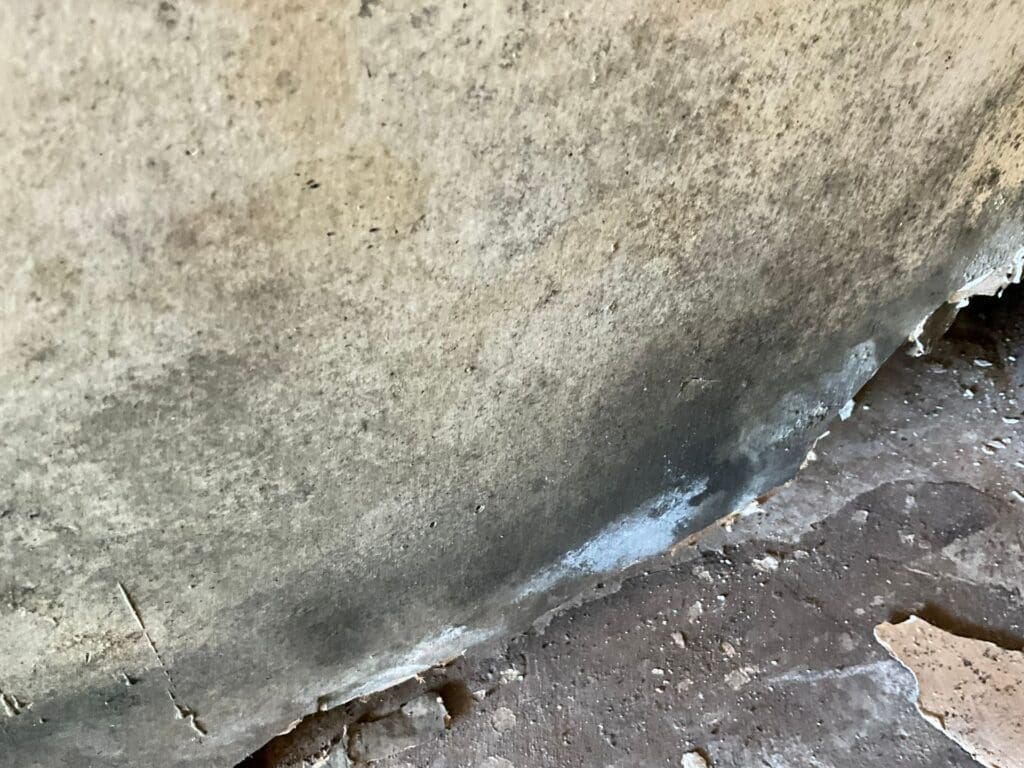
Most mold starts with water. It doesn’t take a flood. A slow roof leak, a clogged gutter or a small drip under the sink can be enough.
In Georgia and South Carolina, water gets into homes all year long. We get heavy rain, summer storms and the tail end of tropical systems. Our winters swing from cold nights to warm afternoons. Many homes sit over crawl spaces on clay soil that drains slowly.
The EPA says mold can start to grow on wet materials within 24 to 48 hours. So the key is to find leaks early and dry things fast. This guide shows you where leaks start, what to check after rain and what to do if you find water.
How a small leak turns into mold
Mold needs three things:
- Moisture.
- Food. Wood, drywall, insulation, cabinet backs and dust all work.
- Time.
A leak supplies the moisture. Your home supplies the food. If the area stays damp for a day or two, mold can start to grow.
Hidden leaks are the most dangerous. Water soaks into insulation, wood framing and the backs of cabinets. You may not see a stain for weeks or months. By then, mold may already be growing.
Roof leaks: why they hide for months
A roof leak that starts in December may not show a ceiling stain until March. Here’s why:
- Insulation soaks up water. Attic insulation holds water against the wood. It keeps the drip from reaching the ceiling, so you don’t see a stain.
- Cold slows mold down. In the coldest months, mold grows slowly. You may not see it or smell it. When it warms up in late winter, growth speeds up.
- No one checks the attic. Most people rarely go into the attic, least of all in winter.
- Some leaks come and go. A roof may leak only in long rains or when wind blows from one side. The wet spots dry a bit between storms, so the pattern is hard to spot.
How water travels from the roof to your ceiling
Water rarely drips straight down. It runs along the roof deck to a low spot. Then it drops into the insulation. From there it soaks into the ceiling joists and the tops of the walls. When it finally reaches the drywall, the stain may be far from where the water got in.
If the leak reaches an air handler or ducts in the attic, the HVAC system can spread mold spores through the house. Read is your HVAC system spreading mold through your home for more.
Where roofs in our area leak
- Pipe boots. These rubber seals wrap the plumbing vent pipes on the roof. They crack with age and temperature swings.
- Step flashing. These are the metal pieces where a roof meets a wall, dormer or addition. They can lift or pull loose over time.
- Valleys. Valleys are where two roof slopes meet. They carry lots of water and catch leaves and debris.
- Ridge caps. These are the shingles along the peak. Wind-driven rain can get under loose or missing ones.
- Chimneys and roof vents. Strong wind can push rain sideways into their flashing.
Plumbing leaks: why a small drip becomes a big problem
Plumbing leaks are one of the most common causes of hidden mold in homes around Augusta and Aiken. They often look minor at first. Watch these spots:
- Under sinks. Loose drain traps, cracked supply lines and worn seals.
- Behind the fridge. Ice maker lines that drip behind the appliance.
- Dishwashers. Leaks along the edge or from a hidden hose.
- Laundry rooms. Washing machine hoses and drain lines.
- Water heaters. Slow seepage that keeps a closet or corner damp.
- Toilets. Supply line drips that soak into walls and baseboards.
You may never see standing water. The only clues may be a soft cabinet floor, a swollen baseboard or a faint musty smell.
From a cabinet problem to an air quality problem
Once mold starts near a leak, it doesn’t stay put. Spores float into nearby rooms. Return vents can pull them into the HVAC system. They settle into carpet, furniture and dust.
The CDC links damp, moldy homes to stuffy nose, cough, wheezing and eye irritation. Mold can make asthma worse. Symptoms may be worse in certain rooms or when the heat or AC runs.
Fix the leak first, then check for mold
When you find a leak, stop the water. Shut off the line and call a plumber. Many people stop there. The surface dries and life goes on.
But water that soaked into walls, subfloors or cabinet backs can keep mold growing after the drip is fixed. That’s when a mold inspection makes sense.
Leak risks through the year in Georgia and South Carolina
Every season brings its own leak risks here. Use this as a calendar for what to watch.
Fall (September to November)
Fall is when many winter leaks really start.
- Clogged gutters. Leaves fall right when heavy fall rains arrive. Full gutters overflow at the roof edge. Water runs down the walls and pools by the foundation.
- The switch from AC to heat. The AC drain line can get partly blocked with algae over the summer. When the AC shuts off, water can sit in the drain pan all winter.
- Dried-out caulk. Summer heat cracks caulk around windows and doors.
Fall is a good time to check. Problems you fix now don’t get months of closed-up air to grow in.
Winter (December to February)
- Long rains. Sound flashing can handle a short storm. Rain that lasts for days finds weak spots.
- Temperature swings. Warm afternoons and cold nights cause condensation. Warm, damp air rises into the attic and condenses on the cold roof deck at night.
- A sealed-up house. Windows stay shut. Moisture from cooking, showers and breathing builds up. Bathroom fans that don’t vent outside make it worse.
- Busy holidays. Spare rooms, attics and crawl spaces don’t get checked. A leak that starts in November may not be found until February.
Late winter and spring (February to May)
February rain soaks our clay soil. Clay holds water and drains slowly. Wet soil can push water against the foundation and through small cracks. It also raises humidity in the crawl space.
Homes stay closed until the weather warms up. So wet materials from February rain can stay wet for weeks. Then spring humidity arrives and mold growth speeds up. Many people first notice a musty smell when they open the house in March.
Late winter is a good time to inspect. Wet materials are still wet. Moisture readings taken during or just after rain show the clearest picture of where water gets in.
Summer and storm season (June to November)
Atlantic hurricane season runs from June 1 to November 30. Even when storms don’t hit us directly, their remnants bring heavy rain and wind. Summer thunderstorms add more.
Before storm season:
- Clean gutters and make sure downspouts drain away from the house.
- Reseal windows, vents and door frames with weatherproof caulk.
- Walk your yard after a rain. See where water pools.
- Check your sump pump, if you have one.
- Make sure the ground slopes away from the foundation.
After a big storm, use the checklist below. If water came in, start drying within 24 to 48 hours.
Post-rain inspection checklist
After any heavy rain, walk through your home with a flashlight. Do it at the start of each season too.
Ceilings and upper corners
Check every room, including closets and rooms you keep closed. Look for:
- Brown or yellow rings and streaks.
- Bubbling or peeling paint.
- Soft spots in drywall.
- Dark spots where walls meet the ceiling.
Take photos. A stain that is new, or bigger than last time, means the leak is active.
Attic
Open the attic hatch. If the attic has no safe floor, look from the opening. Check for:
- Wet, flat or stained insulation.
- Dark streaks on the rafters or the underside of the roof deck.
- Daylight showing through the roof.
- A musty smell at the hatch. That means moisture has been there for a while.
Windows and doors
Run your hand along window sills and the bottom of door frames. Feel for damp, soft or swollen wood. Look for water or dark stains in window tracks. Wind-driven rain often gets in on the side of the house that faces the storm.
Gutters and downspouts
A day or two after rain, check that gutters aren’t still holding water or leaves. Downspouts should drain at least three feet from the foundation. Ground that stays soggy by the house can lead to crawl space moisture.
Crawl space
In most homes in our area, this is the highest-risk spot. It’s also the one people check least. Look in from the access door with a flashlight. Check for:
- Standing water or damp soil.
- Wet or fallen insulation.
- Dark stains on floor joists.
- A torn or missing vapor barrier. A vapor barrier is plastic sheeting that keeps ground moisture out.
If you can smell must from the access door, mold may be growing. Read why Georgia crawl spaces are a mold magnet.
Kitchen, baths and laundry
Open sink cabinets. Feel the cabinet floor. Check behind the fridge, around the dishwasher, under the water heater and behind the washer.
Warning signs that a leak has caused mold
- A musty or earthy smell in a cabinet, closet or room.
- A musty smell near crawl space vents or from the HVAC after rain.
- Dark stains on drywall, trim or ceilings.
- Swollen or warped cabinet bottoms or baseboards.
- Peeling paint or soft drywall at the base of outside walls.
- Rust streaks on metal near pipes or vent collars.
- Spots that come back after you wipe them.
- More window condensation than usual.
- Allergy or breathing symptoms that started after a storm or a leak.
Damage that seems to start at the bottom and move up often points to a leak.
What to do if you find moisture
- Stop the water. Shut off the line, or have the roof, gutter or pipe fixed.
- Take photos before you move anything. They help with repairs and insurance. See does homeowners insurance cover mold.
- Start drying with fans and a dehumidifier if you can reach the area.
- Don’t paint over stains or recaulk until the material is fully dry. That traps moisture inside.
- Get help if you see mold, smell must you can’t trace, or find a crawl space that has been wet for days.
The CDC advises extra care for people with asthma, allergies or weak immune systems. In those homes, get a professional check sooner.
How a professional leak and mold inspection works
A mold inspection after a leak looks for two things. Where is the water? Has mold started to grow? A good inspection uses:
- Thermal imaging. An infrared camera shows cool, damp spots behind walls and ceilings. It can find wet insulation before a stain shows. Learn more in thermal imaging for leak detection.
- Moisture meters. These measure how wet the drywall, wood and subfloor are.
- Air sampling. Samples from the leak area and living spaces show if spore levels are high. An accredited lab analyzes them.
- Surface sampling. If growth is visible, a sample shows what it is.
- A written report. It explains what was found and what to do next.
EnviroPro 360 does this testing. We don’t fix roofs or pipes. We don’t remove mold, either. A roofer or plumber fixes the leak. A mold remediation company handles any damaged materials. Then we can come back for post-remediation verification. That test checks that the cleanup worked. Because we only test, our reports are neutral. That helps with home sales, insurance claims and checking a contractor’s work.
Your next steps
- Walk through the checklist above after the next heavy rain.
- If you find water, stop it, photograph it and start drying within 24 to 48 hours.
- If you see mold, smell must or had a leak you couldn’t dry fast, schedule a mold inspection.
EnviroPro 360 provides mold inspection and moisture testing for homes and businesses in Augusta, Aiken, Columbia and nearby towns. If you have questions about a leak or want to talk through your situation, the EnviroPro 360 team is happy to help. Reach out any time.