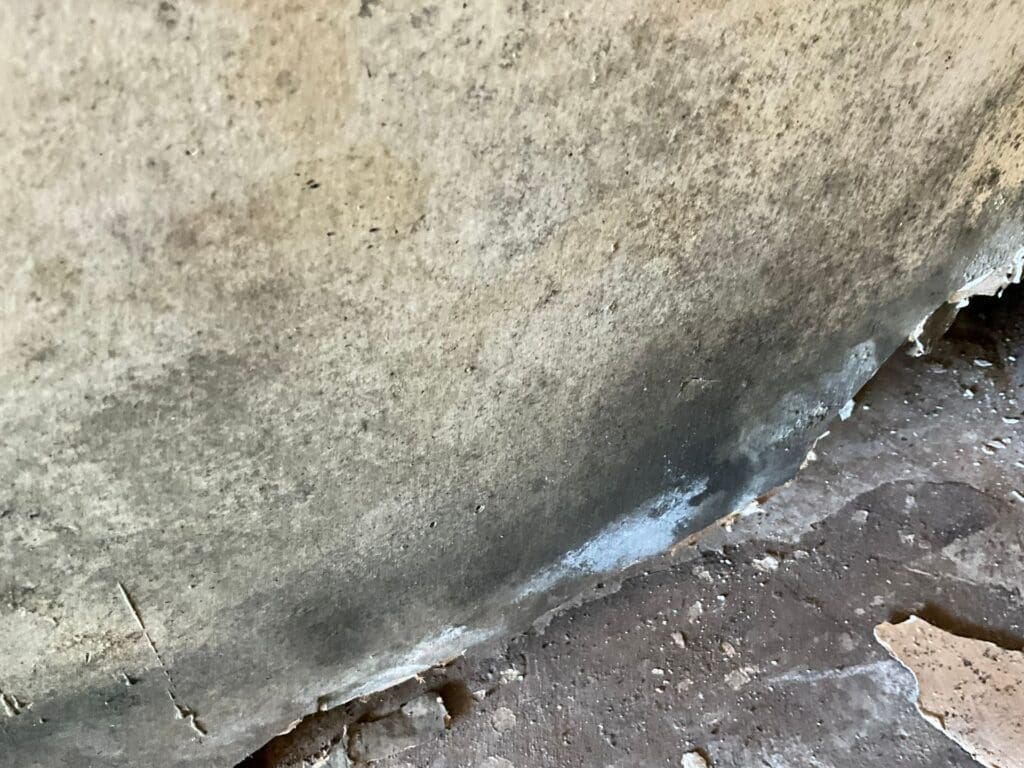
Picture a family that moves into a rental home in Augusta. Within weeks, three of them have a cough that won’t quit. Allergy medicine helps a little. But the cough comes back every evening. Months later, someone pulls off a piece of baseboard. There is mold growing behind the drywall.
Stories like this are common in humid places like ours. This guide explains what mold can do to your body, based on what the CDC and EPA say. It is not about panic. It is about knowing the facts so you can act.
This article is general information, not medical advice. If you have symptoms, talk to your doctor.
Can mold really make you sick, or is that a myth?
It is not a myth. Mold can make some people sick. The CDC says mold can cause a stuffy nose, a sore throat, coughing or wheezing, burning eyes and skin rash. People with asthma or mold allergies may have severe reactions.
But mold does not affect everyone the same way. Some people have no symptoms at all. Others react strongly. It depends on the person, the type of mold and how much is in the air.
How mold gets into your body
Mold spreads by releasing tiny spores into the air. They are far too small to see. You breathe them in without knowing it. That is the main way mold reaches your body. Touching mold can also bother your skin.
Growing mold also gives off gases with a musty smell. They are called MVOCs (microbial volatile organic compounds). That smell is often the first sign of mold you can’t see.
What does mold exposure do to your body?
Breathing problems
Most health effects from mold involve your nose, throat and lungs. The EPA says mold can irritate the eyes, skin, nose, throat and lungs. This can happen in people who are allergic to mold and in people who are not.
When your airways are irritated, they can swell and make more mucus. That can lead to coughing, wheezing and a stuffy nose. For more detail, see the respiratory risks of mold exposure.
Asthma
The link between mold and asthma is well known. The EPA says mold can trigger asthma attacks in people with asthma who are allergic to mold. People with asthma should avoid mold.
Some research also links damp, moldy homes to asthma starting in young children. The EPA notes that most asthma starts before age six. Scientists are still studying how much mold adds to that risk.
Allergic reactions
Mold is a common indoor allergen. Your immune system can treat spores as invaders. The EPA lists these allergy symptoms:
- Sneezing.
- Runny nose.
- Red eyes.
- Skin rash.
These look a lot like seasonal allergies. That is why mold is easy to miss. If your “allergies” get worse at home and better when you leave, indoor mold is worth checking.
Hypersensitivity pneumonitis
Hypersensitivity pneumonitis (HP) is less common but more serious. It is swelling of the lungs caused by breathing in certain things over and over. Mold is one of them, says the National Heart, Lung, and Blood Institute.
HP can cause shortness of breath, cough and flu-like symptoms. Without treatment, it can cause lasting lung damage. Only a doctor can diagnose it.
Lung infections in people with weak immune systems
The CDC says people with weakened immune systems or chronic lung disease may get lung infections from mold. This is rare in healthy people. But it can be serious for those at risk.
What about headaches and tiredness?
Some people with mold in their homes report headaches or feeling tired all the time. These symptoms have many possible causes. The link to mold is less clear than for breathing problems. A doctor can help sort out the cause.
Who is most at risk from mold?
Mold affects some people more than others. Health agencies point to these groups:
- People with asthma or allergies. The CDC says they may be more sensitive to mold.
- People with weakened immune systems. This includes people on chemotherapy, organ transplant patients and people with HIV.
- People with chronic lung disease, such as COPD. COPD (chronic obstructive pulmonary disease) is a group of lung diseases that block airflow.
- Infants and young children. The EPA says their lungs are still developing. They also breathe faster for their size, so they take in more of what is in the air.
- Older adults. A CDC report lists adults over 65 and pregnant women among those at higher risk.
If someone in your home is in one of these groups, act sooner on any mold or moisture problem. The CDC also says people in these groups should not clean up mold themselves.
The “black mold” question
Few mold topics cause more fear than Stachybotrys chartarum. Most people call it “black mold” or “toxic black mold.”
Stachybotrys is a real mold. It grows on materials like drywall paper, ceiling tiles and wood that stay wet. It can make mycotoxins. Mycotoxins are toxic compounds that some molds produce.
Here is what the CDC actually says. In its facts about Stachybotrys, the CDC says no test can prove a link between this mold and specific symptoms. It also says you don’t need to know what type of mold you have. All molds should be treated the same when it comes to health risks and removal.
What this means for you
The color of mold tells you very little. Many types look black or dark green. Instead of asking whether you have “the” black mold, focus on two things:
- How much mold there is.
- What water source is feeding it.
A small patch on a bathroom ceiling is different from mold spread behind walls from a long-term leak. Both should be fixed. But the urgency and the approach are different. Read more in black mold vs. other mold.
Can hidden mold make you sick?
Yes, it can. You don’t have to see mold to breathe it. Mold inside walls, under floors or in ductwork still releases spores and odors into your air.
In Augusta, Aiken and the rest of the region, summers are long and humid. Many homes sit over crawl spaces. Air from a damp crawl space moves up into the house. Mold in ductwork gets blown into every room when the system runs.
Signs of hidden mold
- A musty smell that stays even after deep cleaning.
- Paint or wallpaper that bubbles or peels.
- Stains around baseboards or window sills.
- Warped or soft flooring near sinks, tubs or dishwashers.
- Condensation on windows or cold walls.
Where hidden mold grows, room by room
- Bathroom: behind shower walls, under tile and in exhaust fans.
- Kitchen: under the sink and behind the refrigerator and dishwasher.
- Crawl space or basement: on floor joists and in insulation.
- Laundry room: around washer hoses and drip pans.
- Heating and cooling system: on coils, in drain pans and in ductwork.
- Attic: near bath fan vents and roof openings.
For a full walk-through, see how to find mold.
Why mold symptoms get missed
Mold symptoms look like many other things. Colds, sinus infections and seasonal allergies cause the same stuffy nose, cough and tiredness. So people can live with a mold problem for months before they connect the dots.
The biggest clue is location. Watch for symptoms that:
- Get better when you leave home.
- Come back after a few hours inside.
- Are worse in one room.
- Flare when the heat or air conditioning runs.
That pattern points to something in your home, not a passing bug. Share it with your doctor.
Why guest rooms and closed-off rooms can trigger symptoms
Many families notice mold symptoms during the holidays. A guest sleeps in a spare room that has been shut for months. By morning, they are sneezing and stuffed up.
Spare rooms are often a perfect setup for mold:
- Less airflow. Closed doors and shut vents trap moisture. Humidity can climb in one room even when the rest of the house is fine.
- Cold outside walls. Spare rooms often sit on corners with two outside walls. Warm, damp air meets the cool wall and condensation forms. Mold can grow behind furniture and on baseboards.
- Settled dust. Rooms cleaned less often collect dust in carpet, bedding and furniture.
- Stirred-up ducts. Turning the heat on after months stirs up whatever settled in the vents.
Getting a spare room ready before guests
Start two to three weeks ahead:
- Open the vents and leave the door open for several days.
- Run the heating or cooling system with the room open.
- Wash the bedding, curtains and other soft items.
- Vacuum the mattress, carpet and upholstered furniture. Use a HEPA vacuum if you have one.
- Check for musty odors after airing out the room.
If the smell stays after several days, don’t cover it with sprays or candles. Find the moisture source. Check the vents, baseboards on outside walls, window sills, closet walls and ceiling corners.
Common questions about mold and your health
Does bleach get rid of hidden mold?
No. Bleach can’t reach mold inside walls or under floors. The EPA does not recommend bleach as a routine part of mold cleanup. Dead mold can still cause allergic reactions, so it has to be removed. And the water source has to be fixed.
How much mold is too much?
There is no federal limit. The EPA says no EPA or other federal limits have been set for mold or mold spores. Any mold growing indoors should be fixed. This matters more if someone in the home is at higher risk.
Can a mold test tell me if I will get sick?
No. The CDC says mold affects people differently. So a sample can’t predict whether someone will get sick. A test tells you about your home. A doctor tells you about your health.
Can I test for hidden mold myself?
DIY kits have limits. They can show that spores exist, but spores are almost everywhere. They can’t see inside walls. A trained inspector uses moisture meters, thermal cameras and lab results.
When to see a doctor
The CDC says to contact your doctor or other health care provider if you have health problems after mold exposure. Tell your doctor about any mold or water damage at home. Don’t wait if:
- You have trouble breathing or shortness of breath.
- Your asthma is harder to control than usual.
- You have a weak immune system and any new breathing symptoms.
- Symptoms last for weeks, or keep coming back at home.
- A baby or young child has a cough or wheeze that won’t go away.
Call 911 for severe trouble breathing.
When to get professional mold testing
Consider a mold inspection if:
- You smell a musty odor but can’t find mold.
- People in your home have breathing symptoms that ease away from home.
- You found water damage and want to know if mold has grown.
- You are buying or selling a home with past water problems.
- Mold remediation is done and you want proof it worked.
Air and surface sampling show what types of mold are present and how much. You get real data instead of guesses. EnviroPro 360 only tests. We do not do mold remediation, so our results are unbiased.
Three steps to take right now
- Check your humidity. A hygrometer is a small, low-cost tool that reads humidity. The EPA says to keep it below 60%, and ideally between 30% and 50%. In our climate, crawl spaces and basements often need a dehumidifier in spring and summer.
- Look for water. Check under sinks, around windows, in the crawl space and behind appliances. The EPA says to dry wet materials within 24 to 48 hours to prevent mold growth.
- Get help if you suspect a problem. A visual check can’t see inside walls, ducts or floors.
Your next steps
- If anyone in your home has symptoms, talk to your doctor. Mention any mold or water damage.
- Fix leaks and keep humidity below 60%.
- If you smell mold, had water damage or feel better away from home, book a mold inspection.
EnviroPro 360 provides mold inspection and mold testing for homes and businesses in Augusta, Aiken, Columbia and nearby towns. If you have questions about mold and your health or want to talk through your situation, the EnviroPro 360 team is happy to help. Reach out any time.