A family moves into a new home in a Columbia County subdivision. Everything is new. The HVAC, the windows and the foundation are all brand new. They assume a modern home can’t have a radon problem.
Three years later, a friend mentions radon testing. They try a test kit out of curiosity. The result is 5.4 pCi/L. That is above the EPA’s action level of 4.0 pCi/L.
The pCi/L (picocuries per liter) is the unit used to measure radon in air. A result at or above 4.0 means the EPA says to fix the home.
This surprises many people. But it shouldn’t. Radon comes from the ground, not from the building. This guide explains why new homes can have high radon. It also covers what builders can do and when new owners should test.
Do new homes have radon?
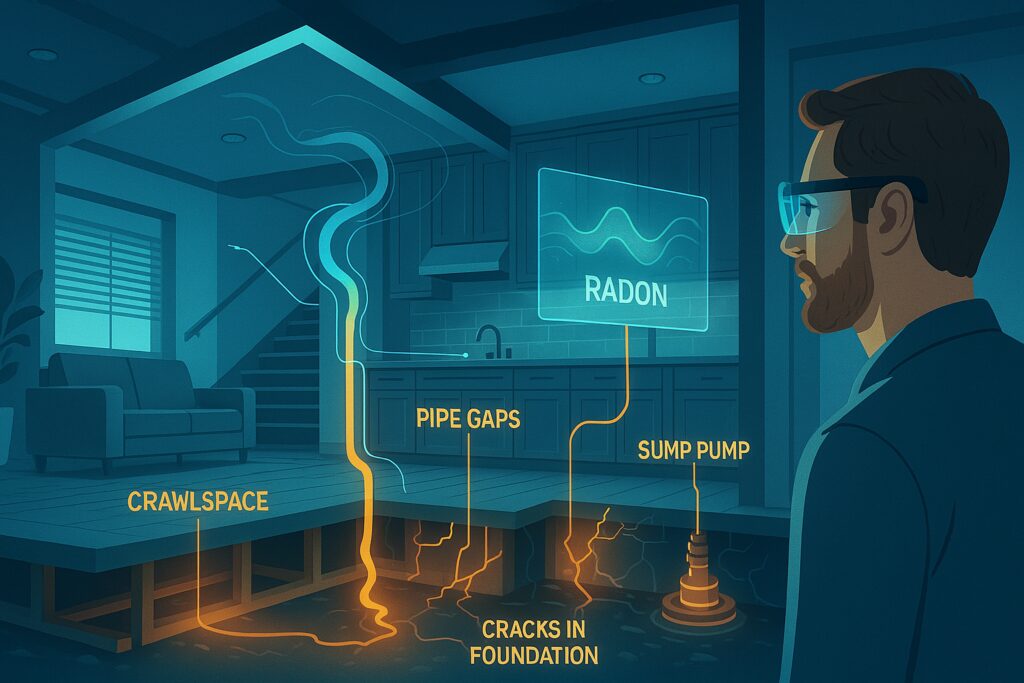
They can. Radon is a radioactive gas. It forms when uranium in soil and rock breaks down. It moves up through the soil and enters any building that sits on it.
Two things decide how much radon gets into a home:
- How much radon the soil under the home gives off.
- How many paths the gas has to get inside.
Neither one depends on when the house was built. The EPA recommends testing all homes, new and old. The only way to know your level is to test.
Why new construction can make radon worse
Some modern building methods can actually raise radon levels.
Tighter homes trade less air
New homes are built to save energy. They have better insulation, tighter windows and house wrap. These features lower power bills. They also cut down on fresh air leaking in from outside.
In an older, drafty home, outside air leaks in and thins out the radon. In a tight new home, there is less of that mixing. The radon that gets in has fewer ways out, so it can build up.
The answer isn’t a leaky house. It’s planning for radon from the start.
New concrete still cracks
Most new homes in the Augusta area sit on a slab or a crawl space. Both can let radon in.
Slab foundations. Concrete shrinks as it cures. Small cracks form in the first few years. Control joints are cuts made on purpose so the slab cracks in straight lines. Those joints are also paths for gas. So are the openings for plumbing, wiring and AC drain lines. The seam where the slab meets the foundation wall is rarely sealed tight.
Crawl space foundations. A crawl space with bare soil gives radon a direct path under the home. A vapor barrier helps. But radon can still pass through seams, edges and tears in the plastic.
Big HVAC systems can pull soil gas in
Exhaust fans, dryers and some HVAC setups lower the air pressure inside a home. Lower pressure inside pulls soil gas in through the foundation. A new home with strong exhaust fans and tight walls can feel this effect more.
To see how foundation type changes radon risk, read Slab, Basement, or Crawl Space: Does Your Foundation Type Change Your Radon Risk?
What is radon-resistant new construction?
Radon-resistant new construction, or RRNC, is a set of building steps that make it harder for radon to get in. They are added while the home is being built. The EPA describes the basic RRNC features this way:
Gas-permeable layer. A layer of clean gravel, usually about 4 inches deep, goes under the slab. It lets soil gas move freely to one collection point.
Plastic sheeting. Heavy plastic goes over the gravel, under the slab. In a crawl space, it covers the soil. It helps block radon from moving up.
Sealed openings. Cracks, joints and pipe openings in the foundation are sealed with caulk or foam.
Vent pipe. A 3- or 4-inch PVC pipe runs from the gravel layer up through the house and out the roof. In a passive system, warm air rising in the pipe carries some radon out on its own.
Electrical outlet in the attic. An outlet is added near the pipe. If a test later shows high radon, a fan can be added to the pipe. That turns it into an active system.
Passive vs. active systems
A passive system has no fan. It relies on natural air flow up the pipe. It often lowers radon, but not always enough.
An active system has a fan that pulls radon from under the slab all the time. This is the same setup used in most radon mitigation systems. Because the pipe is already in place, adding a fan later is a much smaller job than a full retrofit.
RRNC is not a guarantee. The EPA still says to test a home built with these features. A test is the only way to know the system is doing its job.
Does Georgia require radon-resistant construction?
Not statewide, based on what we could find. Georgia’s building code for homes is based on the International Residential Code. That code has a radon appendix, often called Appendix F. In Georgia, it is optional. Each city or county decides whether to adopt it.
A few Georgia areas have adopted it. An AARST summary of RRNC code adoption lists Gwinnett County, DeKalb County and the City of Loganville. AARST is the American Association of Radon Scientists and Technologists.
We did not find a statewide RRNC rule in South Carolina either. To be sure about your area, ask your local building department.
This means the choice often falls on the buyer. Some builders in the Augusta area add RRNC features on their own. Many don’t. Unless you ask for them, they may not be included.
How soon should you test a new home?
Test soon after you move in. You don’t need to wait for the home to “settle.” Radon can enter a new home from day one.
Here are a few tips:
- Test the lowest lived-in level. On a slab home, that is the ground floor. In a home with a finished basement, test the basement.
- Keep the house closed. Close windows and outside doors for 12 hours before and during a short-term test.
- Test again later. Concrete keeps cracking for a few years as it cures and settles. Retest after the first year or two. The EPA suggests retesting about every two years.
- Retest after changes. Finishing a basement, adding a room or replacing the HVAC can change your levels.
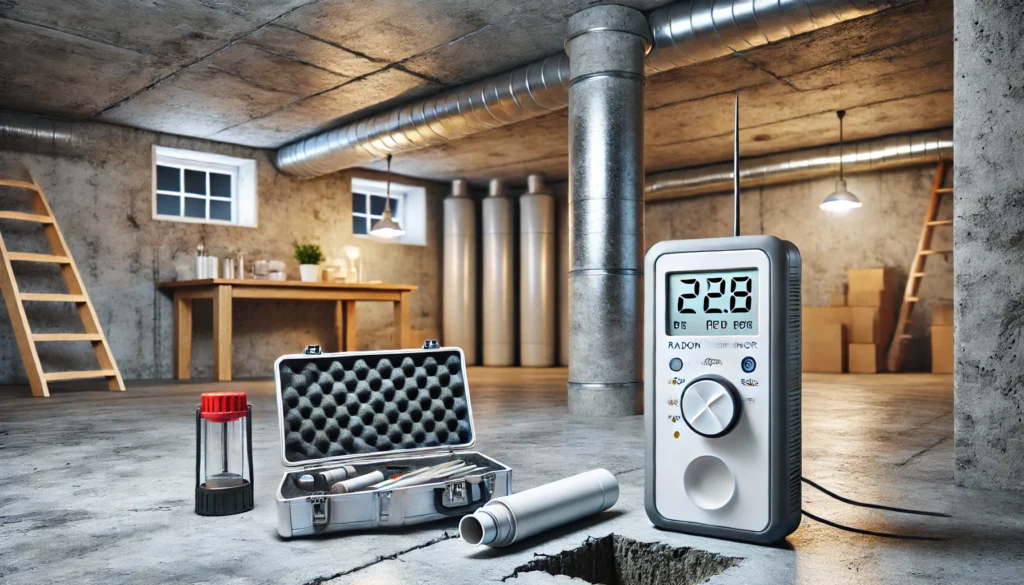
A professional test uses a continuous radon monitor and runs at least 48 hours. It records radon hour by hour, so you can see how levels change. Read Just Bought a Home? Here’s Why You Should Still Test for Radon for more on testing after a purchase.
Should you test before your builder warranty runs out?
Yes, if you can. Many new home warranties cover some systems for one or two years. Radon isn’t always covered. But some builders will help if you raise it early. This is more likely if you paid for RRNC features and the home still tests high.
Read your warranty to see what it says. Test early in the first year. If the result is high, you have the most options while the warranty is active.
What if you’re still building?
If your home isn’t built yet, you have the most control. Here is what to ask your builder:
- Will you include RRNC features? Which ones?
- Will the vent pipe run through the roof, with an attic outlet for a future fan?
- Who seals the slab joints and pipe openings?
- Can we put the RRNC features in the written contract?
Get the answers in writing. Then test after you move in to confirm the system works.
What if your new home tests high?
Don’t panic. High radon is a common problem, and it can be fixed. The EPA says to fix your home at 4.0 pCi/L or above. Between 2.0 and 4.0 pCi/L, it says to consider fixing it.
If your home has a passive RRNC pipe, a certified mitigation contractor may only need to add a fan. If not, they can install a full system. After the work, test again to confirm the level came down.
EnviroPro 360 does not install radon mitigation systems. We only test. That way, our results don’t come with a sales pitch. Read What Should I Do If My Radon Test Kit Shows a High Level? for the next steps.
Your next steps
- If you’re building, ask your builder for RRNC features and get them in the contract.
- If you’ve moved into a new home, test the lowest lived-in level within the first few months.
- Retest after a year or two, and again after any major change to the home.
EnviroPro 360 provides radon testing for homes and businesses in Augusta, Aiken, Columbia and nearby towns. Our testers are certified by the NRPP (National Radon Proficiency Program) and follow ANSI testing standards. If you have questions about radon in a new home or want to talk through your situation, the EnviroPro 360 team is happy to help. Reach out any time.