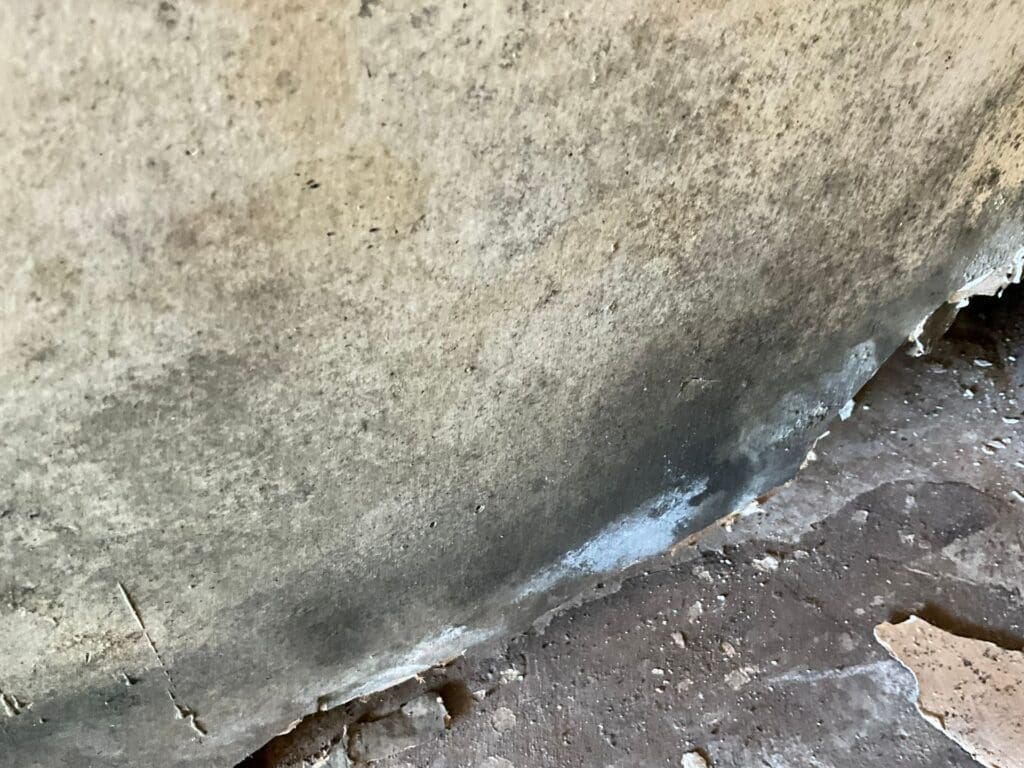
The mold crew has packed up. The room looks clean and smells better. But how do you know the mold is really gone? Clean is not the same as cleared.
That is the job of post-remediation mold testing. It checks the work before the walls go back up. This guide explains what it is, when to schedule it and how pass or fail is decided. It also covers why the tester should not work for the remediation company. If you cleaned mold yourself, there is a section on testing after DIY cleanup. Testing before remediation still matters too, and we cover that near the end.
What is post-remediation mold testing?
Post-remediation mold testing is an inspection done after mold removal is finished. It checks whether the cleanup worked. You may also hear it called a clearance test, a clearance inspection or post-remediation verification (PRV). They all mean the same basic thing.
Remediation is the work of removing mold. The crew sets up containment, which is plastic sheeting and air pressure controls that keep spores from spreading. Then they remove moldy materials, clean surfaces and dry the area.
Post-remediation testing is the final check. It confirms three things:
- No visible mold or mold dust is left in the work area.
- The building materials are dry.
- The air in the work area looks like normal air, not moldy air.
Mold testing vs. mold remediation: what’s the difference?
These are two different jobs.
Mold testing finds and measures the problem. A tester inspects the property, tracks moisture and takes samples for a lab. They don’t remove anything.
Mold remediation fixes the problem. A remediation crew removes and cleans moldy materials. They also dry the area so mold can’t grow back.
Testing usually happens twice. It happens once before remediation to define the job. It happens again after to confirm the job is done. Remediation happens in between.
When should post-remediation testing happen?
Timing matters a lot. The test should happen after the crew finishes cleaning and drying. It should happen before anyone rebuilds.
In most cases, that means:
- The containment is still in place.
- The moldy materials have been removed and bagged out.
- The final cleaning is done.
- New drywall, insulation and flooring are not installed yet.
Why wait to rebuild? If the area fails, the crew can fix it while everything is still open. Once new drywall is up, any missed mold is hidden behind it.
Your remediation company and your tester should agree on the date ahead of time. Many testers ask that air scrubbers be turned off for a set time before air sampling. An air scrubber is a machine that filters the air during the work.
How long after remediation should you test?
There is no single rule. Most clearance tests happen soon after the final cleaning, often within a few days. The key is that the area is clean and dry, and it is still open.
If you are not sure the timing is right, call your tester before the crew leaves.
What happens during a post-remediation clearance inspection?
A clearance inspection uses many of the same tools as the first inspection. The tester compares the new results to the old ones.
Visual inspection
The tester checks the work area inside the containment. They look for any mold growth that was missed. They also look for dust and debris. Mold dust can still hold spores, so surfaces should be clean.
Moisture readings
The tester checks wood, drywall and other materials with a moisture meter. They may also use a thermal imaging camera to spot damp areas behind surfaces. Materials should be at normal moisture levels.
If the leak that caused the mold was not fixed, mold will come back. The EPA says the way to control mold is to control moisture.
Post-remediation air testing
The tester takes air samples inside the work area. They also take one outdoors, and often one in a clean part of the building. These are the baselines. A lab counts the spores in each sample and identifies the types.
Surface sampling
If a surface looks suspect, the tester may take a swab or tape lift. A tape lift is clear tape pressed to the surface. The lab looks at it under a microscope.
How is a clearance test passed or failed?
There is no federal number for “safe” mold levels. The EPA has not set any limits for mold spores in the air. So clearance is judged by comparing results and following industry standards.
The common goal comes from the IICRC S520 standard. The IICRC is a group that sets standards for cleaning and restoration work. S520 is its standard for professional mold remediation. It describes the goal as returning the area to “Condition 1.” That means normal fungal ecology. In plain words, the mold mix should look like what you’d find in a building without a water problem.
To pass, most testers look for all of these:
- Visual. No visible mold, mold staining or dust in the work area.
- Moisture. Building materials are dry and the water source is fixed.
- Air. Spore levels inside are similar to or lower than outdoors. The types of mold inside should match the outdoor mix.
- Water-damage molds. Molds like Stachybotrys and Chaetomium grow mostly on wet building materials. They should not show up inside at higher levels than outside.
- Surfaces. Any surface samples show little or no mold growth.
A good tester explains the result in plain language. You should be able to read the report and know whether the room is ready to rebuild.
What if you fail a mold clearance test?
A failed clearance test is not unusual. It means the job is not quite done.
The tester’s report should say why it failed. Maybe there is dust left on surfaces. Maybe one wall is still wet. Maybe air counts in the work area are still high.
The remediation crew then goes back to fix those items. That often means more cleaning, more drying or removing more material. Then you retest after remediation is redone. Many remediation contracts cover this rework. Check yours before work starts.
Don’t let anyone rebuild over a failed area. It is far cheaper to fix it now than to tear out new drywall later. Read more in can mold come back after removal.
Who should carry out mold clearance testing?
The tester should be independent from the remediation company. This is the most important point in this guide.
Here is why. A company that tests its own work is grading its own paper. It may want the job to pass so it can close out and get paid. It may also gain from finding more mold before the job. An outside tester has nothing to gain either way.
Some states write this into law. In Texas, a licensed company can’t do both the mold assessment and the mold remediation on the same project. Georgia and South Carolina don’t have a state mold license with that rule. So it is up to you to keep the jobs separate.
When you hire a tester, ask:
- Do you do mold remediation, or only testing?
- Do you get paid by any remediation company?
- What certifications do your inspectors hold?
- Which lab analyzes your samples?
EnviroPro 360 only tests. We do not do mold remediation. Our inspectors include Council-certified Mold Inspectors (CMI) and Council-certified Structural Mold Investigators (CSMI), and we are IICRC certified. Samples go to an accredited lab. For a real-life example of why this matters, read they said “trust us,” then tore out my walls.
Should you test after DIY mold cleanup?
Many Augusta-area homeowners clean mold themselves. They scrub it off grout or a damp wall, air out the room and call it done.
The EPA says you can often clean a small area yourself. Small means less than about 10 square feet, or about a 3-foot by 3-foot patch. But clean is still not the same as cleared. A post-cleanup test is the only way to know your work actually did the job.
Why DIY cleanup often falls short
Visible mold is often the smallest part of the problem. Cleaning removes what you can see. It does not reach mold inside wall cavities, under flooring or inside HVAC parts.
Mold also grows into soft materials like drywall paper, wood and insulation. These are called porous materials. Mold roots, called hyphae, grow below the surface. A spray cleaner can’t reach them. That is why the EPA says moldy porous materials such as ceiling tiles and carpet may need to be thrown away.
Here are the most common DIY mistakes we see in CSRA homes:
- Cleaning the mold without finding and fixing the water source.
- Using bleach on drywall or wood. Bleach can’t reach mold inside these materials.
- Cleaning without containment. Scrubbing sends spores into the air. They can settle in other rooms and in the ducts.
- Leaving wet insulation or damaged drywall in place instead of removing it.
Damage you can’t see from above
Crawl space homes add another layer. A homeowner may clean mold off the top of a floor. Underneath, the subfloor and framing may have mold and wood rot. Nothing above the floor gives a hint.
An inspector finds this from the crawl space with a moisture meter. See why Georgia crawl spaces are a mold magnet.
Symptoms that don’t go away
The CDC says mold can cause coughing, a stuffy nose and asthma flare-ups. If symptoms continue after you clean, mold may still be in the house.
Testing for black mold after DIY cleanup
Many people clean what looks like black mold and then worry it is still there. You can’t tell from color alone whether mold is gone or which type it is. A post-cleanup test answers both questions.
A post-cleanup mold test uses the same tools as a clearance inspection:
- Air sampling. Air from the cleaned room is compared with outdoor air. If indoor spore counts are still higher, mold may still be active.
- Surface sampling. A swab or tape lift from the cleaned surface shows whether mold is still on it.
- Moisture readings. Damp framing, subfloor or drywall means mold will likely come back, no matter how well you scrubbed.
- Thermal imaging. The camera can find hidden moisture behind finishes. It may show wet areas you didn’t know were part of the problem.
If the lab finds a water-damage mold like Stachybotrys, the common “black mold,” you will know it. To learn what that result means, read black mold vs. other mold.
When to schedule a test after DIY cleanup
Post-cleanup testing makes sense if any of these are true:
- You cleaned mold but never found or fixed the water source.
- Mold has come back in the same spot after you cleaned it before.
- A musty smell or allergy symptoms continue after cleanup.
- You cleaned a large area without containment.
- You plan to sell the home and want proof the problem is resolved.
If mold is still there, the report tells you where and why. It also sets the starting point if you hire a remediation company.
Before mold remediation: why the first test matters
Clearance testing works best when there is a test before remediation, too. A pre-remediation inspection sets the plan and the baseline.
What a pre-remediation inspection does
A pre-remediation mold inspection finds every area with mold, including hidden spots. It also finds the water source. Without it, the crew may clean what they can see and miss the rest.
The results shape the remediation plan. The plan says which areas to contain, which materials to remove and what needs drying. A clear plan helps you compare bids, because every company is bidding on the same scope.
Tools used before remediation
A pre-remediation inspection usually includes:
- A visual check of the problem area and high-risk spots like attics, crawl spaces and bathrooms.
- Moisture meters to find wet materials.
- Thermal imaging to spot hidden damp areas behind walls and ceilings.
- Humidity readings to see whether the air supports mold growth.
- Air samples, inside and outside, sent to a lab.
- Surface samples where mold is visible or suspected.
To learn more about how this first visit works, see what is a mold assessment.
How the two tests fit together
The full timeline looks like this:
- Pre-remediation inspection. Find the mold and the moisture. Write the scope.
- Fix the water source. Repair the leak or the humidity problem.
- Remediation. Contain, remove, clean and dry.
- Post-remediation clearance test. Confirm the area is clean, dry and back to normal.
- Rebuild. Put back drywall, insulation and finishes.
When the same independent tester does steps 1 and 4, the before and after results are easy to compare.
Why this matters in Augusta and the CSRA
Our area is humid for much of the year. Many homes around Augusta, Aiken and Columbia have crawl spaces and HVAC systems that run most of the year. If any moisture is left after remediation, mold can return fast. A clearance test catches that while the walls are still open.
Clearance reports also help with paperwork. Home buyers, insurance adjusters, landlords and tenants may ask for proof that mold was handled right. A report from an independent tester carries more weight than a note from the company that did the work.
Your next steps
- Before remediation starts, get an independent inspection so the scope is clear. If you already cleaned mold yourself, test to confirm it worked.
- Write the clearance test into your remediation contract. Agree on who pays for rework if it fails.
- Schedule the clearance test for after final cleaning and before any rebuilding.
EnviroPro 360 provides mold inspection and post-remediation mold testing for homes and businesses in Augusta, Aiken, Columbia and nearby towns. If you have questions about clearance testing or want to talk through your situation, the EnviroPro 360 team is happy to help. Reach out any time.