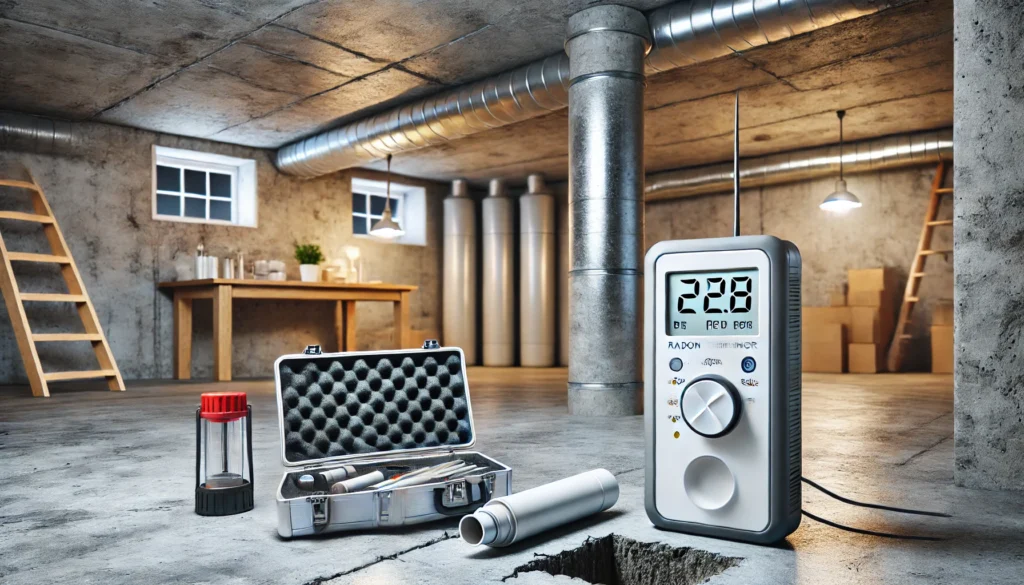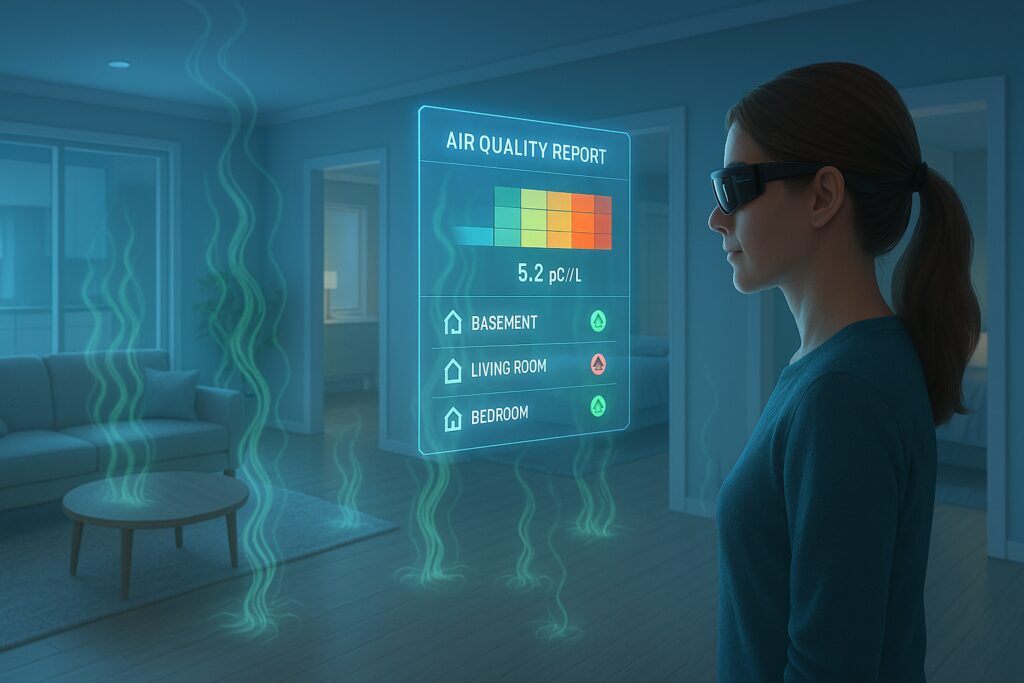
Radon exposure does not produce acute symptoms. There is no cough, rash, or smell that signals a problem. The damage happens at the cellular level in lung tissue over years of elevated exposure, and it typically does not manifest clinically until decades after the exposure that caused it. This delayed presentation is precisely why testing matters.
This post covers what radon exposure actually does to the body, what symptoms eventually develop, and why the absence of immediate symptoms is not evidence of safety.
What Happens in the Lungs
When radon gas is inhaled, it does not stay in the lungs as a gas. Radon is part of a radioactive decay chain. After radon itself decays, it produces short-lived radioactive particles called radon progeny, primarily polonium-218, lead-214, bismuth-214, and polonium-214. These particles carry a positive electrical charge and attach readily to airborne dust, aerosols, and biological surfaces.
When radon progeny attach to airway surfaces in the lung, they continue their radioactive decay sequence while in contact with tissue. This decay releases alpha particles, which are highly energetic but short-range. In the open air, alpha particles are stopped by a few centimeters and are blocked entirely by skin. Inside the lung, where they are in direct contact with delicate epithelial cells, alpha radiation causes significant DNA damage.
The body can repair some of this damage. But repeated exposures over years create cumulative DNA mutations in bronchial and alveolar cells. When enough mutations accumulate in critical oncogenes or tumor suppressor genes, cells can lose normal growth regulation, leading to lung cancer.
The Long-Term Health Consequences
According to the EPA, radon is the second leading cause of lung cancer in the United States, responsible for approximately 21,000 deaths annually. It is the leading cause of lung cancer among non-smokers. The CDC has documented that radon exposure causes lung cancer across all demographic groups, with higher risk in proportion to both concentration level and duration of exposure.
Lung cancer from radon exposure presents no differently than lung cancer from other causes. Symptoms at diagnosis typically include:
- A persistent cough that does not resolve or worsens over time
- Coughing up blood or blood-tinged mucus
- Chest pain that worsens with deep breathing, coughing, or laughing
- Shortness of breath during activities that were previously manageable
- Hoarseness or a persistent change in voice quality
- Unexplained weight loss and fatigue
- Recurring respiratory infections such as bronchitis or pneumonia
These symptoms appear late in the disease process. Early-stage lung cancer is usually asymptomatic, which is why the majority of lung cancer diagnoses occur at an advanced stage when treatment options are more limited. By the time symptoms prompt a medical evaluation, the exposure that caused the cancer occurred years or decades earlier.
Who Is at Higher Risk
Radon exposure increases lung cancer risk for everyone, but the risk is not uniform.
Smokers exposed to elevated radon face a dramatically higher risk than either smokers or radon-exposed non-smokers alone. The interaction between tobacco smoke and radon progeny in the lung is synergistic, not simply additive. EPA estimates suggest that a smoker living in a home with 8 pCi/L radon has approximately ten times the lung cancer risk of a non-smoker in the same home.
Children and adolescents have more rapidly dividing cells than adults, which may increase their susceptibility to radiation-induced DNA damage. Radon exposure during childhood years when indoor time is high and cells are actively dividing warrants the same concern as adult exposure.
Long-term residents of any high-radon building accumulate greater total exposure than short-term residents. Cumulative lifetime exposure is what drives lung cancer risk, not any single period of elevated concentration. Renters who spend five or ten years in an untested basement apartment in Augusta or Aiken accumulate the same risk as a homeowner in the same situation.
Why Testing Is the Only Protective Measure
Radon does not trigger carbon monoxide detectors, smoke alarms, or any other standard home safety device. There is no household indicator of its presence short of a radon-specific test. The EPA recommends testing every home in the United States at least once, with retesting every two years and after any major renovation or HVAC change.
If test results come back at or above 4.0 pCi/L, the EPA action level, mitigation is recommended. Radon mitigation using sub-slab depressurization or crawl space ventilation can reduce indoor radon levels by more than 90 percent in most homes.
EnviroPro 360 provides certified radon testing throughout Augusta, Evans, Martinez, Grovetown, North Augusta, Aiken, and surrounding areas of Georgia and South Carolina. If your home has never been tested, or if your last test was more than two years ago, contact us to schedule testing. Radon does not produce symptoms until the damage is done — testing is the only way to know your risk before that point.