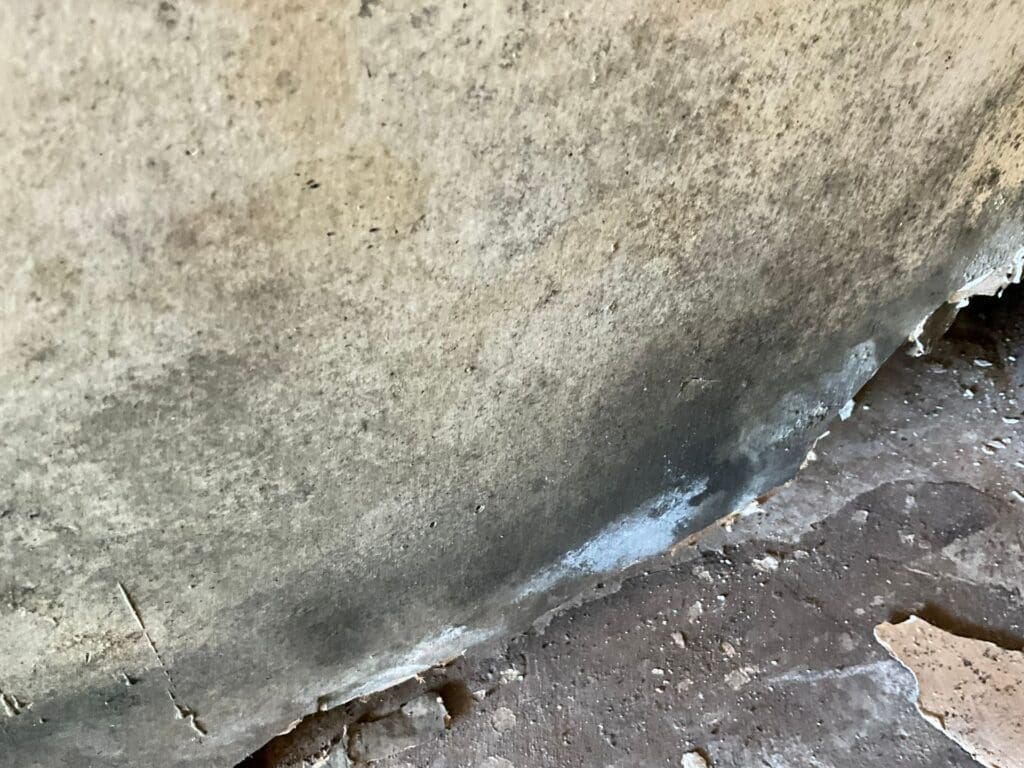
If you live in Georgia or South Carolina, you know what a humid day feels like. The air feels heavy. Your skin feels sticky. Nothing quite dries the way it should.
Your house feels that too.
High humidity is one of the biggest reasons mold shows up in homes. It can happen even when there are no leaks or floods. Moisture in the air slowly settles into walls, carpets, closets and crawl spaces. Sooner or later, mold finds a damp spot and starts to grow.
What humidity really is and why it matters
Humidity is the amount of water vapor in the air. Relative humidity tells you how full the air is, as a percent. At 100 percent, the air can’t hold any more water.
Mold spores are always around in small amounts. They float in from outside. They ride in on clothes, shoes and pets. On their own, that is normal.
The problem starts when the air in your home holds too much moisture. Moist air does three things:
- It slows down drying on wet surfaces.
- It condenses on cool surfaces, like windows and outside walls.
- It keeps fabrics, carpets and wood slightly damp.
That steady dampness is what lets spores wake up and grow.
How does mold grow in a house?
The EPA says mold needs three things to grow. It needs a surface to feed on. It needs mild temperatures. And it needs moisture.
Your home already has the first two. Drywall paper, wood, dust, carpet and ceiling tiles are all mold food. Most homes stay at temperatures mold likes. So moisture is the one thing you can control.
Here is how it usually starts:
- A spore lands on a surface that stays damp.
- Within a day or two, it starts to sprout. The EPA says mold can grow on wet materials within 24 to 48 hours.
- The mold spreads across the surface and into it. It feeds on the material.
- It makes new spores. These float off to find the next damp spot.
What causes mold in houses?
Water is behind nearly every mold problem. The water can come from a leak, a flood or a plumbing drip. But it can also come from the air. High indoor humidity and condensation can feed mold with no leak at all.
Does mold need air to grow?
Yes. Mold needs oxygen, like most living things. But your house is full of air, so you can’t starve mold of it. Even the inside of a wall has enough air for mold. That’s why the focus is always on moisture, not air.
What humidity level causes mold?
The EPA says to keep indoor humidity below 60 percent. The ideal range is 30 to 50 percent.
When humidity stays above 60 percent for days at a time, mold risk climbs fast. These rooms tend to run highest:
- Bathrooms and laundry rooms
- Crawl spaces and basements
- Attics and closed-up bonus rooms
- Home offices and small rooms with poor air flow
A hygrometer is a small gauge that reads humidity. You can buy one at most hardware stores. Put one in a few rooms and check them over a week. If the numbers stay high, or one room reads much higher than the rest, moisture is hanging around too long.
How everyday life raises indoor humidity
You don’t need a storm to create a moisture problem. Normal life adds water to the air every day. Here are common sources:
- Hot showers and baths
- Boiling water and cooking
- Dishwashers and washing machines
- Drying clothes inside
- Lots of people and pets in a small space
Weak exhaust fans make this worse. So do blocked vents and rooms that stay shut. The moisture has nowhere to go. Over time, it soaks into surfaces.
Can condensation on a door or window cause mold?
Yes. Condensation forms when warm, moist air hits a cool surface. In summer, that cool surface might be a window or an outside door near a cold air vent. In winter, it’s often the inside of the glass on a cold morning.
If water beads up often, it runs down onto sills, trim and the bottom of the door. Wood and caulk stay wet. Mold often shows up there first as dark spots or a black line along the seal.
Why is mold worse in summer?
In Georgia and South Carolina, mold is usually worst in summer. Heat and humidity both peak at the same time. Afternoon storms add even more water to the ground and air.
Why July and August are peak mold season
July and August bring the hottest, stickiest weeks of the year here. Outdoor humidity often stays high day and night. Mornings can feel like a wet towel.
Humid air gets into your house through door gaps, window frames, attic vents and crawl spaces. Once inside, it meets surfaces your AC has cooled. Water condenses on them, the same way a cold glass sweats on a hot day. Mold then has the moisture it needs.
Local soil and housing add to the risk. Red clay soil drains slowly. Rain pools near the foundation and soaks the ground for days. Many older homes sit on vented crawl spaces. These pull in humid outdoor air all summer long. That damp air then rises into the floors above.
What is considered high humidity outside in summer?
Weather reports often give the dew point. It’s the temperature where water starts to condense out of the air. When the dew point is in the upper 60s or 70s, the air feels muggy and heavy. Many summer days in Georgia and South Carolina reach that range.
On those days, any surface in your home that is cooler than the dew point can collect water. That includes AC ducts, vents in a hot attic and walls near an air handler.
Does heat make mold worse?
Yes, up to a point. Most household molds grow best in warm temperatures. A hot, damp attic or crawl space is ideal for them.
Does extreme heat kill mold?
Not in a normal home. Summer heat in an attic can slow some molds down. But the spores survive and grow again when conditions improve. Heat alone is not a fix.
Is mold worse in summer or winter?
For most homes in this region, summer is worse. But winter brings its own problems. Closed windows trap moisture from cooking and showers. Cold glass collects condensation. If you smell mustiness when the heat comes on, that’s worth checking too.
Your AC: the best defense and a possible mold source
Your air conditioner is your main tool against summer humidity. As it cools the air, it pulls water out. That water collects in a drain pan and flows out a condensate line.
But the AC can also cause mold. If the drain line clogs, the pan overflows. Water sits around the coil and soaks the insulation nearby. Mold grows there. Then every time the system runs, it blows spores through the ducts and into each room.
The EPA notes that mold in heating and cooling parts can be spread through the home. Torn or kinked flex duct in a hot attic can also sweat and grow mold.
Watch for these HVAC warning signs:
- A musty smell when the system first turns on
- Dust or dark spots around supply vents
- Water around the indoor unit or in the drain pan
- Allergy-like symptoms that get better when you leave home
For more on this, see is your HVAC system spreading mold through your home.
How does mold spread in a house?
Mold spreads in two main ways. First, it grows outward across a damp surface. Second, it releases spores into the air. These spores move with air currents, the HVAC system, foot traffic and pets. They settle in new places. If those places are damp, new growth starts.
That’s why one damp crawl space can affect the whole house. Air moves up from below the house into the living space. This upward flow is called the stack effect. It carries spores and musty odors with it.
Where humidity-driven mold shows up
Even with no standing water, humidity can feed mold in certain spots.
Around windows and doors
Repeated condensation can cause:
- Mold on window sills and trim
- Stained or soft drywall under windows
- Peeling paint around frames
On outside walls and corners
Furniture pushed tight against an outside wall blocks air flow. Humidity gets trapped behind it. You may see dark spots in corners or feel cold, clammy patches on the wall.
In closets and small rooms
Closets on outside walls are humidity hot spots. So are small rooms with closed doors, like a half bath. They feel stuffy. Clothes and boxes inside start to smell stale.
In crawl spaces and basements
Warm outdoor air meets cool wood and concrete under the house. Water condenses there. This is a major reason so many local homes have:
- Mold on floor joists and subflooring
- Musty odors that rise into the living space
- Long-term damage to wood and air quality
Learn more in why Georgia crawl spaces are a mold magnet.
In attics
Heat builds up in the attic all summer. Moist air from the living space can rise into it. Poor soffit or ridge venting traps that air against the roof deck. Mold grows on the plywood or OSB sheathing. OSB is a common wood panel made of pressed wood strands. Attic mold can go unnoticed for months.
In bathrooms, laundry rooms and under sinks
These rooms make moisture every day. Some exhaust fans vent into the attic instead of outside. When that happens, the ceiling and framing stay damp all summer. Slow drips under sinks add to the problem.
On the outside of the house
Mold and mildew can grow on siding too. It’s most common on the shady north side and under trees. Those walls stay damp longer after rain. Outside growth isn’t the same as indoor mold. But it can point to drainage or gutter problems close to the house.
Signs humidity may be fueling mold in your home
Pay attention if you notice any of these:
- A general damp feeling indoors
- Musty smells in one or more rooms
- A musty smell that gets stronger when the AC runs
- Foggy or wet windows, especially in the morning
- Spots on ceilings, walls or around vents that slowly grow
- Peeling paint or bubbling with no known leak
- Allergy or asthma symptoms that are worse at home
The CDC says mold can cause a stuffy nose, coughing, throat irritation and worse asthma. Watch for one pattern in particular. If symptoms ease when you leave home and return when you come back, the house is worth checking.
What to do before summer peaks
The homes that avoid August mold usually get ready in May and June. Here are simple steps that help.
- Service your HVAC system. Ask the technician to clear the condensate drain and check the coil. Make sure the system is drying the air, not just cooling it.
- Check your crawl space. Look for pooled water after rain, wet spots on the vapor barrier or fuzzy growth on wood. A vapor barrier is a plastic sheet that keeps ground moisture out of the crawl space. A torn or missing one lets moisture in.
- Check your exhaust fans. Bathroom fans and the range hood should vent outside, not into the attic.
- Use a hygrometer. Readings above 60 percent with the AC running mean something needs attention.
- Run a dehumidifier where needed. Basements and damp rooms often need one. Empty it or drain it often. See why your dehumidifier might be lying to you.
- Let air move. Open interior doors. Pull furniture a few inches away from outside walls. Avoid drying laundry inside.
- Fix water outside. Clean gutters. Make sure soil slopes away from the foundation.
For a full checklist, see how to prevent mold in your home.
When to test and when testing adds little
If you can see mold, you already know it’s there. Testing that spot tells you little. The better question is whether mold is also growing where you can’t see it.
Mold testing is most useful in these cases:
- You smell mustiness but can’t find any growth.
- A past leak was dried out but never checked.
- Someone in the home has ongoing breathing problems.
- You are buying or selling a home with an unknown moisture history.
- Mold was removed, and you want to confirm the job worked.
When to call a professional about humidity and mold
Good habits help a lot. But they can’t undo months of high humidity. It’s time to bring in an inspector if:
- Mold keeps coming back after you clean it.
- Some rooms always smell musty or feel damp.
- Your home has a history of leaks, storms or crawl space problems.
- Family members feel worse at home than away.
- You want a clear picture before a renovation or sale.
How EnviroPro 360 checks humidity and mold
EnviroPro 360 is an independent testing company. We test and report. We don’t do mold remediation. Remediation means removing mold and fixing the damage. Because we don’t sell cleanup, our results have no stake in the outcome.
Our certified inspectors can:
- Perform a full mold inspection, with a focus on bathrooms, crawl spaces, attics and HVAC areas
- Use moisture meters and thermal imaging to find hidden dampness in walls and floors
- Take air samples to measure mold spores in your indoor air
- Take surface samples where growth is suspected
- Send samples to an accredited lab and give you a written report
Your next steps
- Put a hygrometer in your main living area and your crawl space or basement. Check it for a week.
- Before July, get your HVAC drain line cleared and your crawl space and exhaust fans checked.
- If you smell mustiness, see spots or feel worse at home, schedule an independent mold inspection.
EnviroPro 360 provides mold inspection and moisture testing for homes and businesses across the Augusta area and nearby parts of Georgia and South Carolina. If you have questions about humidity and mold or want to talk through your situation, the EnviroPro 360 team is happy to help. Reach out any time.